‘Kolonos is the highest mountain in the world, because on this mountain the law keeping and the self-sacrifice have put up a monument, which has its base on earth and reaches the stars‘. – Apollonios Tyanefs
AI FREE ZONE
It is hard to find a more iconic battle in history than the legendary stand off between Leonidas and his 299, against the ‘God King’ Xerxies and his Persian hoard. Of course, many forget the 7000 other Greeks that sided with the Spartans, but that doesn’t make for an epic tale.
As a history nerd, and collector of battle fields, and a man, I couldn’t go to Greece without visiting this tactical masterpiece and bloody battle field.
Was it worth it? Hell yeah…
But this isn’t just a tale of two colliding amries, there is so much more to Thermopylae. It’s a story of brotherhood, tyranny against freedoms, duty to yourself, to your state and friends.
The basics
How much is it to visit Thermopylae? Its Free, besides transport obviously.
Is it hard to get to? No, a bus, or rental car can get you hear easily. Make sure you check bus return times.
Is there lots to see? Yeah, there’s a massive battlefield, a hot spring, a information centre, a hike or two and some good views.
Is it wheelchair accessible? Yes and No. While more of the battlefield is accessible by wheelchair, there are some areas with limited access due to rocky surfaces and poor infostructure.
Are there toilets available? In the information centre there are toilets. However, these are restricted by opening times.
Is there anywhere to stay nearby? No. Thermopylae itself is a small village. There are no places to stay that I can recall.
Food and drinks available? Not really. Make sure you bring your own food and water. There is little to no options on the battlefield and the village has a small, somewhat limited shop that is subjected to opening times.
Do I need a tour guide? No, the route is scattered with plaques and information signs that help you understand the battle and the story behind it. However, I imagine a tour guide will be helpful to those who do not enjoy reading.
Are the battlefield info signs easy to follow? Yes and no. Some of the signs are damaged, and sun-bleached. I think having google at hand will be very helpful, but overall the information is good and well structured.
If you have any other questions, feel free to comment below.
What’s the History.
The year is 480bc, the Persian empire is colossal, it stretches from modern day Turkey in the West, to the Hindu Kush in Afghanistan. It’s ruler, the ‘God King’ Xerxies is pushing West for further expansion.
He walks into Greece with the intention of invading and having the Kingdoms of Greece fall to their knees. Why Greece? Why not push North past the Caspian sea, or South into the Persian gulf. Well, there is bad blood between the Persians and the Greeks, and Xerxies has returned to collect a dept.
Ten years prior to battle of Thermopylae, Darius, the father of Xerxies tried his luck against the Greeks and gets his ass handed to him at the battle of Marathon.
Xerxies arrives in Greece ten years later, via the northern land passage. Scholars argue over the host he led, be it one of a million soldiers, or some three-hundred thousand. Nether the less, the odds were in favour of Xerxies and his generals.
The 2006 film adaptation of 300 depicts the earth moving under the weight of the Persians. That so many arrows were fired, it blocked out the sun. Although I doubt the earth itself rumbled, Greece arrived at Thermopylae with 7000 men, of which 300 were legendary warriors from Sparta. For those doing the maths, for every Greek solider, there were roughly 4286 Persians.
It should be kept in mind while walking around this battlefield, Leonidas and his Greek brothers in arms chose this site to take their last stand, and no doubt, they knew stood on this narrow pass that this would be where they died.
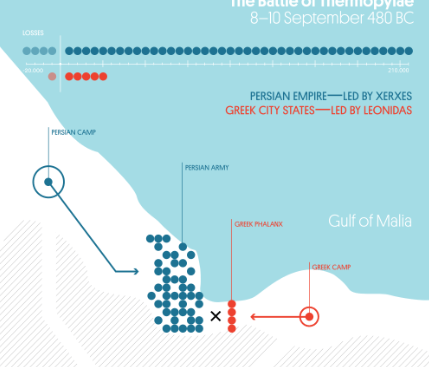
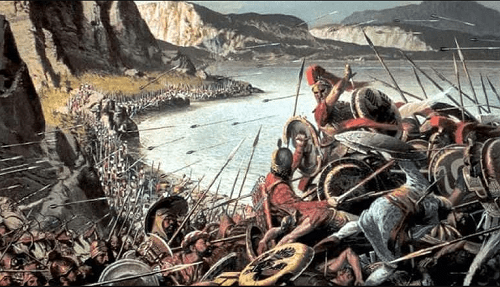
The battlefield has changed somewhat since the days of ancient Greece. A narrow passage stood as narrow as a carriage between gigantic mountains and hills, and the sea. A perfect zone that allowed the Greeks to squeeze the Persians into a smaller, much more manageable army. The Persians would have had to advance forward towards the shield wall of Leonidas. Their numbers meant nothing here.
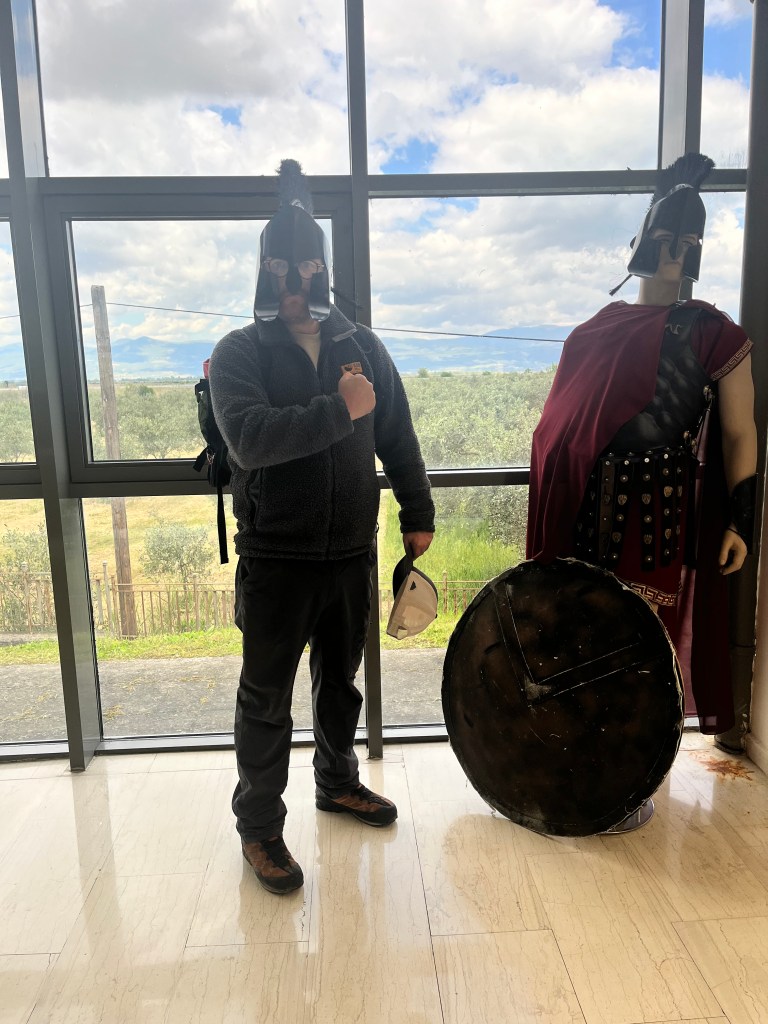
The Spartans would have been equipped with a large bronze circular shield, a long spear that allowed the ranks behind the shield wall to jap through the lines, and a bronze sword for close ranged attacks.
Xerxies, who may have been the ‘King of Kings’ was no ‘General of Generals’. He sent his best troops, knowns as the immortals to the front of the charge in an attempt to counter the Spartan advantage. The immortals were killed in droves.
For three days the battle raged on. Spartans kept the shield wall strong, used feigning retreats to draw the Persians in, only to then block the road and cut down more soldiers.
Ephialtes, a Athenian Greek betrayed the Spartan and Greeks by leading Xerxies through a secret passage behind the mountains. On day three, the Persians surrounded the Greeks, and their impenetrable blockade turned into a death trap.
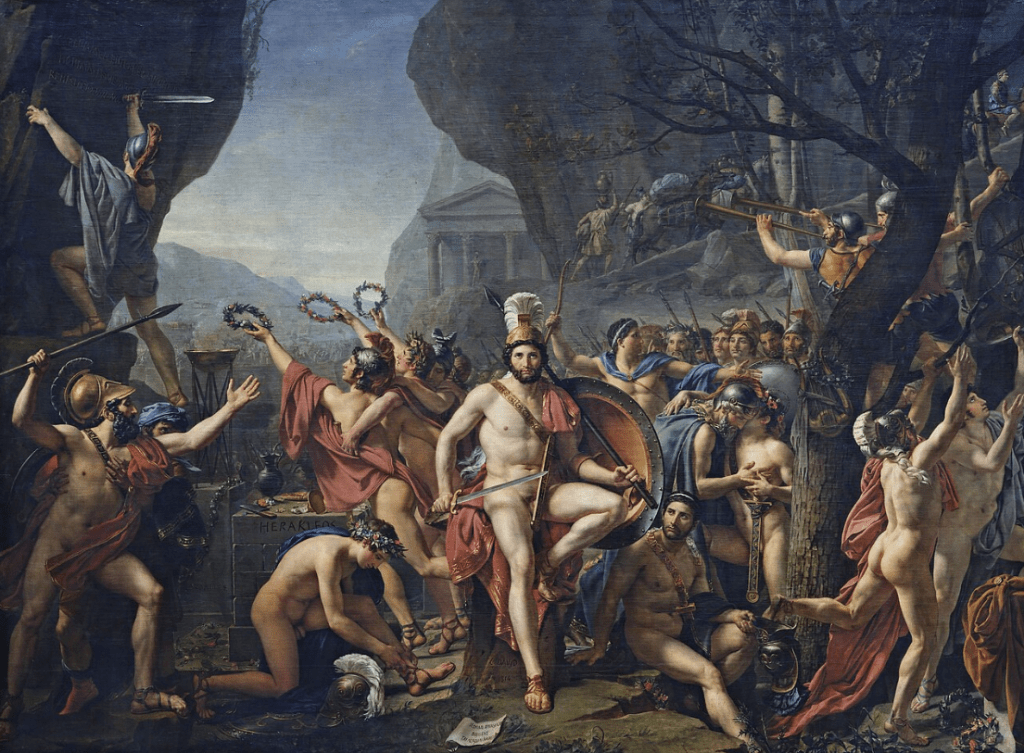
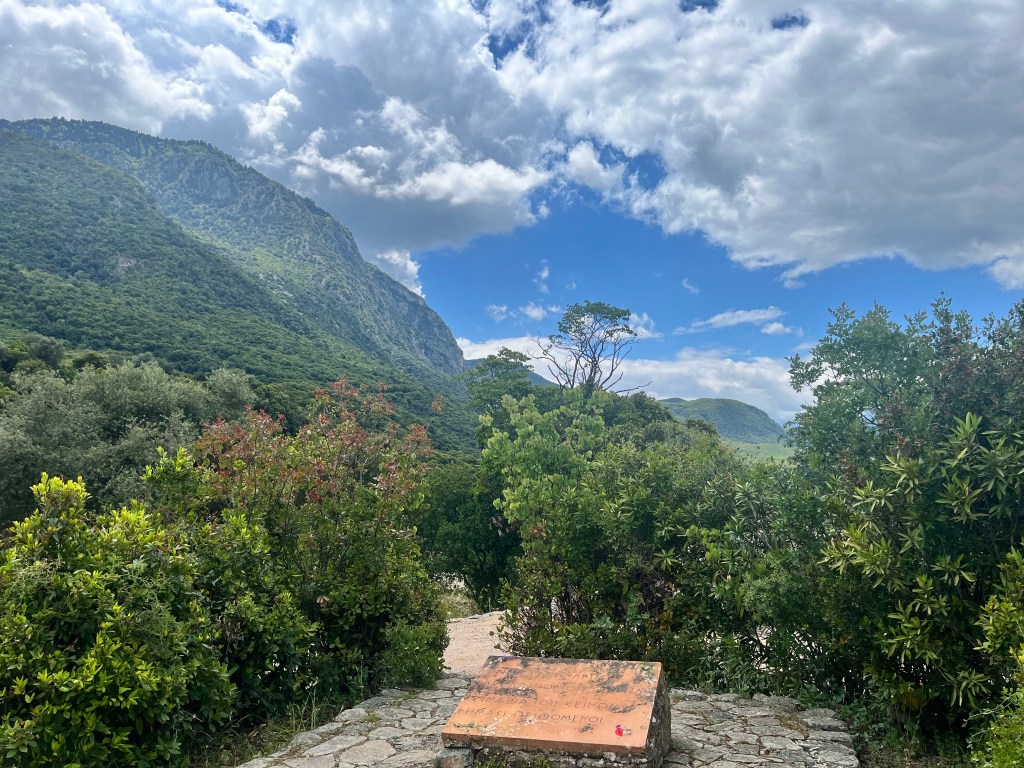
Leonidas was killed by arrows, his body fell and thus the Greeks retreated to a small hill called Kolonos (as featured in the poem). There the Greeks fought on until their eventual demise. A bloody, epic, and legendary last stand that stood the test of time. It is estimated that some 20-30 thousand Persians died at the hands of the 300 Spartans.
That battle and death of Leonidas was so much more than a footnote in the history books, it is a tragic hymn to the immortality of bravery.
Following the battle at Thermopylae, Ephialtes was outlawed and a bounty set upon him. Xerxies pushed further into Greece gathering speed and plunder as he went. However, the war was eventually put to an end by the Greeks in the battle of Salamis, another spectacular show of Greece military prowess.
How to get there?
There are a number of different ways you can get to Thermopylae, be it public transport, hire car, train or hitchhiking.
It isn’t a short distance from Athens to Thermopylae. In a rented car the trip is roughly 2 and a half hours without stops. The coach/bus is somewhat longer. The train isn’t direct.
Rented Car
Although I did not personally rent a car, and did not take this route or have much advice on the matter of driving to Thermopylae, here is some research I have done regarding this mode of transport.
Renting a car in Greece is easy. All you need is the money to hire it, a passport (in date) and a full driving license. There are loads of businesses catering to car rental and a quick google will put things right. Here is one of the most recommended car rentals in Athens: Athens Car Rental.
To get to Thermopylae, all you have to do as a driver is follow the E75
The Battle field.
It has been 2505 years since that fateful, legendary battle and the landscape of Thermopylae has changed drastically. While it still resembles the legendary ‘hot gates’ and it doesn’t take much imagination to see the narrow pass and mounted bodies, where once a crashing ocean of deadly water pounded the left flank of the invading army, now flat, wet, farmland stretched out as far as the eye can see.
There is a wonder and beauty in this new landscape, as endless crops can be grown here as the waters of the receding sea feed a bountiful harvest. A motor-way allows travel through the region easier, and faster. No longer will these ‘hot gates’ pincer the movement of everyday folk.
It doesn’t take much imagination to see the deadly pass, in fact the remanence of the sea and the pass itself is still visible in the geography of the area. Carved into the side of the hills, a plateau sticks out and meanders its was across the mountain side.
If you stand upon Kolonos hill and look North West, you can see the fine imprint of what the battlefield once looked like. If you use that childhood imagination that you left back in the 90s, it doesn’t take long to see the hoard of Xerxies crawling over the far away hill sides, and the thin line of Spartans holding the line.
To the right of the road that leads into the village of Thermopylae sits a monument to those that died defending Greece, as well as a information centre dedicated to the battle and the aftermath of the Greek defeat. There is a toilet here, and possibly the only one in miles, so use it.
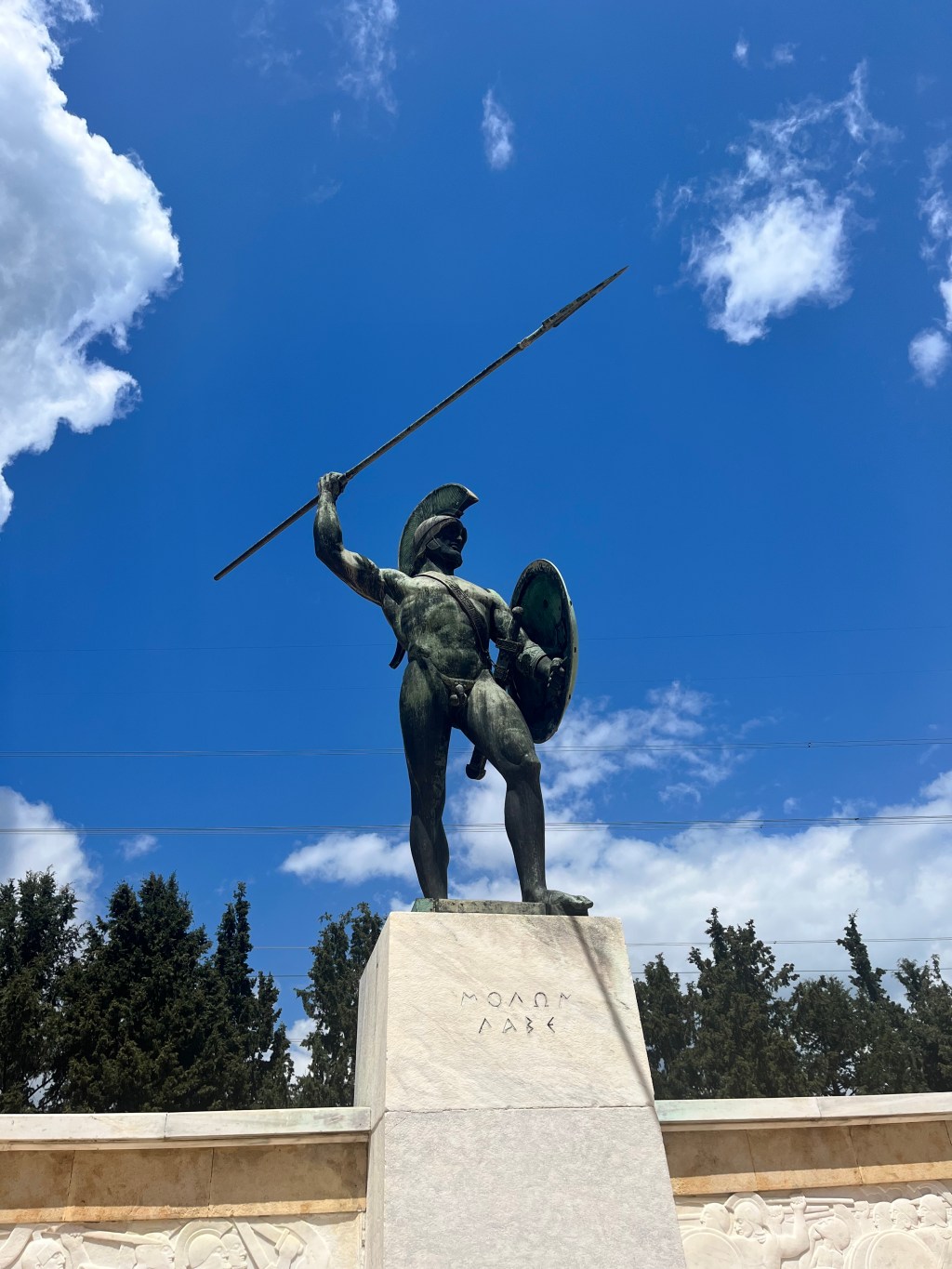
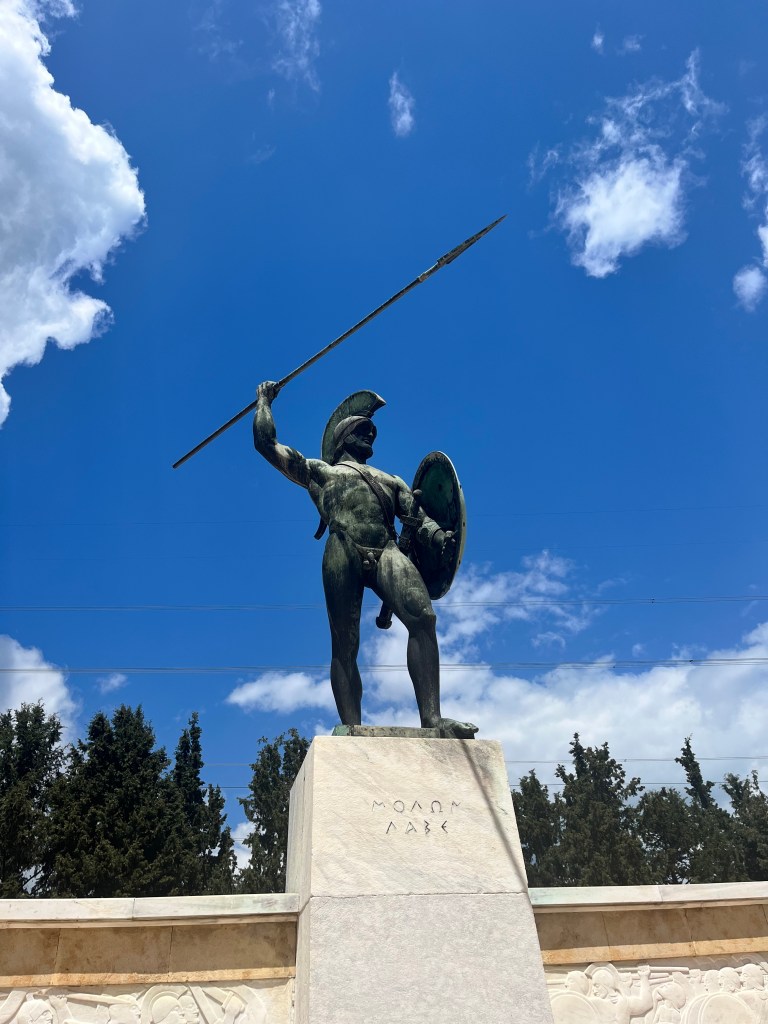
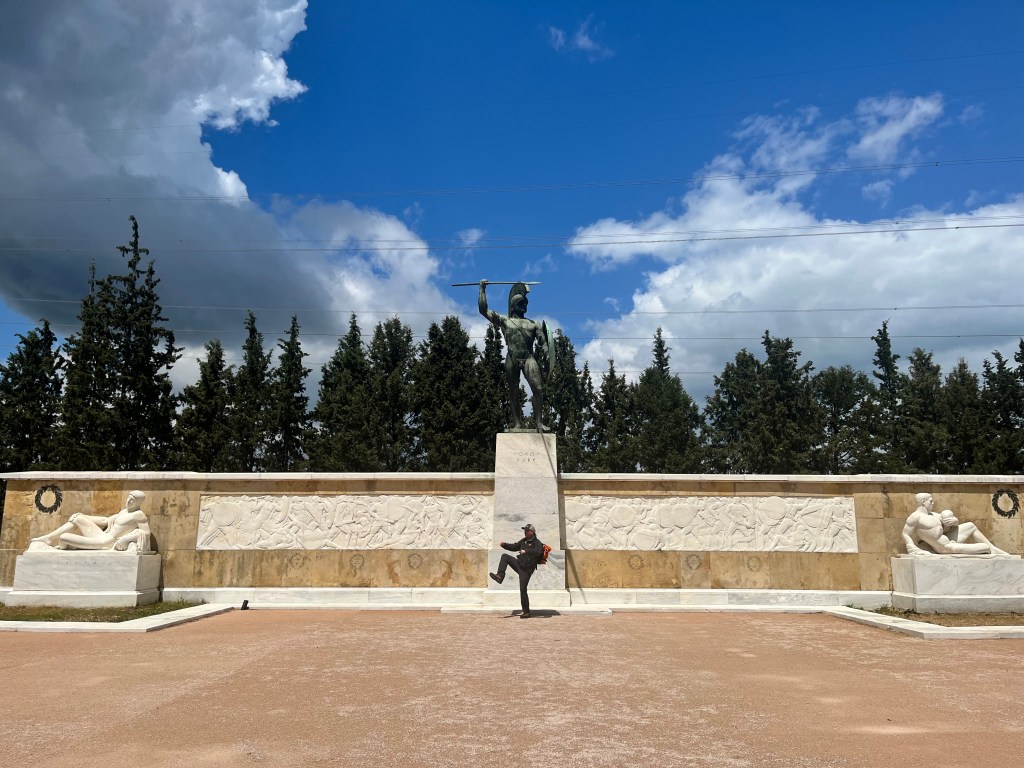
The monument is epic, a true masculine urge serge through ones body when I laid eyes on it. A naked Leonidas stands tall, helmed in bronze with the incredible Greek mohawk style, in his right hand, a readied spear and in his left a gigantic shield. He looks onwards towards Greece, toward the hill in which his comrades fell. Below him a wall depicting the battle in stone.
Beyond the battlefield, and making your way towards the enemy camp, there is a ‘hot spring’. It is situated a short 15 minute walk away and placed next to some abandoned structures. The hot springs are NOT worth visiting. While the spring runs through the car park below and there are some more desirable placed to bath that by a group of abandoned structures.
The Greek government has decided to house asylum seekers here. Fifty or so undocumented people live among these dilapidated ruins guarded by security. I do not advice approaching the security as they were somewhat hostile to our wonderings.
Of course there are limited places to house asylum seekers, but to have them live a stones throw away from a tourist attraction seems like a bad idea to me.


Leave a Reply