
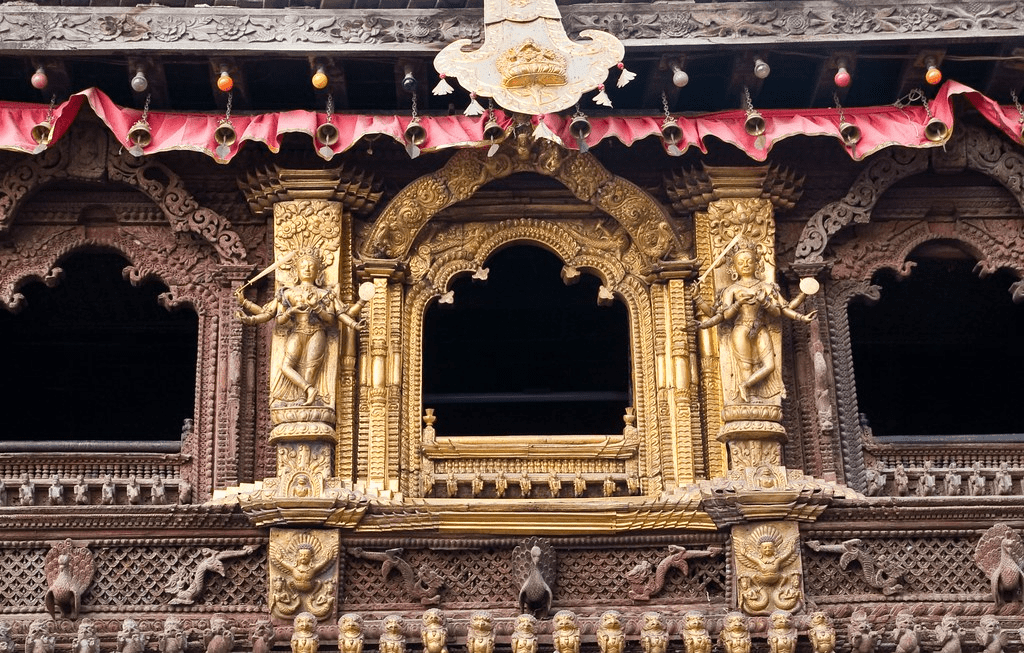
Stumbling across the Palace of Kumari was a pleasant surprise. I was shopping for masks, when all of a sudden I came across a magnificent structure surrounded by locals and tourists alike.
This building is no palace, or temple of stone. It is a example of the craftmanship and cultural relevance of the Nepalese people and their history. While Nepal is home to some of the most fantastic mountains, and a wonder of the natural world. This Palace of kumari is the countries very own Stonehenge, Eiffel tower or Statue of liberty.
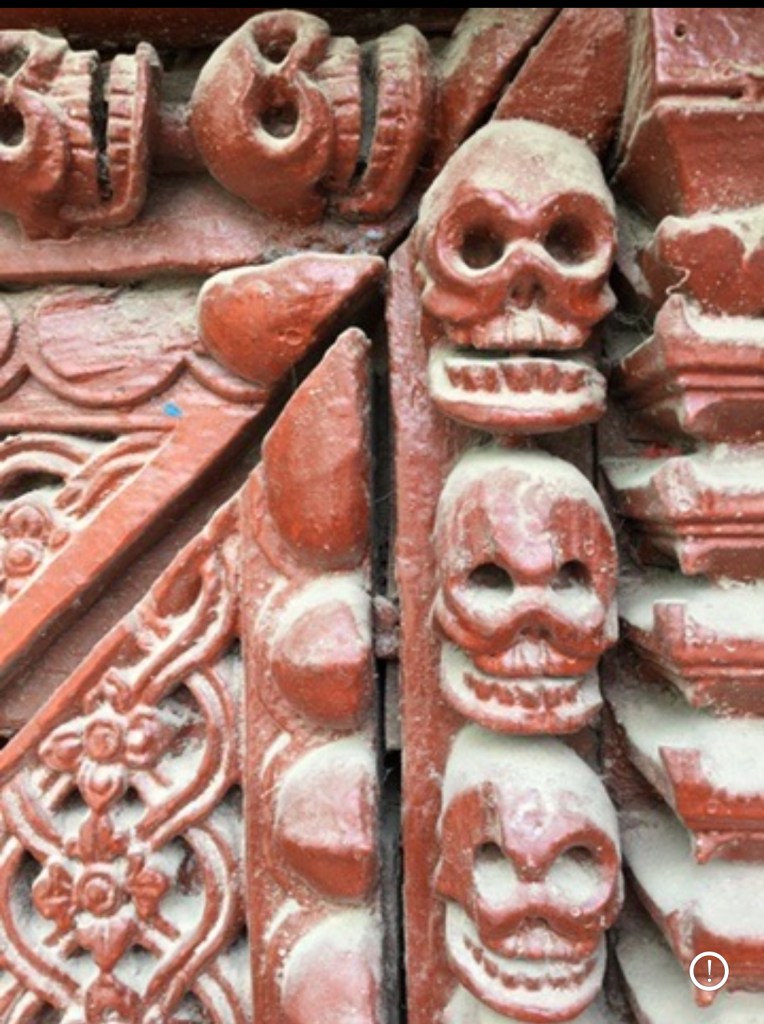
Craved from wood, and painted by hand. The integrate design of this wonder is remarkable. Small skulls surround door frames, Gods with ten arms sit cross legged next to serpents and swords, Ganesh and strange mythical animals have all been delicately and accurately carved into this Palace
But above all its wonders, the most incredible part of this structure lay within the courtyard of stone. As you wonder through tight doorways and past pillars made by the hands of skilled craftsman long dead. You enter a courtyard of wonder, and gazing down upon it a balcony. One where words fall short in their description. I will try non the less.
A reddish brown balcony of design I have never seen before overhangs by a margin from the slim red brick walls. Three windows, all closed by wooden pannle blinds over watch the yard like a heavenly window. Each window is pillared by Godly figures, carved deep into the structure as though buried in the weight of time. Above, another three windows peer out, mimicking those below. To think that someone could stand in front on one and not have their head breach through to the windows above seems impossible. So detailed these six windowed are, it is almost as though it were the home of a God, or should I say a Goddess.
Inside this Godly palace lives a Goddess.
A girl chosen from the age of three, is put through a series of trials to determine if they are the living Goddess. The trials vary, but the outcome is always the same. To whom ever passes the trials will become the holy ‘Kumari Devi’, the living embodiment of the Hindu Goddess Taleju.
Now, I don’t know the belief system of the Hindu’s or the traditions of this ancient religion. Neither do I understand why this girl is the embodiment of the Taleju. I could go online and find it our for you, but even then, I don’t want to be explaining a culture I don’t understand potentially from a website that doesn’t understand it either.
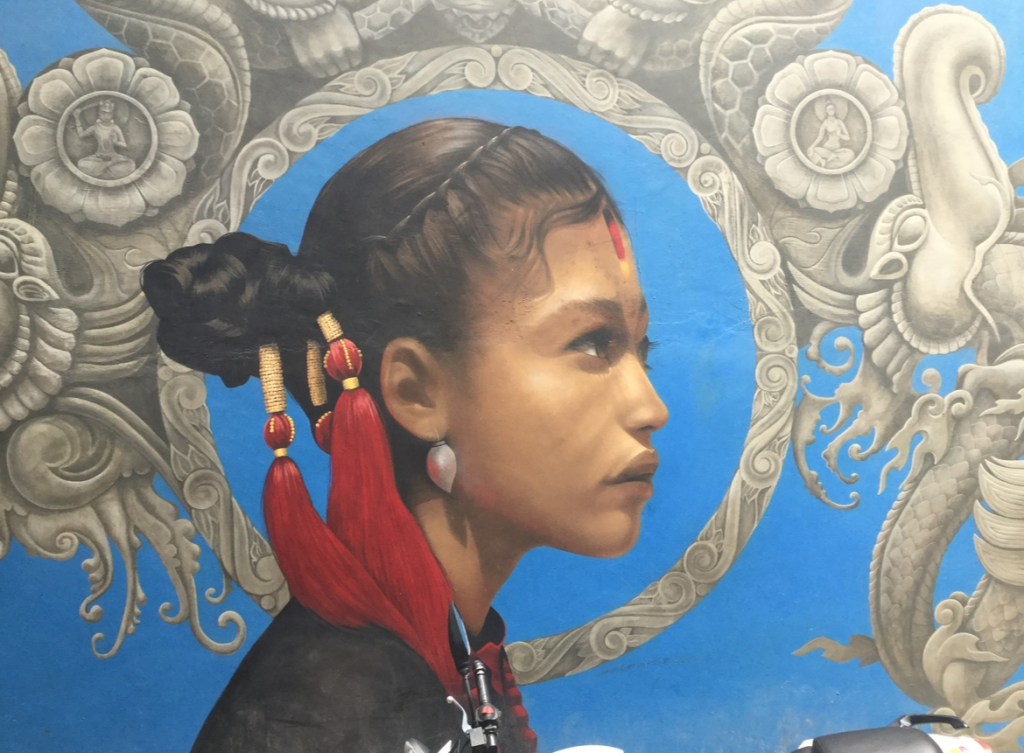
All I know is that there is backlash to this ancient tradition. While exploring the city, we found countless murals, such as the one below. These murals however were tarnished with graffiti saying “Free the Kumari Devi” or “Preeti is a prisoner”.
Preeti is or was the Kumari Devi at the time, and was bought up with the best education, limited but extreme wealth and the worship of a large population. What she didn’t have however, is a childhood. Her freedoms were limited by what was expected of her.
Now some people would argue that freedom is worth more than wealth and education. Others would disagree. All that is true, is that this remained a topic of discussion across Nepal.
While living in this remarkable palace, there is strict rules on the Goddess’s life. She must not leave the palace, unless there are festivals in which she is required to attend. If she does leave the palace for a festival, her feet are not to touch the ground.
The Kumari official caretakers are bound to her for eight years. Telling her what to wear, when to wear it and how. She never went hungry, or had a want for anything of this earth. Except perhaps freedom.
When walking around this palace, think about its significance, admire its incredible architecture and perhaps marvel at its history. But, also consider is one persons palace another’s prison?


Leave a Reply