
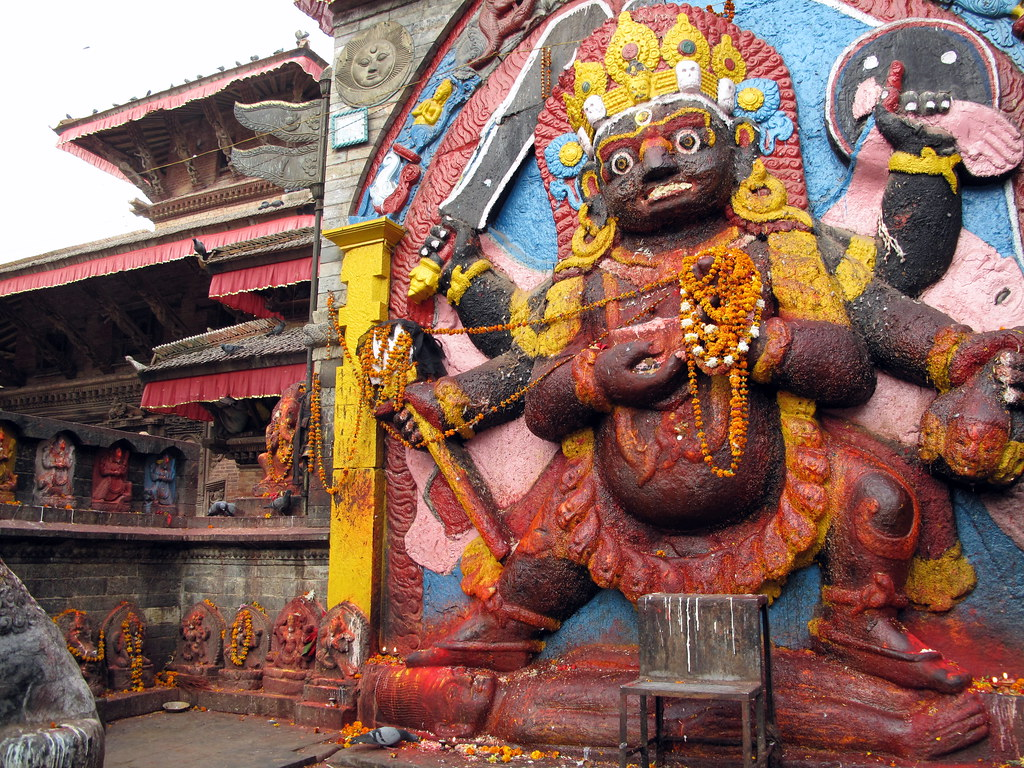
Kathmandu has many names, ‘the great city’, ‘Yen’ and more recently ‘The city of Temples’. Some even say it is the legendary mystery city known as Shambala, if you believe in such tales of course. You could go an entire lifetime in this city and not visit every temple. Sir Kirkpatrick, a British officer who took a diplomatic mission to Nepal in the 1790s relayed to his peers upon his return how “Kathmandu is a place with more temples than houses, more gods and goddesses than people and more festivals than the number of days in a year”.
With an estimation of over 3000 temples spread across a massive built up valley, there is adventure to be had in every corner. This list will have a mixture of popular sights that are visited by hundreds and thousands of people a year, to the more obscure and ‘Uncharted’.
Let this be your guide to which are the best Temples to visit for adventurers and vagabonds such as yourselves.
Temple list:
- Swoyambhu Mahachaitya (Monkey Temple)
- Pashupatinath Temple
- Boudhanath Stupa
- Kopan Monastery
- Namo Buddha
Swoyambhu Mahachaitya (the monkey Temple)
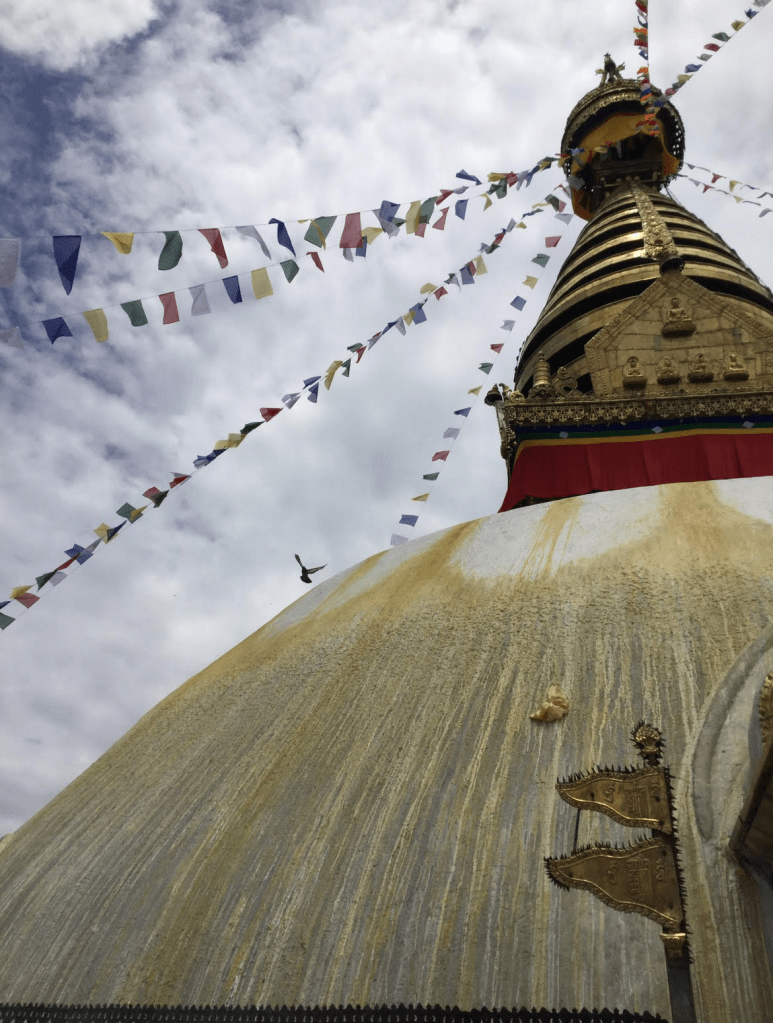
Possibly the most iconic temple, and by far the most visited by tourists is the Swoyambhu Mahachaitya, otherwise known as ‘The Monkey Temple’. This gigantic sacred structure has been the focal point of Kathmandu sightseeing for years.
High upon a hillside, in the Western part of Kathmandu stands a white dome, adorned with a golden spire, draped in colourful prayer flags that flap frantically in the cool mountainous breeze.
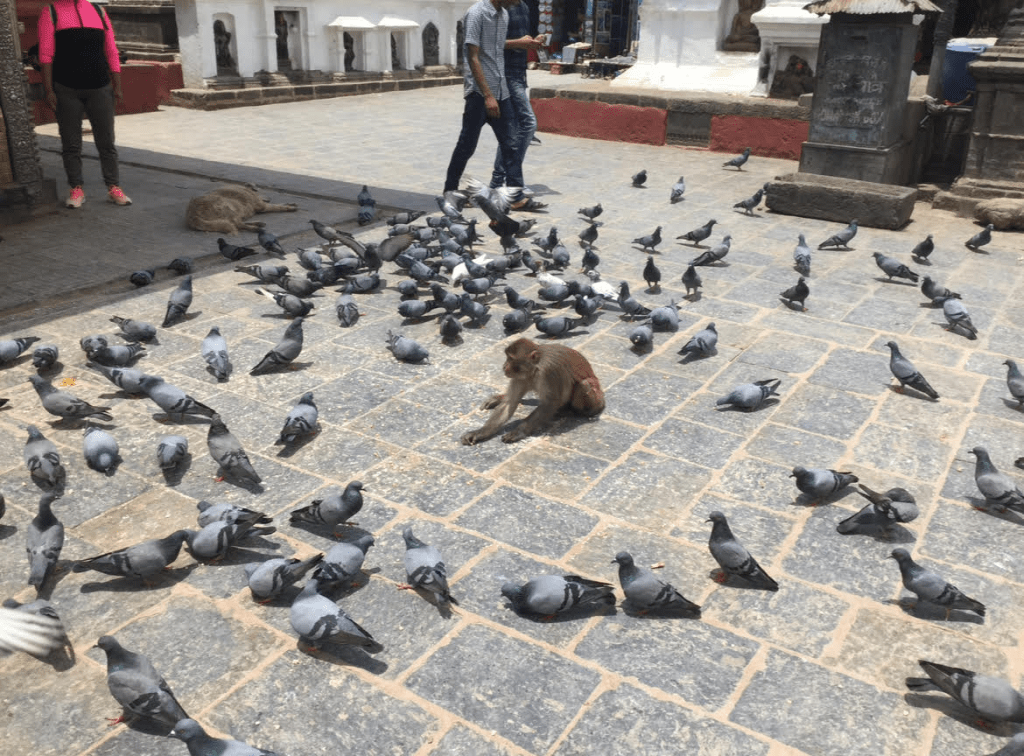
Swoyambhu Mahachaitya’s appropriately nickname, The Monkey Temple, has hundreds of ‘temple monkeys’ or more scientifically named, the Rhesus macaque. These pinked skinned, grey furred robust primates play, live, eat, sleep and cause mayhem in this holy space. Playful in their nature, these beautiful mischievous creatures sunbathe under the blue skies, away from the beeping busy traffic and live in peace and safety.
Be advised these monkeys are Holy, and must not be touched.
Thought to be made from the head lice of Manjushree, a Bodhisattva (a person on the way to enlightenment), these monkeys are just half of the attraction.
While visiting, you ascend steep steps that pass under the canopy of lush trees. Walking amongst Buddhist monks from across Asia in their red-ish dress robes and bald heads, Hindu pilgrims that have travelled from India by bus and of course tourists from all walks of life. You leave behind the chaos of the city and find a monument of peace and tranquillity.
On a clear day, when the smog has settled you can see across the city. The rooftops of thousands of homes sprawl across the valley. It looks to most, as sea of randomly built structures, all fighting for space. The rooftops crooked and mixed with different building material. Like Lego made with no instructions or matching pieces. The usual South East Asian car mayhem reaches above the winding roads and into the atmosphere, like a national anthem to life and chaos. Across this expansive city, in the distance, looming like a titan of the ancient world, are the foothills of the Himalayan mountains.
While I was exploring this vessel of mystery and it’s pious presence, I was approached by a man who claimed to be 2000 years old, a man who claimed he was there when the great lake was scattered with flowers and those flowers turned into the temple hills we stand on. He recalled how he met the Bodhisattva who’s hair lice made the monkeys that walk beside us. I dared not question his story, for in this sacred temple it is hard to tell the truth from reality.
Pashupatinath Temple
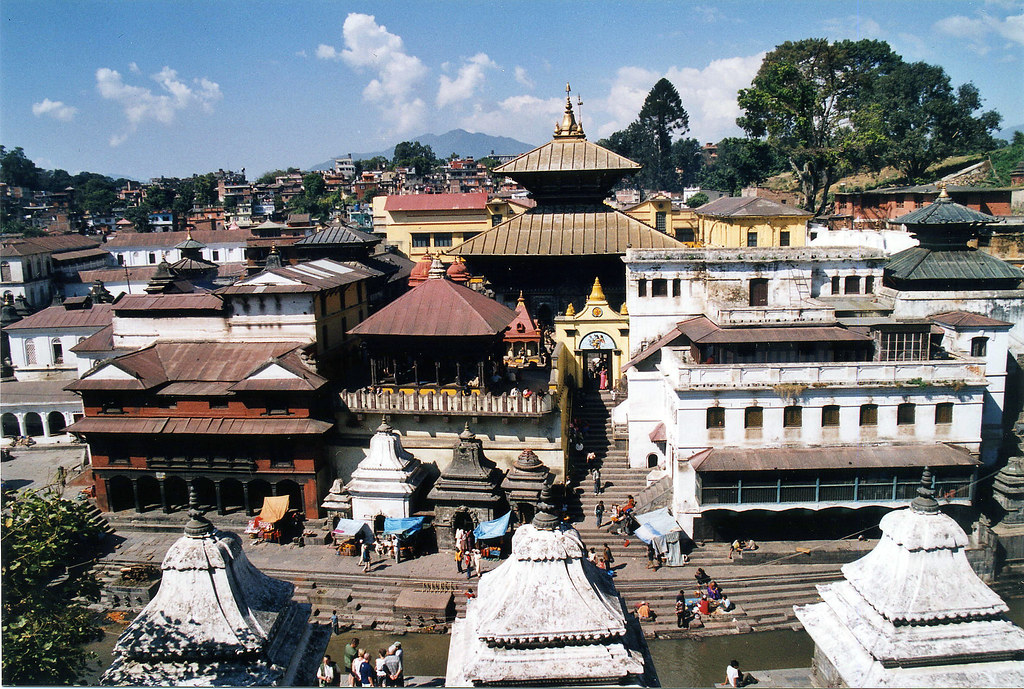
Sat next to the sacred river Bagmati, a holy river that stretches from the Himalayan mountains in Northern Nepal down into India and converging into the world famous Ganges some two hundred miles south… You will find the Pushuptinath. A temple situated in the Eastern parts of Kathmandu. A sacred sight for both Buddhists and Hindus.
The temple was built for the Hindu God Shiva. Although Nepal is often referred to as the birth place of Buddha, 80% of the population are Hindu, the oldest of all religions. With millions of Gods, the vast majority of temples in Nepal are dedicated to them.
Pashupatinath is one of those temples, however it is shared as a place of worship with Buddhists. This temple is unlike any other, it is a temple of death. For it is believed that if one dies within the grounds of this sacred sight, they are to return from reincarnation as a human once again, no matter their sins.
Naturally, this temple is packed with the elderly that wait for the end of one life with hopes to begin another. If they do die on this holy ground, their bodies are cremated on the river and left to float down stream.
We as tourists can NOT enter the main temple. It is a place of exceptional holiness and should be treated as such. Yet, we can explore a vast amount of the large sight. On the other side of the river, we can honour those that have passed by witnessing their cremation on the river. It is a sight that most tourists will no doubt skip over, I recommend going. Sit, and watch as the bodies of men, woman and children are returned to their after life. There is a sense of peace in witnessing this practice, just remember to be respectful as the burning bodies of deceased humans are not for sharing on social media.
Boudhanath Stupa
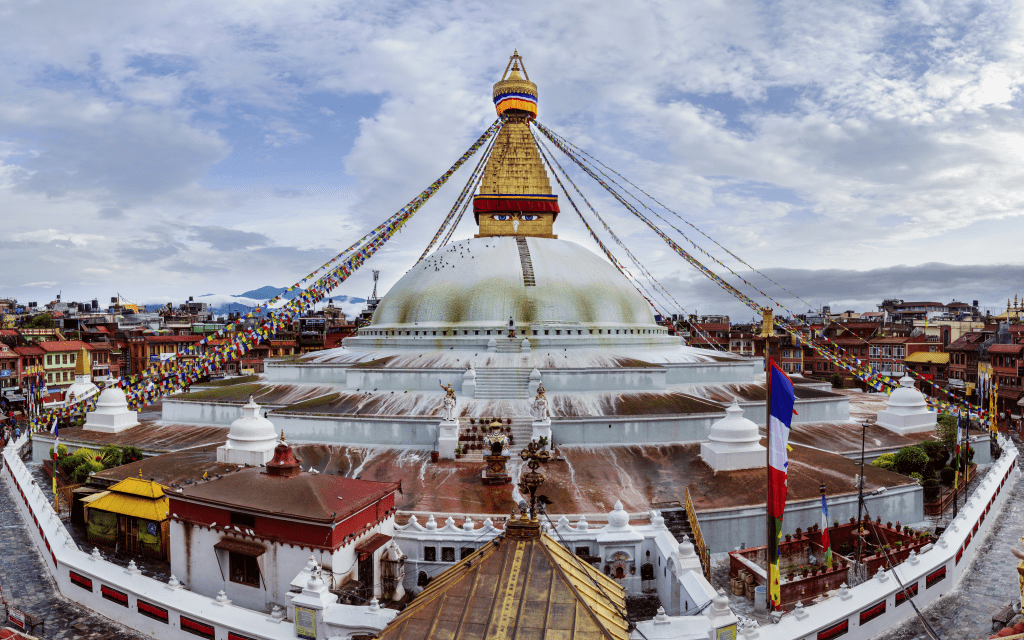
You may be thinking ‘Uncharted Thoughts, isn’t this temple just the same as the Monkey Temple. Why should we visit two of the same temples, the mountains are calling and I only have limited time in Nepal’.
It is the largest Buddhist temple in Nepal, and one of the most notable in the world. This Stupa is located in a Tamang district in Kathmandu, in the North East. The Tamang are an ethnic group of Tibetan and Burmese people, who have settled in Nepal after the annexation of Tibet by China.
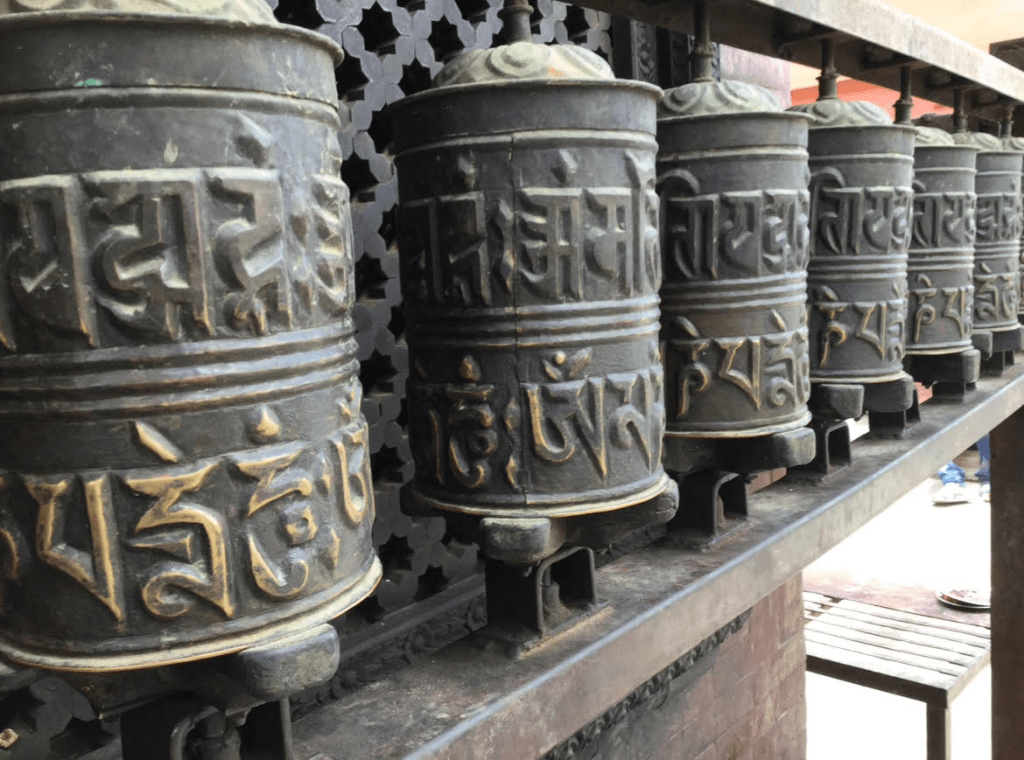
With the colossal dome over head, the flattering pray flags, the incense and squeaking of pray wheels, there is no wonder crowds and pilgrimages come from across the world to behold such a wonder. It is both a landmark of Buddha and its teaching, as well as a landmark that symbolises the plight of the Tibetan people and their contribution to Nepalese society.
There is a feel here. One that you get in many spiritual places. A sense of belonging, a sense of clarity and to some extent the feeling of being part of something larger than yourself. I am not religious, but here, in the presence of prayers and robes, I believe that there is something. Maybe not a God, maybe it’s just nature or the cosmic universe above. But I feel part of whatever than may be.
Kopan Monastery

This is no ordinary temple, or shrine. This is a school of Buddhism overlooking the Kathmandu valley. Although I have mentioned the fantastic views of the Monkey Temple, and the tranquillity and lure to adventure of the great Boudhanath Stupa. No atmosphere or view on this list can truly top this Monastery. Of course each have their charm, and I’d struggle to put this list in an order of beauty or wonder, but Kopan Monastery is a wonder in its own right.
The monastery was built on on a hill, some miles away from the chaotic streets of the city centre. It is surrounded by green vegetation and flanked by the foothills of the Himalayas. Red pillars hold up golden trimmed roof tops, the gardens are teeming with life, and shrines dot themselves in well groomed fields. Each prayer room is a splatter of colour and incense, as your senses are dulled by the peaceful surroundings they are awakened by the intense power of these holy rooms.
Unlike the other temples listed in this guide. This monasteries history is modern. Built by two Lama (monks) in the 60s as a place of learning for Western disciples of the Buddhist teachings. Here, you can pay to be caught the religion and its practice. Meditate and learn from Buddhist monks in a monastery built by those that escaped religious persecution.
Anyone interested in the courses provided here, please look at the official monastery website Here.
Namo Buddha

Namo Buddha is translated roughly to ‘Homage to Buddha’. Perched upon a lush green hill surrounded by prayer flags and laughter. Although I know very little when it comes to Buddha, I know by his smiling visage on passing merchandise stores that he’d have been proud of the homage given to him by this place of beauty.
Most of the temples, and places of worship mentioned within this article are situated within taxi range of the city centre, or if you are in need to stretch those hiking leg, they can be walking distance. The Namo Buddha however makes you work for its wonderous aura. Some 32 kilometres from Kathmandu, this hidden gem is by far the least visited by tourists.
Unless you truly are like us at Uncharted Thoughts, walking is NOT an option. The hike is roughly 7 and a half hours long, along busy road sides and through a maze of unseen streets by the average tourist.
Leaving the Ratna Bus Park in Kathmandu every 15/20 minuets is a bus that take one and a half hours. Costing under 100 rupees (about 50p or 70c).
Another way to get to this fantastic temple is by taxi, costly to the shoe-string traveller, but comfortable and stress free. Taking roughly an hour and ten minuets, at 2500 rupees (£14 or $16).
If you do decide that this magical landmark to the great Buddha is on your list. It would be in your interest to book accommodation here, spend the night away from the busy city. See the stars and experience village/town life in Nepal.
hangu Narayan
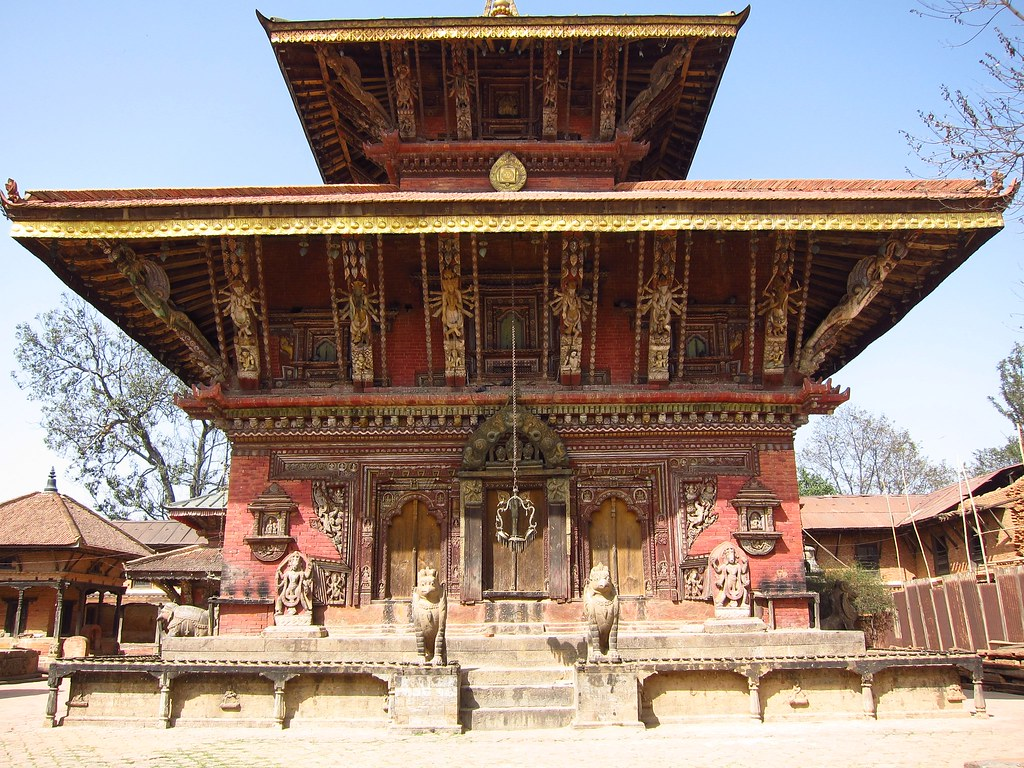
Perhaps the most remote, and possibly the least visited temple out of all those mentioned on this Uncharted Thoughts list. The Changu Narayan is still no doubt a wonder to behold. It may not be the grandest out of all the temple on this list, but it sure is a piece of history that needs to be explored.
Of course if you are here for the Instagram photographs and the Facebook posts to show off to your friends and family, go head, skip Changu Narayan. We here at Uncharted Thoughts however, like to see things a little more off the beaten track.
Changu Narayan IS the oldest Hindu temple in Kathmandu, or at least it is the oldest that is still in use. Changu Naraya isn’t just some 200 hundred year old brick temple. It isn’t even some 1000 year old shrine to a deity. It is rumoured to be over 1600 years old. Meaning that this shrine is older than England.
Of course there have been changes to the temple over the years, but with these changes come new layer of history waiting to be discovered.


Leave a Reply