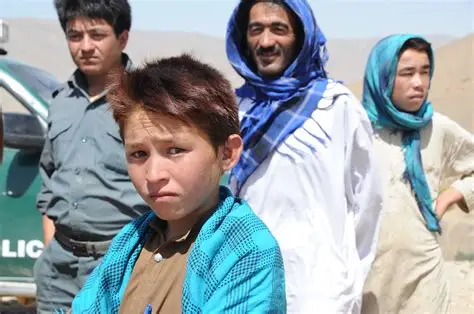
“We are victims because of our race.”
The low humming of the extractor fan whirled overhead—something I had not noticed before. Now, it seems deafeningly loud. A small break in the silence that had formed ten minutes into my interview with Arezo.
“Would you like to stop, take a break?” I asked, noticing the tears forming in her eyes.
Three days into my ten-day excursion in Pakistan, and tears were already becoming a symbol of those I interview.
“No, the world should know what we are suffering.”
Both Arezo and my translator, Bakhtawar, are Afghan refugees living in Pakistan. Both are women. Both are Hazara.
Outside this makeshift office, in the spare room of my AirBnb, four other women were patiently waiting. More tears, more horror.
Last year marked the four-year anniversary of the Taliban takeover of Afghanistan. While the rest of the world celebrated the 80th anniversary of VJ Day, Afghans across the world mourned the country they once had.
Since August 15th, 2021, the largely unrecognized government body known as the Taliban has stripped back twenty years of democratic progression, launching the country back into a zealot authoritarian regime. An old country with a new flag, its eleventh rendition in forty years.
The restrictions forced upon Afghanis by the Taliban, in a country of forty-plus million, have sparked international outrage.
United Nations Special Rapporteur Mr. Richard Bennett regards these restrictions as a “deep human rights crisis,” describing their treatment of women as “subhuman, not even second-class citizens.”
“Let me be clear” he continued “all communities, and individuals that resist the Taliban or are associated with the republic or even disagree with the Taliban are targeted. However, historically Hazara have been and continue to be specifically persecuted”.
“The Taliban have imposed at least 200 decrees targeting women and girls since their reemergence in 2021,” Dr. Niamatullah Ibrahimi, a senior researcher for The Initiative for Peacebuilding, said. “They have dismantled the rule of law to target women and minorities.”
While the systematic persecution of women in Afghanistan is well documented, and a crisis that is not to be ignored or overlooked, another hidden humanitarian crisis is unfolding under the surface: the genocide of the Hazara people. A genocide deeply rooted in the complicated and blood-stained tapestry of the country’s history.
Karimi, chairman of the Hazara Council of Great Britain remarks on this ongoing crisis by stating “The Hazaras, as one of the largest ethnic minorities have faced intensified persecution which include targeted attacks, land seizures, forced evictions and cultural exclusion. Hazara women and girls face overlapping discrimination because of their ethnicity, religion and gender”.
Although the origin of the Hazara people is largely unknown, it is often speculated that they are the descendants of Genghis Khan and his military horde that passed through Afghanistan on his bloody conquest of Asia, some eight hundred years ago. Some Hazara agree, others consider it a rumor imposed upon them to erase any form of legitimacy as true Afghanis—another attempt from the Taliban to eradicate them from their lands and livelihoods.
As there are in all communities there is dispute about where Hazaras originate from, however, there is almost unanimous agreement on where their people have been and what crimes have been inflicted upon them.
“Hazara is an ethnic community in Afghanistan. We have always been in a dangerous situation. Before the invasion in 2001, the Taliban hunted us, and now we are hunted again,” Bakhtawar said, as we sat down for our interivew. “Most Hazara are Shia Muslims. The Taliban think the Shia are not real Muslims—they are trying to kill us for this. We are always afraid to tell Pashtun people we are Shia because most of the Taliban are Pashtun, they are Sunni, we are Shia”.
The Taliban are internationally recognized as a Sunni Islamic extremists’ group. The exact population of Shia Muslims in Afghanistan is unknown. Statistics from the US department of state suggest that roughly 89% of the population are Sunni, leaving the minority percentage as Shia, of which 90% are Hazara.
The newly formed ‘Propagation of Virtue and Prevention of Vice’, a Taliban KGB or Nazi Gestapo style of policing, has become a great threat to minorities and their religious freedoms. The US Commission on International Religious Freedom recently reported that “The new morality law reinforces a systematic and overt erasure of religious freedom in Afghanistan and facilitates the ongoing repression of religious minorities.”
While this new policing impacts everyone living under Taliban rule, women being the subject of much of its enforcement, minorities are disproportionately affected by these new, inhuman laws.
The ‘Laws’ enforce such rules as; ‘A woman should cover her face to prevent some fitna [social disorder or chaos, which can itself facilitate sin] taking place.’ That; it is forbidden for unrelated men to look at a woman’s body or face. Likewise, women are not allowed to look at strange men’, or ‘The sound of a woman’s voice or any music emanating from any gathering or from the home’.
It also bans by law the predominantly Shia celebration of Shab-e Yalda and Nawruz. Labeling it as ‘without Islamic foundations’.
Bakhtawar was the first of many interviews I had planned in Pakistan. She was also my translator and guide into the often dark and bleak world of Afghan refugees.
We met online. Her activism with the women’s rights group Afghan Women’s Justice Movement (AWJM) is loud and inspiring, grabbing my attention and admiration.
The reception of the Hotel was hot, one fan pointed at the lone, bored security guard. Bakhtawar greeted me with a smile, a hand on her heart and a softly spoken “As Salaam Alaikum” (Peace be upon you).
“Wa-Alaikum Salam” (Peace also with you) I replied. Instinctively I shot out my right hand, only to retract it quickly hoping she did not notice.
She was well dressed, though not as I expected. Her hair was uncovered; a thin, almost transparent white scarf lay around her neck. A long-sleeved white shirt, a pair of jeans (a recently banned item of clothing by the Taliban, jeans that led to one of her arrests by the Taliban months prior) and white sneakers.
She held herself gracefully, though a clear weight was upon her small framed shoulders.
It wasn’t until later in the week I realize that her choice in clothing was as much a protest to Taliban as her work with AWJM. A show of resistance, her freedom worn on her sleeve for all to see. Each item of clothing acts as a thorn in the side of her countries oppressors.
“I try and look good so no one can see the poor situation I am in”. She told me in a taxi ride later in the week. “I live in a bad condition, but I want my family to see me strong”.
Batkhawar would shake my hand, with every meeting and every farewell. She is defiant, she is a feminist, and a woman of Afghanistan.
We walked slowly to the hotel room, she gave me a bouquet of yellow sunflowers, and a traditional Hazara Hijab for my partner.
“You shouldn’t have” I said gratefully, “We are Afghani, we are hospitable” she replied proudly. A generosity I experienced throughout my time in Pakistan.
Batkhawar was born into a large Shia Muslim family in Bamiyan, a historically rich province of Afghanistan. Famous for the two towering Buddhist statues that once overlooked an agriculturally rich valley. Statues that were destroyed by the Taliban in 2001 “so that no one can worship or respect them in the future”. Bamiyan, like much of Afghanistan has seen its fair share of horrors and persecution from the Taliban.
“When I was not even a year old” She began “They [Taliban] came into our village. The people ran into the mountains. They asked for the men of the village so they could kill them, in an attempt to kill our generation. My mother and my father wanted to run to the mountains, they were so tired, they left me behind a big stone, so if the Taliban found them, instead of killing all three of us, I might survive”.
“After some time, my aunt fled to the mountains also, she saw a me next to the stone. She picked me up and fled further up the mountain to safety”.
“They [Taliban] are systematically trying to erase the Hazara people. Before the invasion of 2001, they attacked the people—even the children, even the women. There was no forgiveness. Our crime? We were Hazara.”
“When we were young, we were afraid to tell Pashtun people that we are Hazara. When we were doing something bad for example, our families would tell us to be quiet, or the Pashtuns will hear you. When I grew up, I learnt that this was not true. I am Hazara, I belong to Afghanistan, the Pashtun, they also belong to Afghanistan”.
Bakhtawar paused, her eyes looking up to the ceiling above, her hands tightly wrapped around each other. She recalls how she was attending her studies in Kabul in 2021, when she witnessed a Pashtun man walk into a local educational center in Dasht-e-Barchi—a largely Hazara-populated area—and set off a suicide bomb, killing and injuring many of her classmates and close friends.
“He had so much material [explosives], but it failed to [fully] explode. If he had managed to detonate all the material, today I would not be here. There were at least five kilograms of material that didn’t explode.
“I was the one—I saw my classmates that were killed. All of them wanted to be a doctor or an engineer. But twelve days before the exam, they were killed. I saw how they kill us, how they hurt us, the pain they cause. I will not forgive this. I will not forget this.”
The genocidal tactics of the Taliban, although still bloody and discriminatory towards the Hazara, have changed. Where once suicide attacks reigned over Hazara communities, now systematic rape and forced marriages threaten to liquidate them into a Pashtun-dominant population.
“The Taliban would come to our village and ask for the men of each family so that they could kill them.”
The killing of the patriarch of the family causes economic pressure on Hazara women. Without a head patriarch, poverty creeps into the home silently and quickly. Due to Taliban restrictions on women working, they are forced to find stability through marriage—in a Pashtun-dominated land, where men choose their wives, and women obey without question or else be punished.
“You have to get married. Most of the girls are not interested in forced marriage, but because of the conditions they are in, they haven’t any choice.”
Although there has not been an accurate census in Afghanistan since before the turn of the millennium. Be it through persecution or displacement, Hazara communities are reported to have dramatically decreased since the 1900s.
The safety of Hazara women is never certain.
Farida was walking home from a friend’s house in Afghanistan’s capital city of Kabul, the sun was hidden behind a thin vail of clouds. It was April.
Since she is no longer allowed to work her job in finance by law, Farida’s only task was to collect groceries and return straight home. She wore proper Islamic dress, in accordance with the new laws imposed by the Propagation of Virtue and Prevention of Vice. Her Hijab was not tight to her body, her mask was pulled up to her eyes, her ankles and hands were covered.
As she turned the dusty corner of her street, up ahead a large ‘Ranger’ vehicle was parked. Men dressed in camouflage stood in the road, their heads donned with white head scarfs. They were stopping vehicles, checking driver’s identification cards and questioning anyone who may seem suspicious and acting against the new laws imposed by the Taliban. Which Included women drivers, or women without the company of a male guardian. Strapped to their bodies, semi-automatic rifles and ammunition belts.
Fear shot through Farida like an electric shock. She froze momentarily. If she turned back now, they’d spot her and know she was afraid and chase after her. If she carries on, they’ll interrogator her and ask for her ID. She moved forwards bravely, her head lowered.
These were no mere Taliban members; she could tell by their dressage. They were the Badri Unit, a special force of Taliban soldiers trained to fight, to kill.
Armed with guns and a patriarchal privilege unburdened by any legal obligations, at least any with repercussions that would see them implemented for any crimes they should commit upon a citizen or ‘criminal’.
“I was terrified—not just of their presence, but of what might happen if they recognized me as a girl who has participated in protests in Kabul. I genuinely believed that if they identified me as someone who had spoken out, they might kill me right there on the spot”.
Some months prior, Farida participated in a women’s rights protest in central Kabul. Her voice was loud, brave and righteous. She, along with many others, was arrested, her name notified to Taliban officials and imprisoned.
Farida’s attempt to blend in and become invisible was futile. They noticed her. A lone girl walking, without a male guardian. This is not acceptable. Like sharks the Taliban closed in. Passing cars looked on as a small, frightened woman was surrounded by ten men, weapons in hand.
“Where is your man” they shouted, “Where is your man, your brother, your father, your husband?” Some barked harsh insults at her “whore” “prostitute”.
“At that time, I was single. I explained to them that my home was very close—just a few steps away from their checkpoint—but they refused to let me pass. They said I would not be allowed to return home unless my brother came to pick me up. They gave me two options: either wait for my brother to arrive or go with them to the police station”.
Now, in front of me, under the humming fan, Farida’s dark eyes glazed over. I could almost feel her consciousness pull away from our conversation. What horrors still resided? What evils does she battle even now, miles away?
“And if your brother did not come? What would have happened to you at the police station” I asked.
The trance was broken; she was pulled back to this fragile safety. “If my brother wasn’t there?” She repeated “they would have forced me to marry someone or take me for themselves. Or If the Taliban had identified me at the station—which was highly likely—they would have immediately arrested me as a protester, transferred me to prison, and I would have faced a serious risk of torture, physical and psychological abuse, and maybe even prolonged detention”.
Immediately following the protests in 2023, Farida was arrested and thrown into a Taliban cell. She was subjected to torture, and humiliation at the hands of her tyrannical government. Perhaps this is where she goes, when the silence creeps in?
“I was arrested for participating in civil protests against the oppression and restrictions imposed by the Taliban. During my detention, I was imprisoned and tortured.
“The torture I endured wasn’t just inflicted on my body—it carved deep wounds into my spirit, my dignity, and my sense of being human. I was tortured excessively, to the point where I lost all sense of time, of day and night. Every moment was filled with humiliation, verbal abuse, psychological torment, and physical pain, blended together in a way that stripped me of my very humanity.
“I do not say this to seek pity, but to get justice, to speak the truth aloud. What happened to me must be known—must be heard—so that no other human being will ever have to endure such agony again.”
This subjection to torture was a dreadful, common theme throughout the interviews with minority groups. Each conversation that highlighted the arrest of a person, I peeked through a window into a pit of darkness and despair. A land occupied by a club no one wants membership for, but it is thrusted upon them by armed, zealot men.
Another interviewee recalls how “They beat me, my sisters, and my brother without any crime, and kept us hungry for days—only because they believed that all protests against them were led by Hazara girls”.
She resighted how one of her Taliban captors said “You Hazara girls are not even worth ten Afghanis to be spent on, you are not even worth a single bullet of ours. You should be killed like dogs so that it becomes a lesson for your future generations.”
Months later Taliban officials had made several threats to Farida and her family. Thankfully, she escaped each attempt at arrest.
“The Taliban came directly to my home, and they asked my brother ‘can you guarantee that she [Farida] will no longer work [with women’s rights groups] after this?’. Fortunately, I was not at home.”
Farida fled Kabul soon after this incident, she moved from town to town, staying with friends and family until she finally had her Pakistan VISA granted. It was granted for six months and was later extended for an additional six months, marking a year of safety. Now, Farida has just reached the 15-month mark. Her Visa expired. Her risk of deportation increasing, in turn, the risk of Taliban retribution and punishment an ever-lingering threat.
Pakistan, as well as Iran have begun mass deportation of Afghani refugees, adding another layer to the worries of Afghan refugees. While this is being condemned internationally, the deportations processes have only intensified these last two months.
“The horror and pain I experienced in Afghanistan were so unbearable and terrifying that I never want to return to my country. That is why, despite all the hardships and difficulties, I endure life in Pakistan—but I do not want to witness, once again, the daily death and terror my family suffered under Taliban rule”. One interviewee commented.
Another explained how “returning to Afghanistan would be worse than death”.
The threat to the lives of families were a common tactic used by the Taliban to subdue the Afghan people. Often these threats turn violent, and deadly, especially when minority communities are involved.
Nadia’s, voice is a powerful one, especially in the Afghans women’s rights movement. Although young, she has grown to be a matriarch to those around her.
She was born in the early 2000s, just after the collapse of the Taliban. American troops battled in Helmand and across the country as her cries rang out from inside her home for the first time, there were no hospitals in Ghazni then. Although the clatter of gunfire was common, she was welcomed into the world with the spectacular view.
The Ghazni desert plateau is undeniably beautiful. A gigantic valley that supports the flow of the Tarnak river which descend from high up in Hindukush, finding its resting place in the Helmand Lake region, bordering Iran. From aerial photographs, you can watch as the river carves its way through the desert, leaving a trail of lush vegetation in its wake. The lifeline of civilisation. To the North, the mountains swallow the skyline like gigantic sandstone blocks, structures of benevolent beauty.
Systemic genocide is slow and calculated process. While suicide bombings and mass shootings are affective in spreading fear, it would take the Taliban millions of dollars of resources to execute a ‘final solution’ on these small but scattered ethnic communities throughout Afghanistan. Additionally, international intervention could prevent them from succeeding in their sickening goal. Therefore, their tactics have changed, while killings and torture are still prominent, displacement, restrictions on rights, starvation and liquidation have become the prime goal in their attempts to destroy Hazara’s in turn, destroying the Shia community within its highjacked boarders.
Redirection of aid intended for Hazara communities, enforced by the Taliban, has already been noted by the UN and other humanitarian groups across the world. Minority Rights Group (MRG) said “In several districts, aid collected by Hazara communities is diverted by local authorities and channeled to Taliban supporters” rather than to their intended destinations.
Nadia holds a quiet power, hers is still but honest. She, like most interviewees was Hazara, and her family has suffered immensely at the hands of the Taliban.
Her father was their towns representative, a man well respected and honoured by the largely Hazara based community. Working with a construction company, he built schools, hospitals and other developments across the province.
“With his killing, our lives changed forever and became filled with hardship, pain, and fear. My father was brutally killed for being Hazara and for striving for progress”.
Although justice was initially served, Nadia’s father’s murderers were jailed and sentenced to twenty years in prison, under the watchful supervision of America and its allies. Following Taliban reoccupation, her “father’s killers were released from prison and our lives in Afghanistan turned into hell”.
The silence continued for a while longer as Arezo composed herself gracefully, although she was crying, she did not make a noise, just the humming fan continued above.
It took a moment before she looked up, her eyes red, but determined.
“Let’s talk about football” I said, a somewhat feeble attempt to protect Arezo from any further emotional harm. As though my words could break a Hazara, how naive of me, she, them were stronger than anyone I had ever met.
Arezo was, or more accurately is, one of Afghans most talented football players. She played for the Afghan woman’s National team since she was fourteen, bringing home glory and honor for a country she was once so proud to represent in international tournaments as well.
“Football was my first and last love” she smiled, her high prominent Hazara cheek bones flashing “from the moment I knew this was my left hand and this was my right, from that moment I was in love with football.
“My first international trip was to India, and we returned accomplished. I had big dreams, to travel the world, to win medals for Afghanistan and to be an inspiration to underprivileged girls across the world.
“When I was a child, I played football with the boys. While girls were playing with dolls, I was not like [them]; I loved to have my own ball and play outside”
“My father encouraged me. When I played in India, he told me, ‘You are not just Arezo, your team is not just a team –you are ambassadors of Afghanistan. You can show the world how powerful we are.
Arezo’s smile was contagious, the room only moments ago doused in the horrors of extremism, now alite with the passion that comes with the beautiful game. But here, one hundred miles away from the border from a land they once recognized as home, smiles and laughter do not linger, they fade quickly.
“When the Taliban banned sports for us, I was heartbroken. Even mentioning football became a crime for girls”.
Arezo was nineteen when the Taliban came to Kabul, with them the restrictions that would crush her dreams and the threats of violence that would install fear.
“I received death threatening phone calls, warning that if I continued my activities [football] I would be killed. I was insulted and humiliated on the street when I left my house without a male guardian. Attackers would shout “unveiled girl” and hit me on the hands and feet with a whip.
“The threats of rape, and death from the Taliban and their collaborators were constant. These were not just verbal threats, but physical, and psychological violence had become a part of my daily life”.
To understand the gravity of the oppression held within Afghanistan outside of the Hazara community, I conducted four questions repeated in almost every interview. The questions were intended to spark a consensus among the interviewees and see if there were any opposing views on rights in Afghanistan under Taliban rule. There were none. Each interview only cemented further evidence of the unbearable oppression inflicted upon the people of Afghanistan.
Is a woman enforced by law to wear a Burqa?
“Yes”. – Wajiha
Can a person be Christian, Buddhist or without religion?
“No, If the Taliban knew about them, they would imprison them, torture them, and kill them” – Darya
Can a man, or a woman be homosexual?
“The ones who are homosexual, they would be tortured and killed.” – Darya
Can a woman divorce their husband?
“No, but a man can sometimes divorce his wife” – Bakhtawar
Can a woman choose who she wants to marry?
“In Afghanistan, the idea of marriage for love is very foreign. Most marry for money or for tribal connections” – Bakhtawar
A growing sense of helplessness hovers over each interview, a dark cloud of despair that clings to every word. A certain bitterness and disdain also crept into conversation, especially when the conversation turns to the United Nations.
“The United Nations only does what America wants them to do. If they wanted to help, then they would have” Darya remarks.
“No, I get no support from the United Nation’s or from anyone else” Arezo addressed when asked if she has any additional support from charities or other organizations.
“The UN, they are not doing anything. They know what is going on in Afghanistan, but they are keeping their silence” Bakhtawar said.
Even Mr Bennett suggests that the UN and international community is not entirely sure on how to tackle to Taliban, stating that “There isn’t a united internation plan, I think that is something that is missing”.
This frustration can be reflected in an interview with the Hazara Council of Great Britain, Special Rapporteur Mr. Richard Bennett remarks, without prompt “In practice, unfortunately, I get only a fraction of the resources the United Nations has voted to give me. Thats means, it is becoming increasingly difficult for me to discharge my duties. This has been the case for several years, and has become even more critical in recent months, due to the financial crisis at the UN.
“The ICC have issued two arrest warrants for Taliban leaders without having access to the country, so physical access doesn’t stop us doing our work. What impedes it most is not having resources”.
While the UN have been vocal on their condemnation of the Taliban, it powers stop at the border of any nation. It has failed to stop mass deportation from Iran and Pakistan. It has failed to provide aid to minority communities, failed to prevent the recognition of the Taliban by Russia, and support those that have fled and seek financial or resrouce support.
This sense of frustration and abandonment is ripe within the Afghan refugee community, especially within the minority groups.
But these are Hazara, a people that have lived with the burden of persecution for generations. They are not so easily defeated, even by the evil of totalitarianism and the failures of bureaucratic organizations.
It was in my last round of interviews, after almost twenty hours of convers, Darya asked in good, broken English “Jack, I would like to invite you to have a proper Afghan meal with us and our homes”.
“I would be honored, thank you so much for the invitation” my reply was sincea, but I knew there was still much work to be done before leaving Pakistan. At the time, I still had three interviews in Attock, an interview with Asia’s first female blind archer, a trip to Marree hosted by said archers’ family and start organizing and transcribing the interviews already conducted.
“Please, let me know when we can host you” Darya smiled.
It was late when me and Bakhtawar arrived by idrive (Pakistan’s Uber). The sun dipped low, projecting an orange hued smog across the cityscape. This was a poor neighbourhood. The roads were rough, the houses darkened by lack of electricity, some homes were half built a concrete shell wrapped in wooden scaffolding.
Outside their flat, men sat on plastic stools playing cards. Children ran riot, playing ball games, there was a sense of peace.
As we exited the taxi, eyes gravitated to my presence. I nodded, awkwardly.
Darya met us at the door; her brother accompanied her.
“As Salaam Alaikum”.
“Wa-Alaikum Salam”.
I was led upstairs concrete steps. Darya leading, me and Bakhtawar falling in behind, her brother at the rear.
The flat was small, undecorated and somewhat dilapidated, yet under Hazara occupation, the flat was made a home. It didn’t feel like a temporary set up, it was a home, just one perhaps unsuitable for most living standards. The walls were washed white, there was no carped or flooring, besides the wooden planks left by the builders, which had been covered by a large rug (not a real Afghani rug, just a machine made one). The kitchen had a cooker, stove and low cupboards. I didn’t see the bedroom. Yet, it was explained to me that the room we dined in was the bedroom for two of the children, there were no beds. Just cushions on an old rug.
In stark contrast, laid out before me, a grand plater of food. A gigantic pile of Pulao, a rice dish cooked with large chunks of deliciously tender lamb, cooked amongst herbs and spices and topped with raisins and carrots. The famous and delisious Afghan Naan, and a plat of potato Bolani.
It was here, sitting on the floor of some flat in an undisclosed district in Islamabad, I saw the strength and bravery of the Hazara people. As we conversed over deliciously prepared Afghan food, you can see in the eyes of these women there is hope, there is community, friendship and a human spirt shaken but undeterred from its goal of equality.
Yet, between conversation, when there are breaks or pauses between mouthfuls of Naan-e-Afghani pilled with Palao, doubt, and desperation creeps in like a sickness. They pull their children closer, gaze outside vacant only for a moment from the here and the now. Strong, and brave beyond measure are the Hazara, but humans, neither the less.
There is an overwhelming sense of community between these women, a common struggle, a common goal to be recognized as human beings. Although most of them knew each other prior to my arrival, be it through human rights organizations, from within Afghanistan or crossing each other’s paths in this shared struggle. Those that were once strangers were bound by this struggle. A universal sisterhood, bound by a life of oppression and torture.
Each joke told, each smile and tear shed, each song sung and the donning of jeans was a liberation, a middle finger to the monsters across the border. Each tear, the release of trauma, one that does not define them, but made them the strong women they are today.
“Those hard times made us strong, made us who we are. As a human being, we have to raise our voices” Bakhtawar said “We are Hazara, we belong to Afghanistan”
It was hard to sit here, besides these brave women, and their young children. Knowing that at any moment, the Pakistani police could bash down the door and send them one hundred miles West to their doom. That in theory, these women could be dead, or worse, in the coming months.

 Uncharted Thoughts.
Leave a comment