It is hard to look at statistics and come to terms with the fact that things are going to get a lot worse before they get better. As an amateur historian and trained journalist, looking at the numbers is often the most disturbing part of our job.
Since the 1970s, Afghanistan has been in an constant state of conflict—whether against Soviet forces from the north, tribal warfare supported by the British or Saudi Arabia, or against NATO at the turn of the millennium.
Now, the land has been hijacked by the Taliban, a group of Islamic extremists who consistently oppress their people.
The history of Afghanistan is well documented—from Alexander of Macedon, to the great Genghis Khan, to the NATO invasion of 2001. Layers upon layers of historical narratives have allowed us to understand why, and how, Afghanistan has arrived at this dreadful position.
Although the past is scary, and at times impossible to imagine, it is the future of Afghanistan that I fear for the most.
With limited water supplies, poorly maintained infrastructure, and only 12% of the landmass suitable for agriculture, the future of this country looks bleak.
Let’s take a look at some statistics:
Afghanistan has a population of 41 million people, 23 million of whom are requiring humanitarian aid (Concern). This number is predicted to increase by 2 million due to the mass deportation of refugees from Iran and Pakistan (BBC).
Kabul, the capital city of Afghanistan—home to some six million people and headquarters to many of the Taliban’s operations—is set to run out of water by 2030 (Al Jazeera).
The humanitarian funding required to combat mass poverty and other crises in Afghanistan amounts to $3.04 billion (Concern).
The country is highlighted as one of the most dangerous on Earth in terms of natural disasters. According to its disaster risk profile, “Afghanistan takes second place—only surpassed by Haiti—in terms of the number of fatalities from natural disasters.” With global warming and rapid environmental change, these disasters are expected to increase in both frequency and severity (Global Conflict Tracker).
Although there is a perceived sense of security under Taliban control, civil unrest and terror attacks from IS-K and other militant groups remain common. These tribal and domestic terror attacks could result in another war within Afghanistan’s borders (U.S. Department of State).
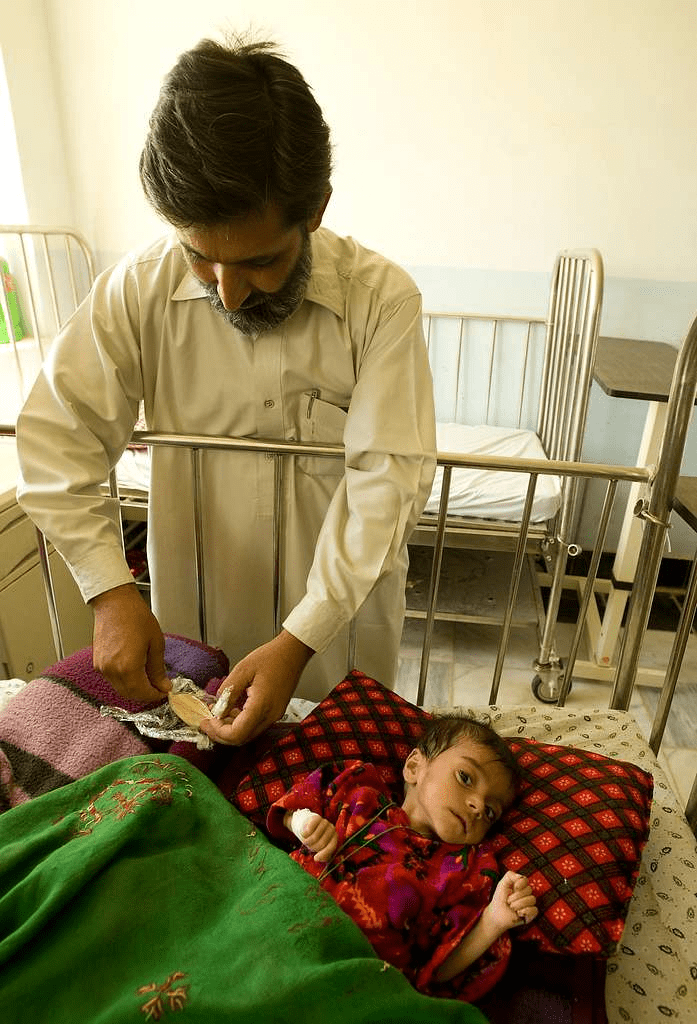
Food insecurity is on the rise. According to the well-researched book Taliban: The Power of Militant Islam in Afghanistan and Beyond, only 12% of the Afghan landmass can support agriculture. This year (2025), it is reported that “3.5 million children under five, and 1.2 million pregnant and breastfeeding mothers, will become malnourished and require life-saving treatment” (WFP).
In 2023, Afghanistan recorded one of the worst maternal mortality rates in the world (CIA), with nearly 550 women dying from childbirth per 100,000 successful births.
This tragic statistic becomes even more shocking when examining child mortality rates, which sit at a dreadful 5.6% (Our World in Data).
Education is scarce in Afghanistan, as it is common in countries heavily reliant on child labour. Only 37% of the population is literate, placing Afghanistan among the ten least literate countries globally (World Population Review).
The Taliban, rightly, are not recognised by any country except Russia (as of 2025), due to the treatment of their population and their numerous human rights violations. This lack of recognition blocks the Taliban from receiving international aid, trade, or investment (The Indian Express).
It is hard to see how the people of Afghanistan win in this tragic story. There appear to be only two options regarding the country’s future.
Either Aristotle was right when he preached that “Poverty is the parent of crime and revolution,” and the continuation of Afghanistan’s decline will provoke another conflict—one in which peace, prosperity, and democracy have another chance to succeed. Or the Taliban will grow stronger through limited international support, dooming Afghanistan to another decade of oppression.
NATO and America’s decision to leave Afghanistan was a tragic catastrophe that will ripple through South Asia for many years to come. While billions were spent yearly by NATO to maintain peace in Afghanistan after the Taliban’s withdrawal into the Hindu Kush, that money was also helped rebuild a country that had been at war for the better part of fifty years.
Now, with each passing year, the billions that were once spent on defence and reconstruction will instead be allocated to aid and resettlement. America has passed the coin, from defence and justice to aid and mass migration, and the consequences of this shift will be felt by people, places, and nations alike.
There is another door for Afghanistan, one that could bring peace, justice, economic security, and prosperity to the nation.
“We cannot always build the future for our youth, but we can build our youth for the future.”
— Franklin D. Roosevelt
Education is the way forward. With mass migration and educational opportunities for Afghan refugees in some countries, there is a chance that revolution could come from within—from the youth and the educated. The future for the people of Afghanistan looks bleak, but doors are still available to those who are willing to sacrifice and fight for them.
 Uncharted Thoughts.
Leave a comment