
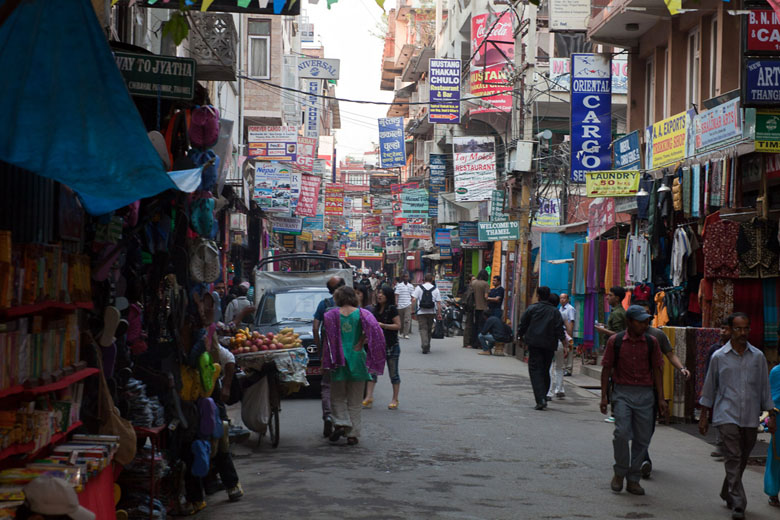
Walking the narrow busy streets of Kathmandu is like waking up in a gun slinging, treasure hunting, Harrison Ford movie from the 80s. The beeping of passing motorbikes, the cluttered stores, the smell of incense and the maze of tangled telephone wire transports you to a time and place far beyond the reaches of the Western world.
People smile as you pass them, shop keepers greet you graciously with the reoccurring phrase ‘namaste’ (the divine in me honours the divine in you). The smog creates an aura that is both charming and unsettling. You can just imagine running across the roof tops in a high stake adventure, on the way to the Himalayan mountains to collect the last treasure from a lost time.
So, you survived the bumpy runway of the Kathmandu airport, grabbed a taxi from frantic drivers waiting at airport gates and unpacked at your hostel/hotel. Now it’s time to explore the great city of Kathmandu… But where do you start?
Here at Uncharted Thoughts, we have you covered, but if you are looking for a specific topic click the HERE button at the end of each listing:
- Exploring the ancient temples of Kathmandu HERE
- Navigating the bustling shops of Nepal’s capital markets HERE
- Exotic food stops, to take your tongue on a adrenaline filled journey HERE
- Magical Himalayan city hikes HERE
- Walking among the Garden of Dreams HERE
- Palace of kumari – The chamber of a living Goddess HERE
- Travellers guide to Kathmandu Here
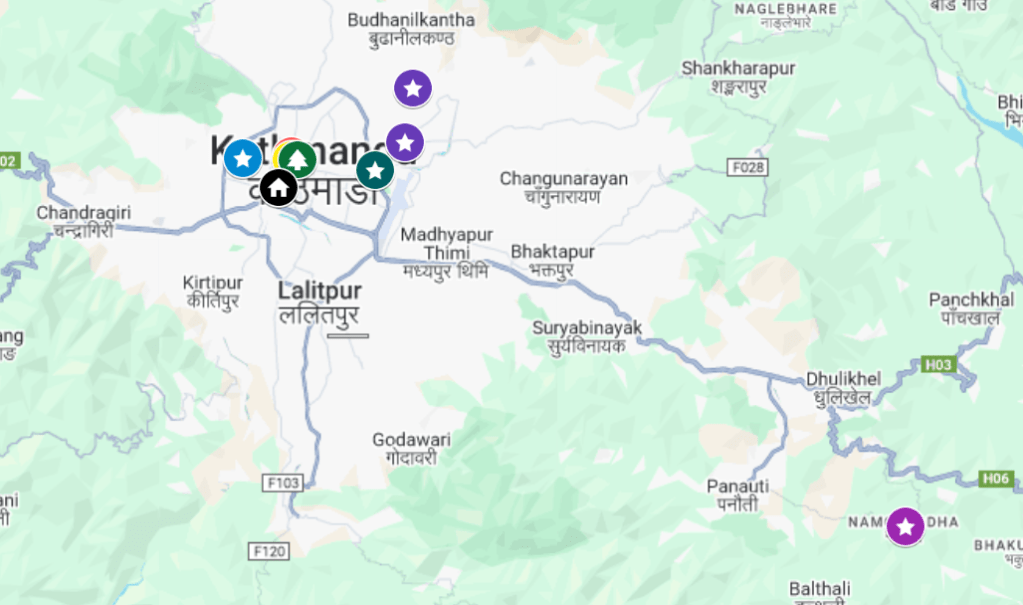
Interactive map below.
Explore the ancient temples of Kathmandu.
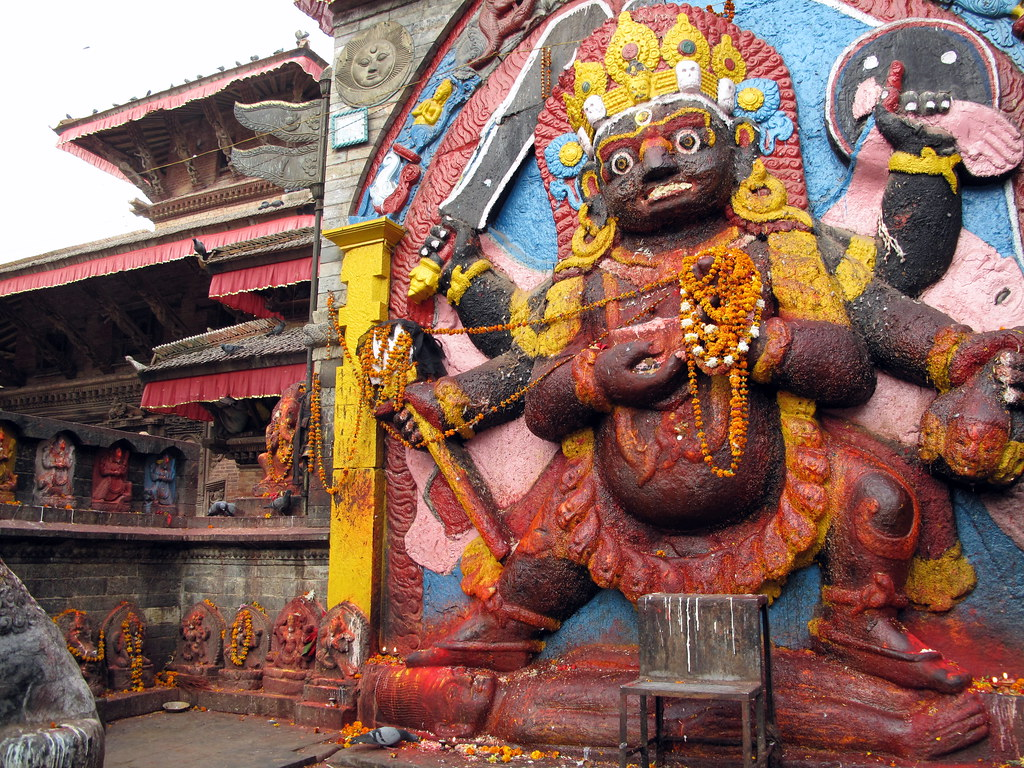
Kathmandu has many names, ‘the great city’, ‘Yen’ and more recently ‘The city of Temples’. Some even say it is the legendary mystery city known as Shambala, if you believe in such tales of course. You could go an entire lifetime in this city and not visit every temple. Sir Kirkpatrick, a British officer who took a diplomatic mission to Nepal in the 1790s relayed to his peers upon his return how “Kathmandu is a place with more temples than houses, more gods and goddesses than people and more festivals than the number of days in a year”.
With an estimation of over 3000 temples spread across a massive built up valley, there is adventure to be had in every corner. This list will have a mixture of popular sights that are visited by hundreds and thousands of people a year, to the more obscure and ‘Uncharted’.
Let this be your guide to which are the best Temples to visit for adventurers and vagabonds such as yourselves.
Temple list:
- Swoyambhu Mahachaitya (Monkey Temple)
- Pashupatinath Temple
- Boudhanath Stupa
- Kopan Monastery
- Namo Buddha
Swoyambhu Mahachaitya (the monkey Temple)
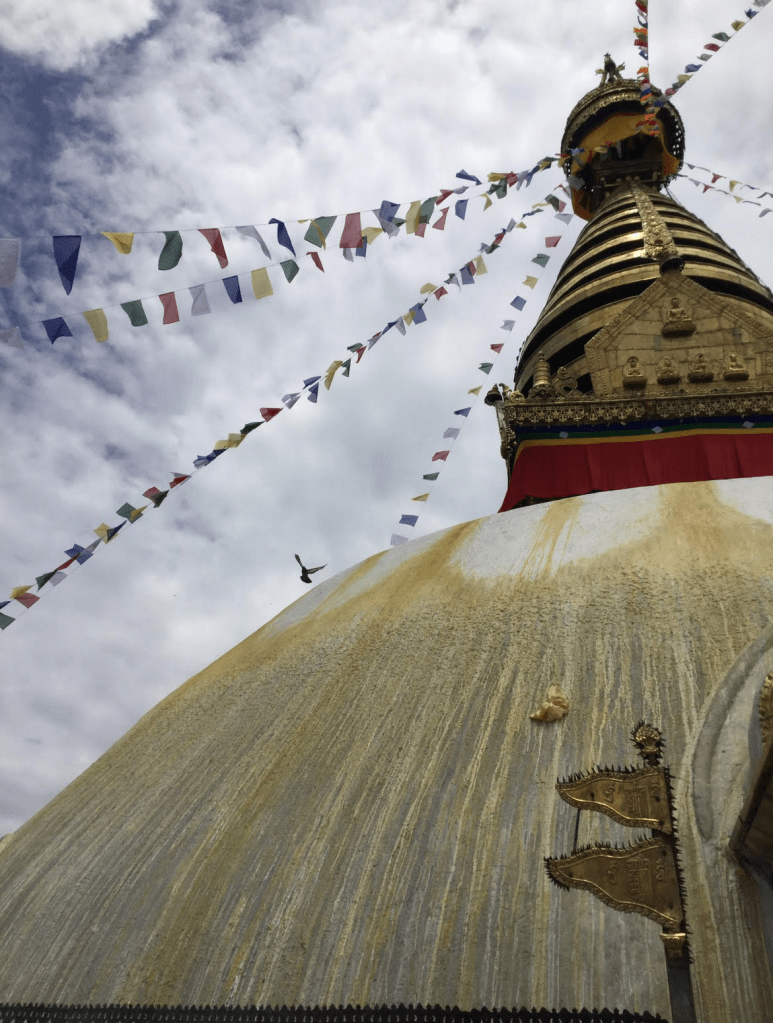
Possibly the most iconic temple, and by far the most visited by tourists is the Swoyambhu Mahachaitya, otherwise known as ‘The Monkey Temple’. This gigantic sacred structure has been the focal point of Kathmandu sightseeing for years.
High upon a hillside, in the Western part of Kathmandu stands a white dome, adorned with a golden spire, draped in colourful prayer flags that flap frantically in the cool mountainous breeze.
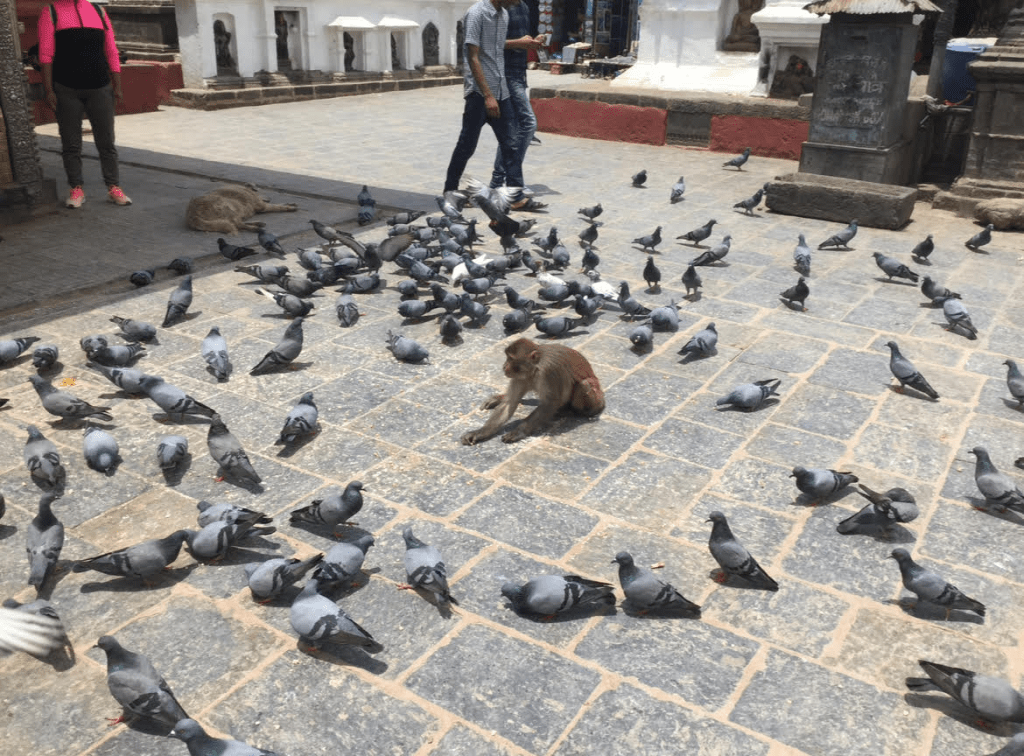
Swoyambhu Mahachaitya’s appropriately nickname, The Monkey Temple, has hundreds of ‘temple monkeys’ or more scientifically named, the Rhesus macaque. These pinked skinned, grey furred robust primates play, live, eat, sleep and cause mayhem in this holy space. Playful in their nature, these beautiful mischievous creatures sunbathe under the blue skies, away from the beeping busy traffic and live in peace and safety.
Be advised these monkeys are Holy, and must not be touched.
Thought to be made from the head lice of Manjushree, a Bodhisattva (a person on the way to enlightenment), these monkeys are just half of the attraction.
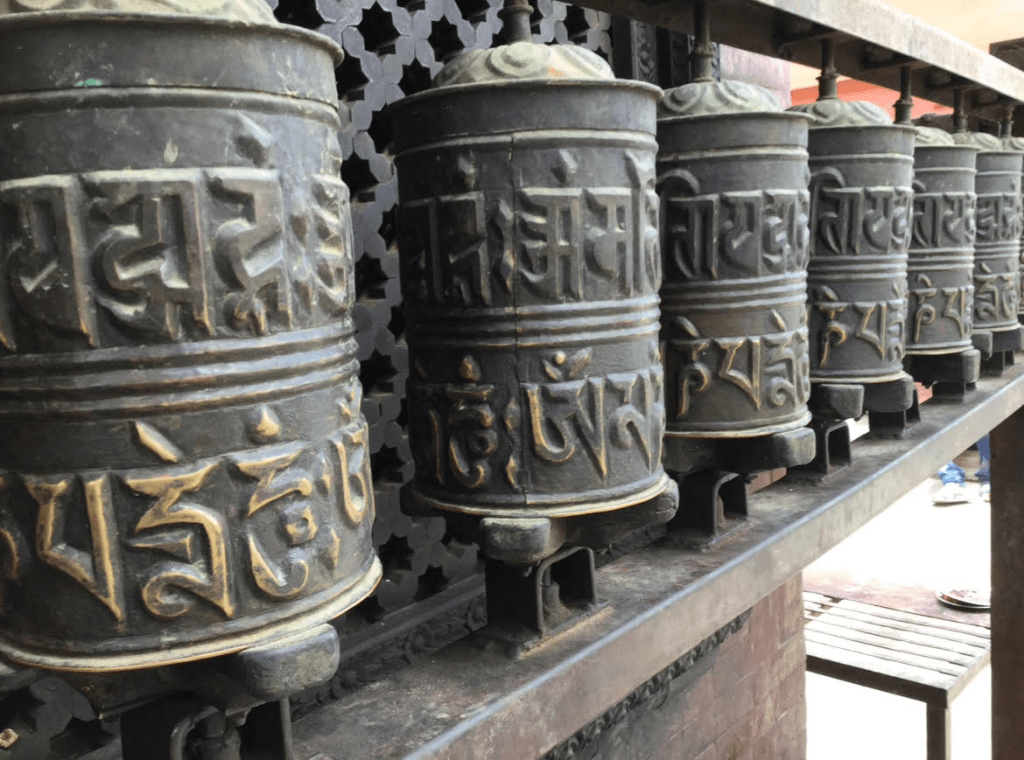
While visiting, you ascend steep steps that pass under the canopy of lush trees. Walking amongst Buddhist monks from across Asia in their red-ish dress robes and bald heads, Hindu pilgrims that have travelled from India by bus and of course tourists from all walks of life. You leave behind the chaos of the city and find a monument of peace and tranquillity.
On a clear day, when the smog has settled you can see across the city. The rooftops of thousands of homes sprawl across the valley. It looks to most, as sea of randomly built structures, all fighting for space. The rooftops crooked and mixed with different building material. Like Lego made with no instructions or matching pieces. The usual South East Asian car mayhem reaches above the winding roads and into the atmosphere, like a national anthem to life and chaos. Across this expansive city, in the distance, looming like a titan of the ancient world, are the foothills of the Himalayan mountains.
While I was exploring this vessel of mystery and it’s pious presence, I was approached by a man who claimed to be 2000 years old, a man who claimed he was there when the great lake was scattered with flowers and those flowers turned into the temple hills we stand on. He recalled how he met the Bodhisattva who’s hair lice made the monkeys that walk beside us. I dared not question his story, for in this sacred temple it is hard to tell the truth from reality.
Pashupatinath Temple
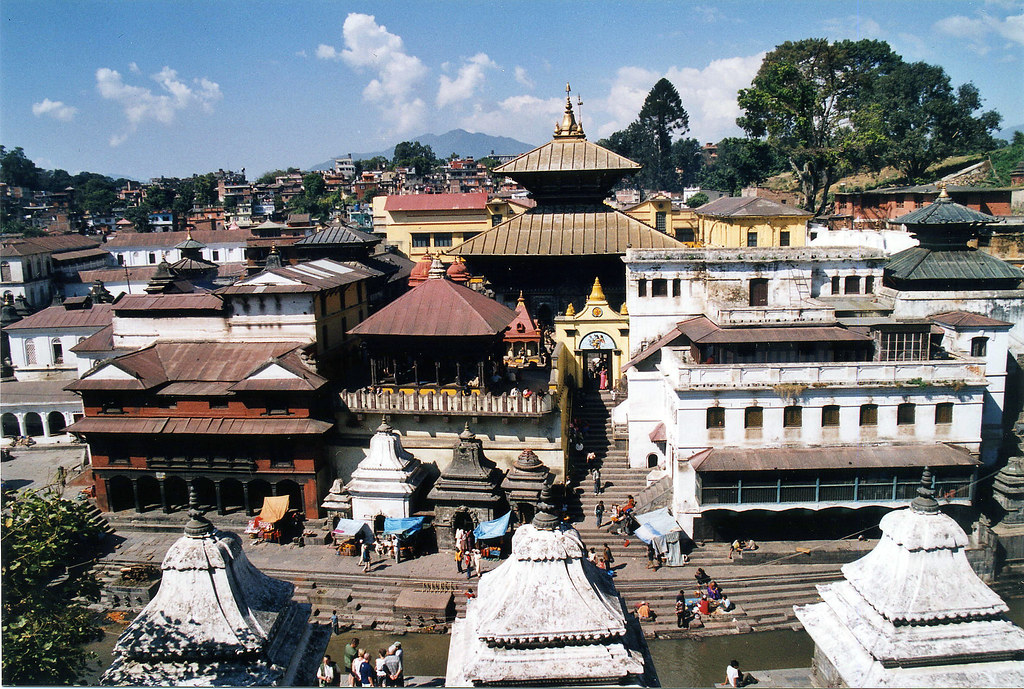
Sat next to the sacred river Bagmati, a holy river that stretches from the Himalayan mountains in Northern Nepal down into India and converging into the world famous Ganges some two hundred miles south… You will find the Pushuptinath. A temple situated in the Eastern parts of Kathmandu. A sacred sight for both Buddhists and Hindus.
The temple was built for the Hindu God Shiva. Although Nepal is often referred to as the birth place of Buddha, 80% of the population are Hindu, the oldest of all religions. With millions of Gods, the vast majority of temples in Nepal are dedicated to them.
Pashupatinath is one of those temples, however it is shared as a place of worship with Buddhists. This temple is unlike any other, it is a temple of death. For it is believed that if one dies within the grounds of this sacred sight, they are to return from reincarnation as a human once again, no matter their sins.
Naturally, this temple is packed with the elderly that wait for the end of one life with hopes to begin another. If they do die on this holy ground, their bodies are cremated on the river and left to float down stream.
We as tourists can NOT enter the main temple. It is a place of exceptional holiness and should be treated as such. Yet, we can explore a vast amount of the large sight. On the other side of the river, we can honour those that have passed by witnessing their cremation on the river. It is a sight that most tourists will no doubt skip over, I recommend going. Sit, and watch as the bodies of men, woman and children are returned to their after life. There is a sense of peace in witnessing this practice, just remember to be respectful as the burning bodies of deceased humans are not for sharing on social media.
Boudhanath Stupa
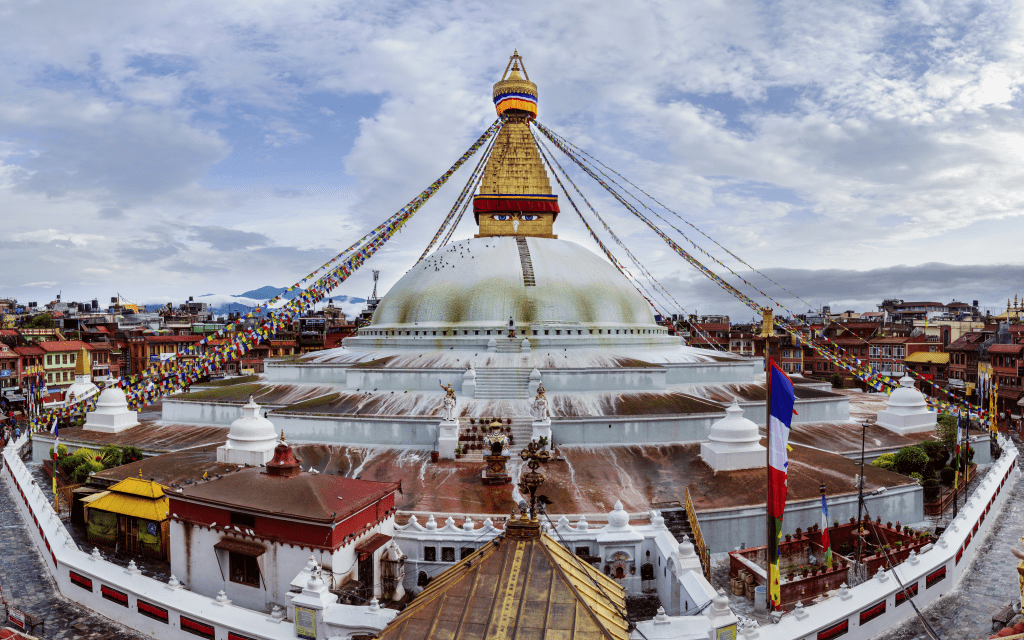
You may be thinking ‘Uncharted Thoughts, isn’t this temple just the same as the Monkey Temple. Why should we visit two of the same temples, the mountains are calling and I only have limited time in Nepal’.
It is the largest Buddhist temple in Nepal, and one of the most notable in the world. This Stupa is located in a Tamang district in Kathmandu, in the North East. The Tamang are an ethnic group of Tibetan and Burmese people, who have settled in Nepal after the annexation of Tibet by China.
With the colossal dome over head, the flattering pray flags, the incense and squeaking of pray wheels, there is no wonder crowds and pilgrimages come from across the world to behold such a wonder. It is both a landmark of Buddha and its teaching, as well as a landmark that symbolises the plight of the Tibetan people and their contribution to Nepalese society.
There is a feel here. One that you get in many spiritual places. A sense of belonging, a sense of clarity and to some extent the feeling of being part of something larger than yourself. I am not religious, but here, in the presence of prayers and robes, I believe that there is something. Maybe not a God, maybe it’s just nature or the cosmic universe above. But I feel part of whatever than may be.
Kopan Monastery

This is no ordinary temple, or shrine. This is a school of Buddhism overlooking the Kathmandu valley. Although I have mentioned the fantastic views of the Monkey Temple, and the tranquillity and lure to adventure of the great Boudhanath Stupa. No atmosphere or view on this list can truly top this Monastery. Of course each have their charm, and I’d struggle to put this list in an order of beauty or wonder, but Kopan Monastery is a wonder in its own right.
The monastery was built on on a hill, some miles away from the chaotic streets of the city centre. It is surrounded by green vegetation and flanked by the foothills of the Himalayas. Red pillars hold up golden trimmed roof tops, the gardens are teeming with life, and shrines dot themselves in well groomed fields. Each prayer room is a splatter of colour and incense, as your senses are dulled by the peaceful surroundings they are awakened by the intense power of these holy rooms.
Unlike the other temples listed in this guide. This monasteries history is modern. Built by two Lama (monks) in the 60s as a place of learning for Western disciples of the Buddhist teachings. Here, you can pay to be caught the religion and its practice. Meditate and learn from Buddhist monks in a monastery built by those that escaped religious persecution.
Anyone interested in the courses provided here, please look at the official monastery website Here.
Namo Buddha

Namo Buddha is translated roughly to ‘Homage to Buddha’. Perched upon a lush green hill surrounded by prayer flags and laughter. Although I know very little when it comes to Buddha, I know by his smiling visage on passing merchandise stores that he’d have been proud of the homage given to him by this place of beauty.
Most of the temples, and places of worship mentioned within this article are situated within taxi range of the city centre, or if you are in need to stretch those hiking leg, they can be walking distance. The Namo Buddha however makes you work for its wonderous aura. Some 32 kilometres from Kathmandu, this hidden gem is by far the least visited by tourists.
Unless you truly are like us at Uncharted Thoughts, walking is NOT an option. The hike is roughly 7 and a half hours long, along busy road sides and through a maze of unseen streets by the average tourist.
Leaving the Ratna Bus Park in Kathmandu every 15/20 minuets is a bus that take one and a half hours. Costing under 100 rupees (about 50p or 70c).
Another way to get to this fantastic temple is by taxi, costly to the shoe-string traveller, but comfortable and stress free. Taking roughly an hour and ten minuets, at 2500 rupees (£14 or $16).
If you do decide that this magical landmark to the great Buddha is on your list. It would be in your interest to book accommodation here, spend the night away from the busy city. See the stars and experience village/town life in Nepal.
hangu Narayan
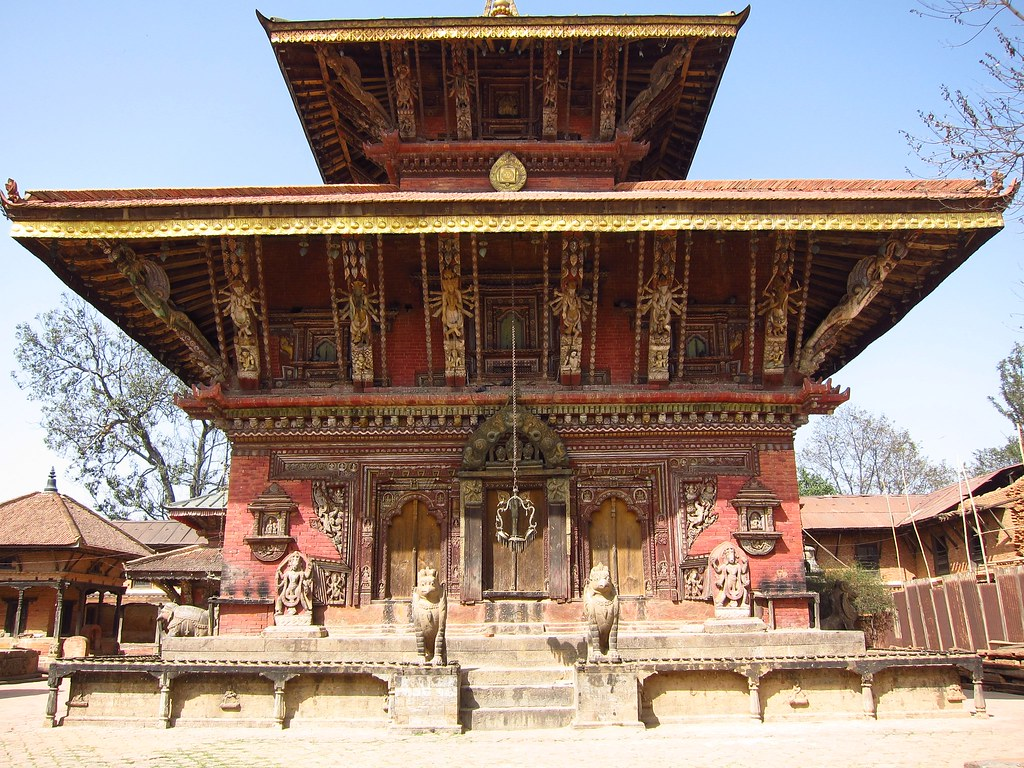
Perhaps the most remote, and possibly the least visited temple out of all those mentioned on this Uncharted Thoughts list. The Changu Narayan is still no doubt a wonder to behold. It may not be the grandest out of all the temple on this list, but it sure is a piece of history that needs to be explored.
Of course if you are here for the Instagram photographs and the Facebook posts to show off to your friends and family, go head, skip Changu Narayan. We here at Uncharted Thoughts however, like to see things a little more off the beaten track.
Changu Narayan IS the oldest Hindu temple in Kathmandu, or at least it is the oldest that is still in use. Changu Naraya isn’t just some 200 hundred year old brick temple. It isn’t even some 1000 year old shrine to a deity. It is rumoured to be over 1600 years old. Meaning that this shrine is older than England.
Of course there have been changes to the temple over the years, but with these changes comes a new layer of history waiting to be discovered.
Navigating the bustling shops of Nepal’s capital markets.
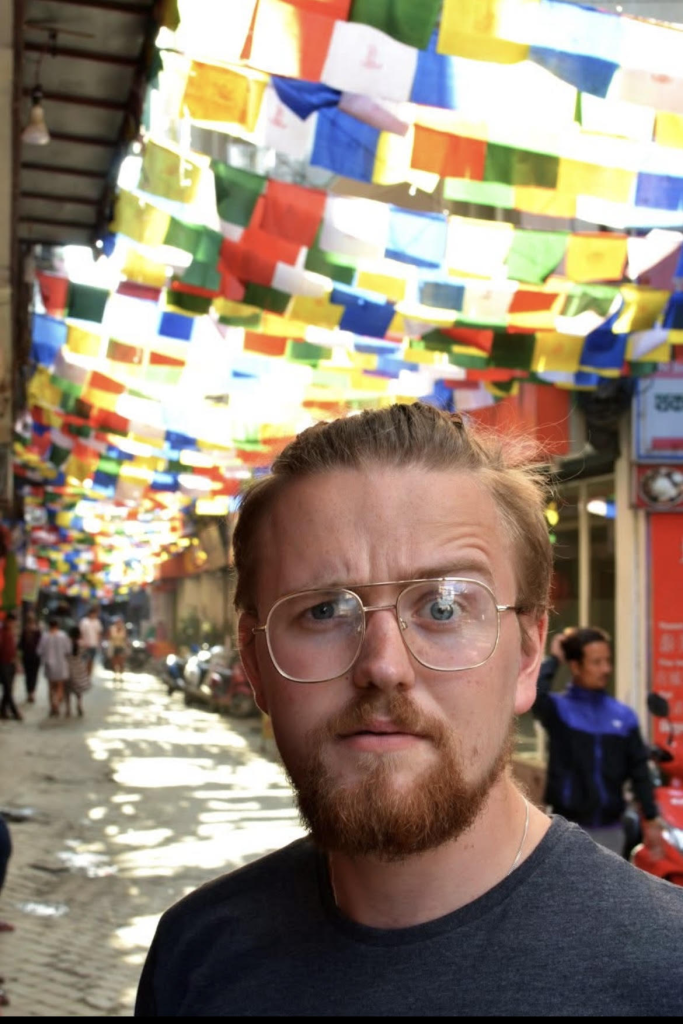
Now, I am not much of a shopper. You can tell by the state of my jeans and shirts. Shoes, well I have walking boots, work trainers, trainers and a pair of black boots for nice occasions. What can I say, I am a practical guy. But Nepal is full of practical trinkets. Let this be your guide to the markets of Kathmandu, what to buy and where.
Although I am not a shopper as previously mentioned, I do collect travel memorabilia so that when I do have a house and finally settle down. I can plaster my treasures all over the walls to be seen by friends and family. Nepal, is where I purchased some of my favourite treasures.
A worthy note for your reading here. If you are thinking of travelling to Nepal, or Asia in general, Nepalis the best place to start. You can arrive here with little on your person, perhaps just a carry on. Then, go shopping. Buy all your travel needs there, rather than paying for the extra baggage. Just a tip for you if are trying to save money and travelling on a shoe-string budget.
Uncharted Thoughts has provided you with a list of items every traveller must get before returning home:
- Tibetan Masks
- Prayer Flags
- Singing Bowls
- Hiking Gear
- Incense
Thamel district
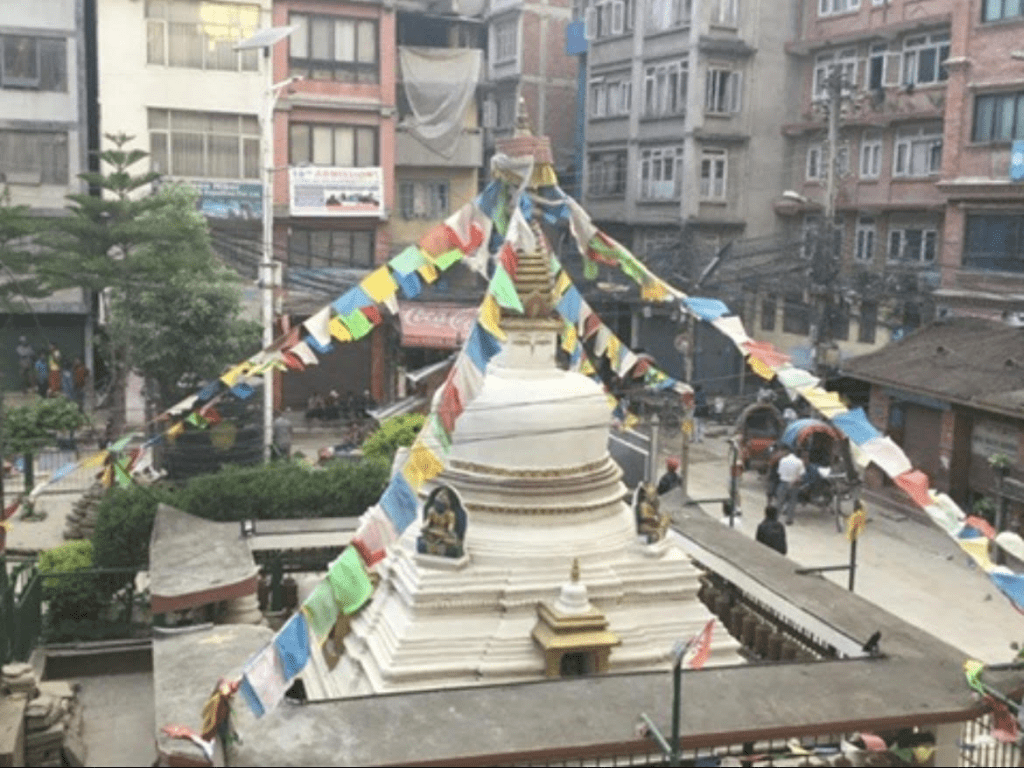
If you want to shop the Thamel district is the place to go. It is a tourist hub no doubt, but there is a good reason for this attraction… Antiques and hiking gear at incredible prices. Located in the centre of this marvellous city, there is no escaping its pull. For each shop has a unique look, a new trinket and lure to its smiling keepers.#
I spend three days in Kathmandu, and each day I made sure to visit the Thamel, to see if I missed anything from the night before. To see what treasures I could fill me new 50l “North Face” duffle bag I purchased for £10. With the intension of flying it home filled with goodies.
Anyway, lets look at what goodies you can walk away with..
Masks
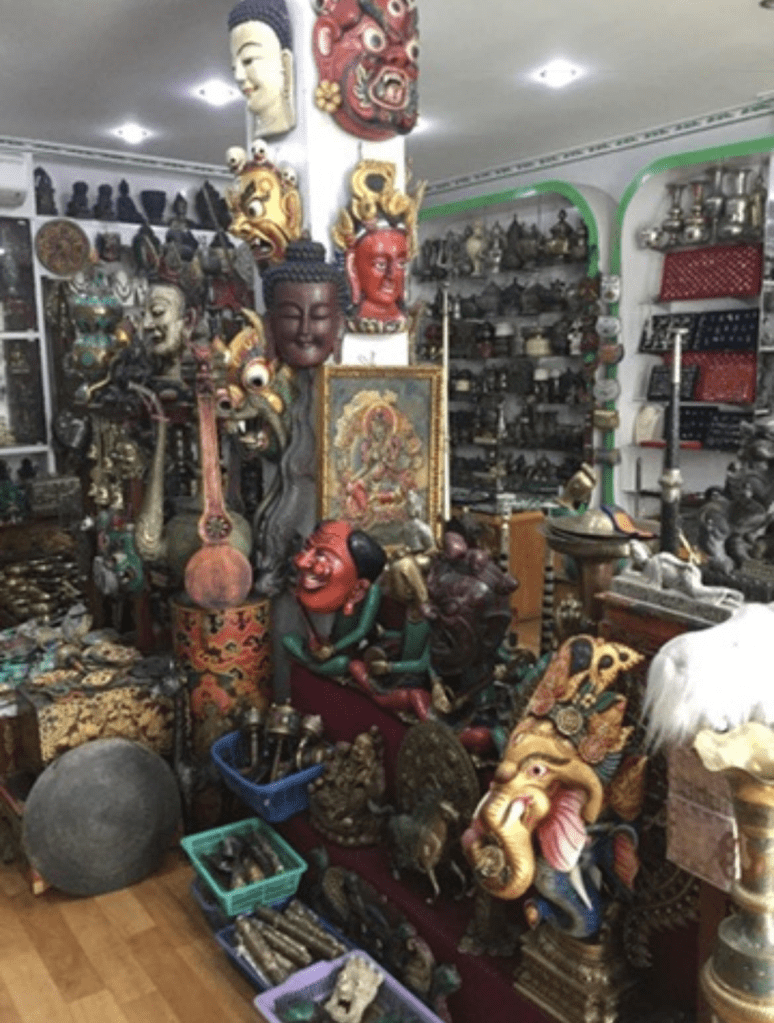
It is hard to ignore antique shops in the Thamel. Not only are their paintings of mountains and Gods, swords made from Ivory, ornaments that’ll make your friends go “Wow, that’s cool’ and of course prayer flag. But nothing sticks out from these narrow crowded shops like the gigantic masks who’s eyes follow you menacingly down the street.
These masks are of Hindu and Buddhist Gods, most are made from the trunks of Peepal trees, sacred to those that worship the teachings of Buddha. For it was under one of these epic trees that he attained enlightenment.
Each mask has its own power, I purchased the ‘Red Mahakala Mask’. It was made to chase off evil spirits and to protect a place form negative energy.
However there are hundreds to choose from, Ganesh, Shiva, Mahakala, Bhairab, Tara, Buddha, and more.

Prices for these masks range from cheap and cheerful to the need for a loan from a willing bank. Of course with higher prices comes better quality. The cheaper masks, range from £20-£35 pounds and are often made from other cheaper wood. These are usually smaller and less detailed, the paintwork is botched, but its is far more practical for travellers, both economically and in terms of transport.
My mask was £55. It is large, made form the sacred wood and well painted. The man who sold it to me threw in a sherpa doll as well. He claimed the mask was over eighty years old, however, on retrospect I highly doubt it.
Then you get the expensive masks. These can range from £300-£1500. Professionally made, often much larger and with finer detailing. Sometimes coming with animal hair attached to the masks back in an attempt to hide the wearer. They are great works of art that the carvers take care and time over for many weeks.
Prayer Flags

What is more iconic to Nepal than the colourful prayer flags that are found draped along the mountain passes, over the temples and shrines and in the bustling streets of Kathmandu.
Traditionally sold in set of five, these prayer flags are used to promote peace, compassion, strength and wisdom. It is believed that the flags when blown in the high winds of the Himalayas will spread these virtues across the land.
Five flags, five colours, each representing a element of the earth. Blue is the symbol of sky and space. White, air and wind. Red is fire. Green is water, strangely enough and yellow is earth.
These flags can be purchased at most tourist hotspots, I purchased mine at the Monkey Temple for £2.50. It came with about 40 flags, each tied by a old fashioned weaved rope. The woman at the stall said that the flags she sells have been blessed by monks in the temple.
These are easy to store, cheap and a great way to buy multiple gifts for friends and family back home. Five flags, in a large bundle of 40 means 8 gifts. Also, you are spreading peace, compassion, strength and wisdom to those you love. So it a win win.
Singing Bowls
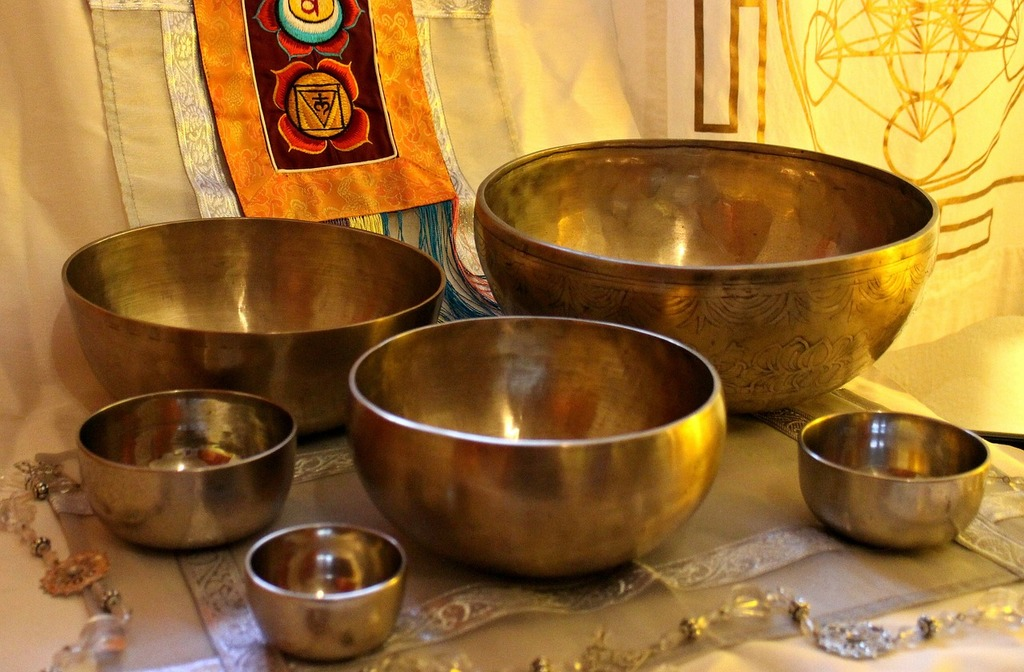
While masks and flags are great to look at in a house filled with travel trinkets. Singing Bowls are a practical ornament, that can be used as instruments and for meditation.
Like the masks, these bowls have a massive price range. The lower the price the cheaper the metals used in its creation. While the more pricey ones are filled with precious metals and craftsmanship. And of course, the bigger the bowl the more money you’ll have to spend.
The bowl I purchased was cheap, small and perfect for a traveller to stash away in a large bag. It came with the bowl a prayer mat for the bowl and a mallet.
I never used my bowl, I gave it to a friend of mine who works in therapy as a tool to help his customers with meditation. It is believed that sound therapy help with lowering blood pressure, relaxation, circulation and reduce stress and anxiety.
Perhaps a good gift to someone you know that is struggling or does meditation or that crystal person in your life that has tattoos of dreamcatchers.
Hats and hiking gear
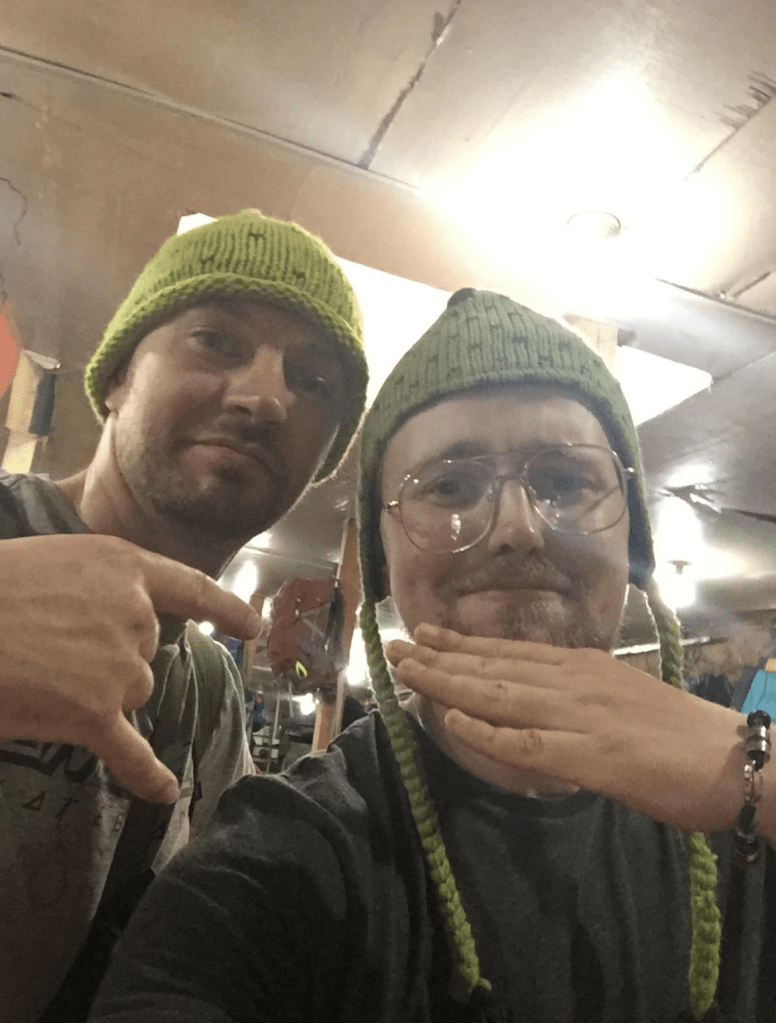
There is no place in the world I have visited that promotes both quality and cheap hiking gear like Kathmandu. Of course a lot of the items that are sold here are fake, and manufactured in some sweat shop on the outskirts of the city. But the quality of the fake stuff is beyond any I have seen before.
Tents, hiking boots, trousers, water purifying tablets, backpacks, hats, socks, underwear, belts, you name it. The outdoor shops in Kathmandu will supply you with all an outdoorsman needs to get things done in the Himalayan mountains.
As mentioned before, if you do not possess any hiking gear and are planning to fly out to Kathmandu before taking one of the many treks across the country. Do not buy before you go. Gear in the UK and across the world is expensive. Why buy something for full price when you can get it for a third or less in the country you are already visiting.
If you don’t have to funds to get hiking gear, it is always a fun day out trying on hats that don’t fit westerners.
Incense

Whenever I smell incense it takes me back to Nepal. It takes me to windswept mountains and ancient monasteries where the humming of prayer soothes a wonderers soul. Even now, back in my flat in Manchester UK, whenever I smell the herbal intake of these burning sticks I am sent back, 4600 miles to a place of peace and comfort.
In Kathmandu there is no shortage of incense sticks, neither the wooden stands they are placed upon. In the Thamel district, there is a shop called Lovely Incense (HERE). At affordable prices, these sticks of smelly goodness are crafted in its traditional craft. Within hundreds of smells to choose from, this is a hippie and house lovers dream.
Exotic food stops, to take your tongue on a adrenaline filled journey
I am not sponsored by any of the restaurants on this post.
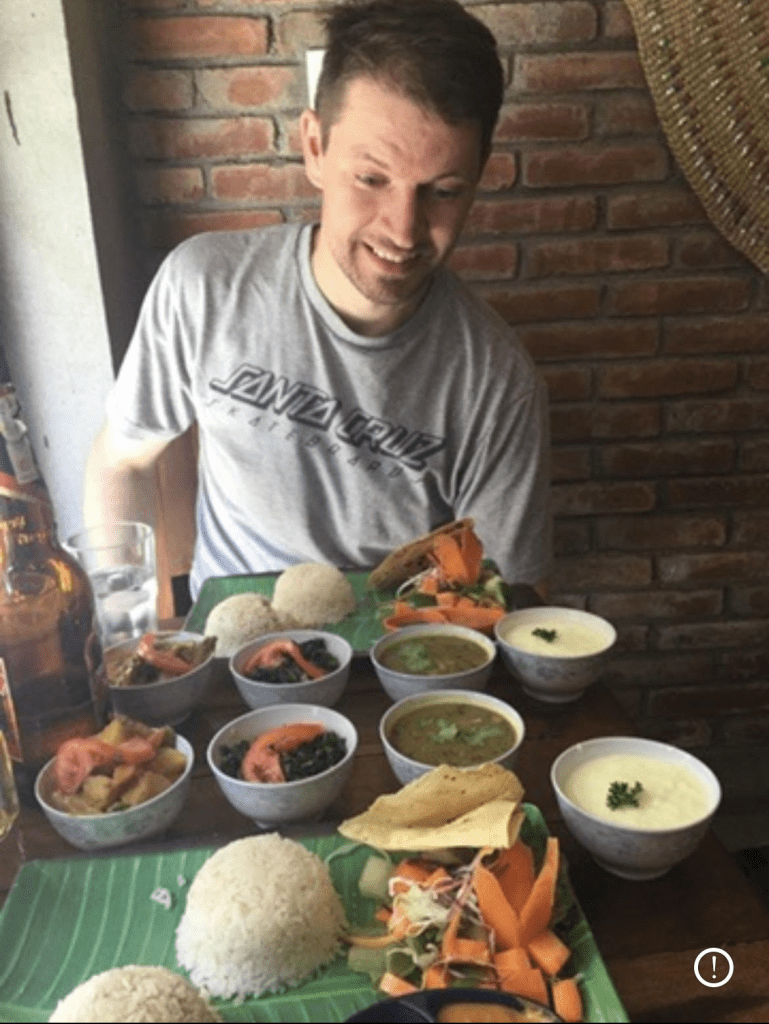
Nepal isn’t known for its cuisine, unlike Italy, India or France, there is not a huge emphasis on Nepalese food. Perhaps for good reason you may be thinking, well. No. Nepalese food was surprisingly good. I don’t mean to insult anyone who lives in Nepal by saying that it isn’t in my top five cuisines of all time. I don’t think their food compares to Greek, Italian, French, Spanish or Portuguese foods, but then again they are competing with some of the greatest.
But, as I said, Nepalese good was surprisingly good. Unfortunately I can no recall every meal I indulged in on this trip. However, I plan on updating this section of the post when I revisit Nepal next year.
Uncharted Thoughts has supplied you with the perfect restaurants in Kathmandu for both when you are ready to explore new local cuisine and, when you want a taste of home:
- The Third Eye (Thamel)
- The Roadhouse Cafe (Thamel)
- Bhojan griha (Close to Thamel)
- UP Street Food Cafe (Near Airport)
- Kathmandu Streets (Everywhere)
The Third EYe
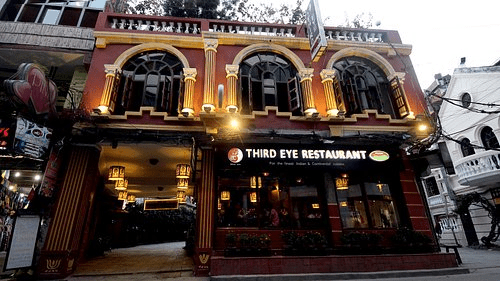
The renowned Third Eye Restaurant in Thamel is without doubt one of the greatest restaurants in Kathmandu. Opened since 1989, this restaurant has a ambience that incapsulates the Nepalese charm. With bright light open spaces, and dark warm cosy private eating spaces, it reminds us of both the mountainous regions of light and wind, and the ancient modesty of the temples.
There are multiple areas to eat, there is the main dinning area, the popular garden, the sitting area (a sort of lounge) and of course the rooftop view. Each produce a particular element of luxury and essence that is Nepalese.
And although the design of the restaurant is filled with love and beauty, with traditional windows, lanterns and ornaments. It is the food that drives people to the ‘Third Eye Restaurant’.
They say that the food is “Unique flavours of Indian, Continental & Nepalese cuisine” but I believe it is food from the heavens. From Chicken Tikka, Mutton Boti Kabab, Special Raan and Gosht Shahi Korma to Chicken Stroganoff, Pepper Steaks and of course the Nepalese special Baal Bhat. Each dish perfectly cooked, each dish has fresh ingrediency and perfectly presented.
Whether you are looking for traditional foods, or maybe a little come comfort. The ‘Third Eye’ has it all, at a great location, with great food and at a reasonable price.
Mouth watering soups raging from 350r (£3), delicious spicy curries at 735r (£4.14) and steaks at 1400r (£8). Although it is a little more expensive than some restaurants, a rewarding evening here will not break the bank. If you are looking for drinks, perhaps there are other bars that can provide cheaper alternatives, but at the ‘Third Eye’ cocktails, shots, and domesticated beers are all available.
The Road house Cafe
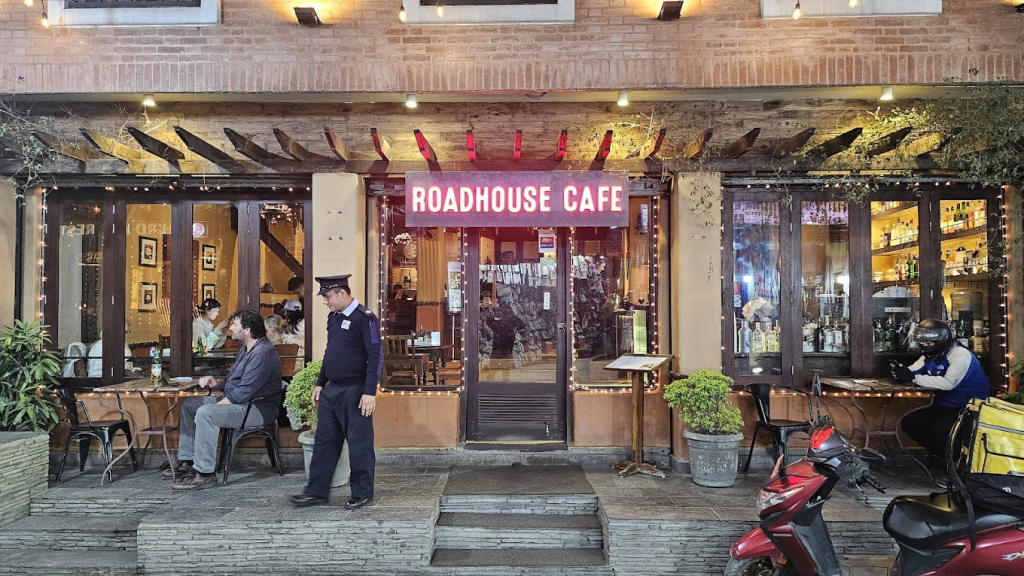
While it is all well and good trying out new foods from distant lands and washing it down with a brew that tastes like the mountain waters of Nepal. Every now and then, every traveller must go back to their roots. When I finished the Annapurna Base Camp Trek, all I wanted to do was eat pizza, and drink beer. That is exactly why we went to the Roadhouse Cafe.
A taste of Italy, in Kathmandu. Here, the signature woodfire pizzas are plentiful and fresh. The drinks are served ice cold and both are handled with passion. Roadhouse is a chain of cafe/restaurants and the site in Kathmandu, was the first ever. So you know this is their baby.
Being on the cheap side of travel, I got a beautifully cooked margarita, with chips and a cocktail for under £10. But, if you have a budget to pig out and really get stuck into that reward meal, then the sky is your limit.
With outdoor seating, friendly smiley staff and a vast selection of everyone’s favourites, Roadhouse is without doubt the place to eat after a hard trek in the world greatest mountain range.
See menu below.
bhojan griha
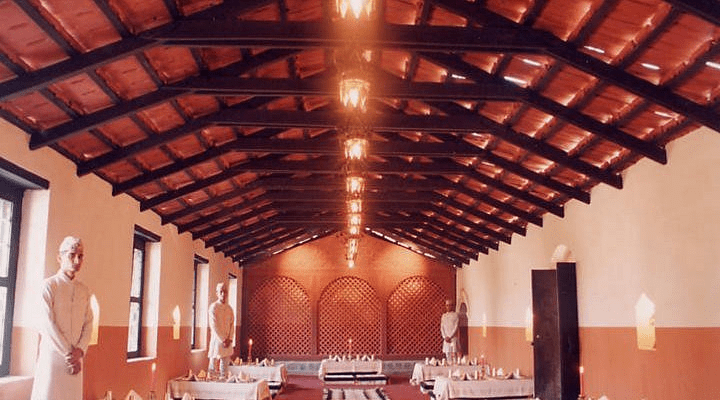
The building in which bhojan griha is located is 150 years old and has a history like no other. The architecture is traditional Nepalese, the waiters and waitresses dress in traditional Nepalese attire, guests are encouraged to sit in the traditional Nepalese style. The food there is locally sources and organic.
While there are many greats in the cuisine of Nepalese style foods. None, top the Dal Bhat. Dal meaning Lentil Soup and Bhat meaning boiled rice. Dal Bhat is the most consumed meal throughout Nepal. Not only because it is cheap, but it is tasty and often unlimited.
Here at Bhojan griha. Dal Bhat is not unlimited, but, it is often considered one of the best in Kathmandu, and therefore one of the best in the world.
This isn’t any old plastic chair, sloppy beer and tourist fuel up before the next elevation. No, this is Bhojan griha. A experience like no other. Dancers will entertain you as you fest of multiple course meals. Traditional music will echo through this once Royal hall.
https://www.bhojangriha.com.np/index.php
UP Street Food Cafe

Enough with the fancy stuff, when you travel like us at Uncharted Thoughts, you don’t have time, money and the patience for lavish lifestyles. What you do have is 900r (£5) and a bus to catch in 20 minuets to Pokarah. A eight hour drive with no breaks.
When I first landed in Nepal, I was chased down by a taxi driver and he convinced me that HE was the cheapest taxi in town. I said ok, lets go, but I need food, good food. I hate airplane food. So he took me to ‘UP Street Food Cafe’.
I arrived, and was ready for some food that I was probably going to regret eating in 5 hours time. But I was pleasantly surprised. For under £5, I managed to eat Nine Momos, some crunchy ‘supersized spring roll and a drink.
It is unremarkable to look at, but the taste was outstanding and it filled a gap of a eight hour flight like nothing I have ever had before. So much so I gave a Momo or two to the driver after he charged me almost double the correct fare. But, that’s what happens in airports, after that taxi I was charged the normal standard charge and never had another issue.
The Streets of Kathmandu
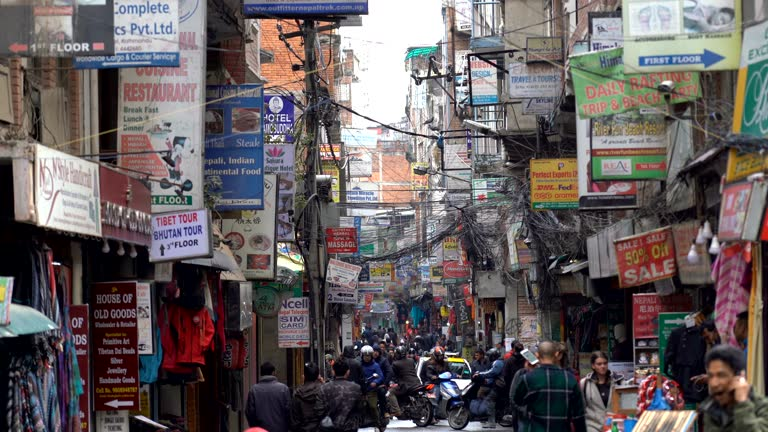
The food in Kathmandu is vastly underrated, it is a cultural pot of Indian, Tibetan, Chinese and Nepalese, with some western foods out there for fussy eaters. At Uncharted Thoughts we are dedicated to getting travellers to best experiences possible, while on a budget.
Nepal isn’t America, it isn’t England. Food here is cheap, tasty and grounded in the fast pace environment of the busy city. I ate out every single night, in places that looked like the sitting room of someone’s home, or some cut off restaurant that can be filled with four large westerners and a small Nepalese chef. Each place I ate, I ate with people who love their country, love their food and are welcoming beyond belief.
I was never ill, I was never cautious about what I ate, and I never turned anything down. So, while my list is filled with fantastic places to eat, some of which you must not miss out on, I implore you to leave the hostel, walk five minuets up or down the road and find something that looks cheap and cheerful. It’s even better if local are sat in there also…
Magical Himalayan city hikes
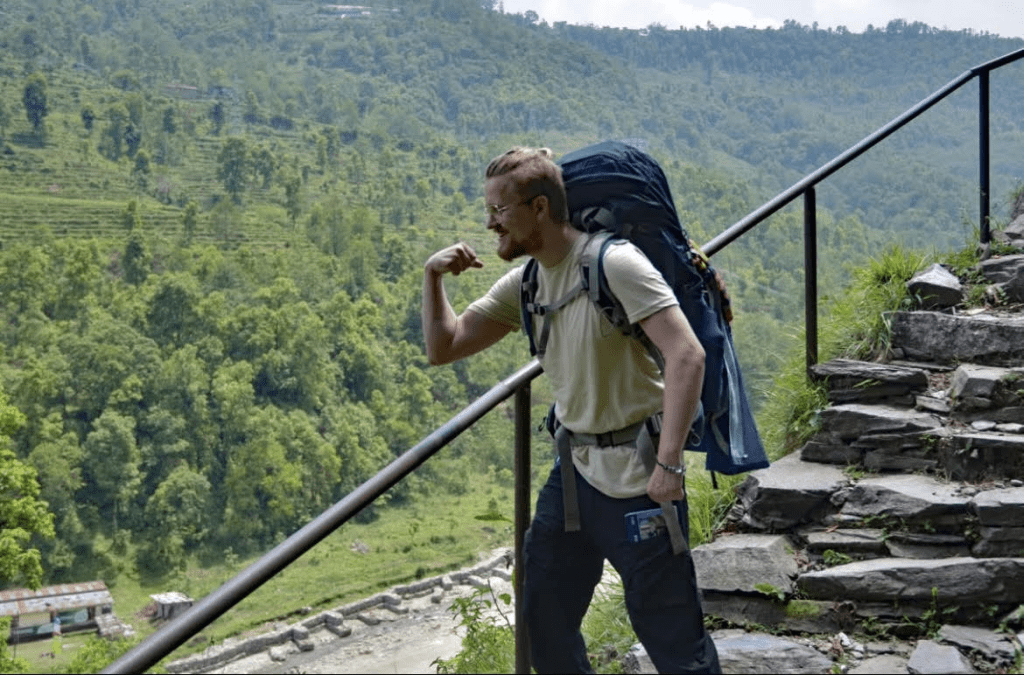
Nepal is the worlds capital for mountaineering and trekking. Of course there are other incredible hiking destinations across the world, the Rockies, the Andes, the Alps and the Pyrenees. But the Himalayan mountains are the crowning jewel of this planets beauty, at least in my opinion.
So, while in Kathmandu shopping, and exploring, it is important to start getting those legs ready for the big climbs.
Of course, if you have planned to come out and trek in the Himalayan mountains you are already fit and able… right? Yes, of course you’ve been training at home in preparation for this trip. You wouldn’t have just bought a ticket and hoped for the best, that is not like you.
Sarcasm aside, please, do not underestimate mountain trekking anywhere in the world. Altitude can kill, it almost killed me. HERE.
Kathmandu, although busy with the life of city peoples. The valley itself is not without perfect day hikes and beautiful views.
Warning!
If you take part in any hikes. PLease be sure to check the weather conditions as well as the terrain difficulty. to do this visit the local guide or tour shop. Be sure to wear appropriate clothing and leave only footprints.
Here at Uncharted Thoughts we travel to hike(mostly), and we have supplied some of the best hikes in the Kathmandu area for you all to enjoy and warm up those legs before the big hills:
- Jagadol Tarebhir
- Balthali
- Bhasmasur Hill, along the champadevi.
- Buddha Cave in the Nagarjun
- Ranikot Village
Jagadol Tarebhir
This is a hike I wish I had done before hitting the Himalayas. Although I was unable to take part in this hike myself. I heard a lot of good reviews from other travellers while in Kathmandu. So, if you are looking for a first hand account, please, look else where.
The Jagadol Tarebhir is a hike that can take 2 hours, or 8. It depends on where you want to start. Most people start the hike in the Chunikhel or Chapali Bhadrakali district. Its a short bus ride from the Thamel district. Taking a bus or taxi, for a thirty minuet drive up through the Kathmandu chaos.
Others, the most skint and adventurous types. Walk the four hour trek through the city to the Chunikhel or Chapali Bhadrakali to then start the accent to the hills summit.
There are of course benefits to both of these options. If you take a taxi or bus, you are able to complete the trek within 5 hours in total, and get back in time for dinner and a cocktail. It’s easier, and with the same visual rewards as those that walk. However, if you walk from Thamel, you will meet people along the way that will make you smile, you will explore parts of Kathmandu unexplored by many tourists and you will have a reward better than any view can give you… a memory worth a lifetime.
You don’t need a guide or porter for this walk. Its strenuous when the sun is out. But besides water, a snack and some common sense you will be fine.
When I return to Nepal, in a year or so. We will be doing this trek without a doubt.
At the top of the hill, the views are supposed to be phenomenal. Overlooking the large city, there is no perch quite like it. Surrounded by greenery and monkeys. You would have achieved a picture worth your time and efforts.
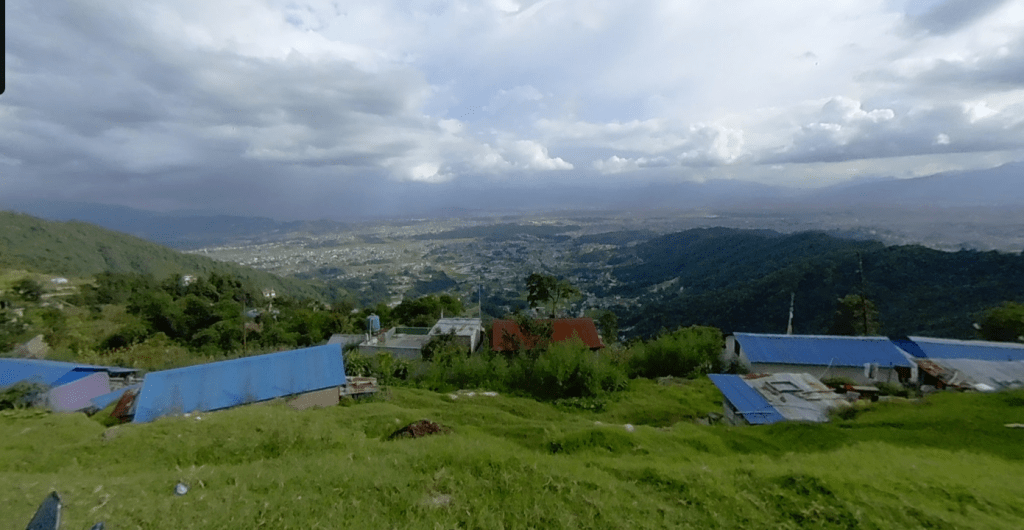
At the end of this epic trek there are cafes for refreshments, a smooth road to lead you back to the city and a monastery in waiting.
With £5 this trek can be a wonderful day hike with coffee, and snacks. With buses or taxi’s it still isn’t a bank breaker. Maybe adding on an additional £3.
Balthali
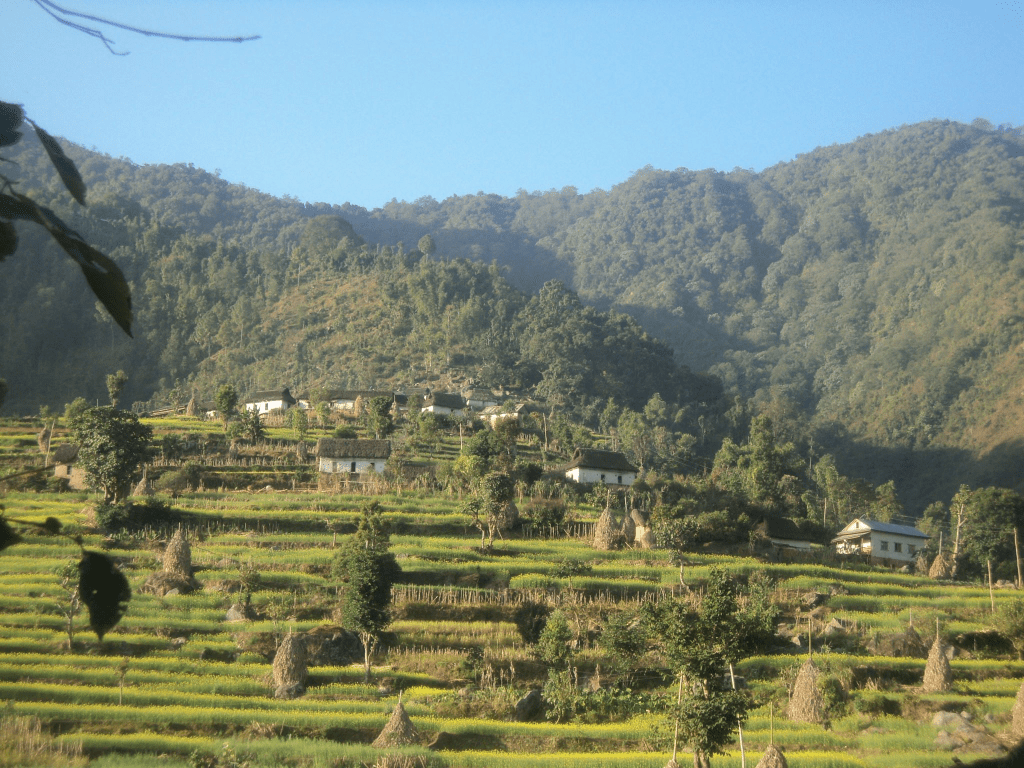
This trek isn’t as accessible as Jagadol Tarebhir, it is tucked out the way of the Kathmandu valley. Some 40+ kilometres from the city’s busy centre, in the remote location of Panauti. So, if you are looking to explore the recommended monastery of Namo Buddha (as seen previously HERE). Then you can hit two birds with one stone and hike the Balthali.
Among rolling green hills, tranquil rivers and valleys, and the sparsely populated villages. Balthali day hike will take your breath away. Everyone that visits Nepal goes to the same places, Poon Hill, Annapurna and of course Everest base camp. But there is a beauty in the south that is somewhat untouched by hoards of tourists, not because it is any less beautiful, but because it isn’t as grand in the eyes of the majority.
Step back in time as you stroll through the ancient southern valleys and farm lands. Spend a night in one of the many many luxury resorts, or perhaps in a village hall?
This is very much a day hike, at entry level and with a timid altitude of 2500m. Although these are supposed to be day hikes, and this is a day hike. Due to the location someway out of town, it would be best to set your sights on staying the night.
This trek is filled with agricultural sightseeing, culture, monuments to Gods and Goddesses, and the remanence of pilgrimage.
It is difficult to recall the exact pricing of this hike, and on my return to Nepal I will be sure to update this so you can know a more accurate price representation. However, I recall the bus to Panauti being relatively cheap (under £5), food was £1.00/£1.80 a meal with a drink and accommodation was relative.
All in all, you can spend less that £30 on shoe string budget to get this incredible adventure under your belt. Of course there ara tours you can take if you feel the need. But this is one of the safest places I have ever visited, I felt that on the trail, I could have left a camera on the side of the path and came back the next day to it still being there, perhaps even been cleaned. (I do not recommend leaving anything anywhere ever).
Bhasmasur Hill, along the champadevi.
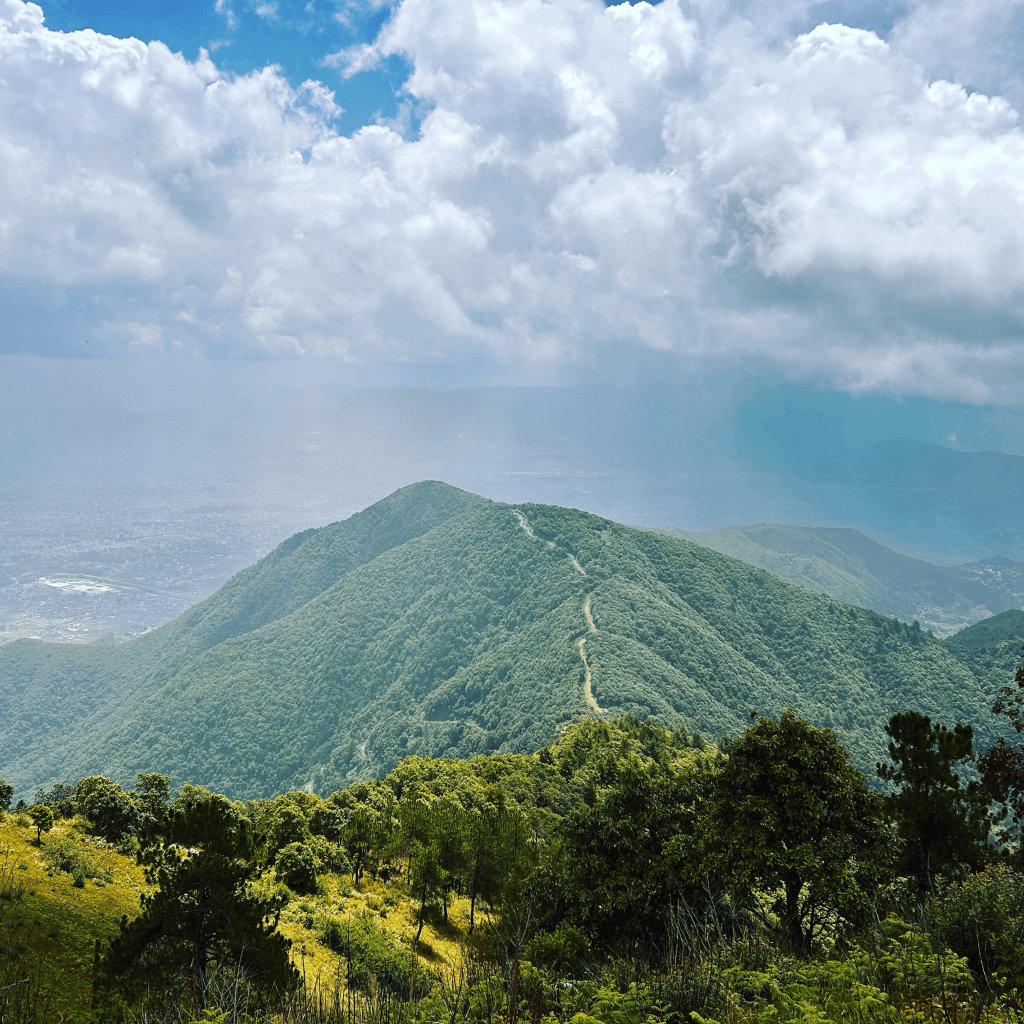
Lets head back to Kathmandu, to a hike more accessible routes. Although we all enjoy a bumpy, rammed bus in twenty five plus degree sweltering heat for hours on end. Sometimes, you just wanna get up, out of your hostel and head for the hills. Nothing strenuous, just good old fashioned morning walks.
So, jump out of your bed, lets shake off that jetlag with some smoggy air and a hike up a hill to one of the best views of Kathmandu.
As a Thru hiker, a five hour hike to the beginning of the hike isn’t anything to bat and eye at. I think exploring beyond the taxi is so important in understanding a culture and seeing the world through a true lens. However, a taxi ride is easier and if you have a strict time limit to your adventures.
Get a taxi, bus or walk to the South West of the city. To the Pahiro Bus Stop. From there the REAL walk begins. Upon exiting from the mode of transport, have a drink of water and get ready for a gradual climb. Exit off the tarmacked road onto a rough, old path.
A narrow path is shaded by trees, and ascends into the unknown. Motor bikes and cars are still permitted here, so be sure to keep and eye out on the climb.
As you climb it wont be long before the sound of the city begins to fade, replaced by bird songs and laughing locals. In each direction, through the trees you can make out the surrounding hills sides, all green, all equally as beautiful from the last. If you look carefully, small breaks in the trees show temples and shrines to Gods far older than those of western religions.
Soon enough you arrive on the hills ridgeline. Between the gaps in the dense treeline you can make out the vast city in the expanding valley below. Like a grey jungle of human life, it goes on and on and on into the horizon. Paths will start to direct into the one you walk on from the East, South and North, at any point, take one of these paths and return to the valley floor. But for the real rewards, continue up to Bhasmasur Hill.
After passing prayer flag incombered shrines and ceremonial painted temples you will arrive at Bhasmasur hills summit. A spot of beauty and a mesmerising view. Sit, take in the beau
Buddha Cave in the Nagarjun
Hidden deep in a calm, still and angelic woodland just off from the city is a cave of great importance and mystery. The Nagarjun forest reserve is home to some of Kathmandu’s most incredible view points. It also houses a cave of the Buddha.
It is probably the closest walk from the city centre. A thirty minute taxi, 40 minute bus and a 2 hour walk West of the city. It is possible the only greenery you can seen from the city floor. Catching a glimpse of it through ally ways and gaps between buildings.
This is another easy climb to help warm up the legs ready for bigger more challenging hikes in the Himalayas.
I thought about posting some pictures of the view, the cave and some of the magic the forest provides walkers. But, I think it’ll be better for you to go and explore this place for yourself. It is by far the easier, cheapest and best views of the city.
Ranikot Village
Ranikot Village is another trek I wish I had the opportunity to do, and on my return to Nepal, I will update this section of the post.
While in Kathmandu, I had a choice. Ranikot Village or Jagadol Tarebhir. I chose Jagadol Tarebhir. I don’t regret making the decision, but its like trying to choose a flavour of ice cream from a stand that charges extortionate prices for a scoop. I chose, and i live with that decision. But, would the cream berry whirl been a better option. I guess I’ll have to come back next year.
Ranikot Village is a taxi, bus or long walk from the city centre. In the South East of the city limits. It’s an easy walk, consisting of hills and straight paths through woodland and farm land.
Along the way there are marvellous view points, small villages and farms, a vip line and, you guessed it, temples and shrines.
Although I have yet to do this myself, from reviews and other online research. I’d recommend this hike to those of lower fitness levels and those with an eye for culture.
Walking among the Garden of Dreams

Between the hours of 9-9, you can take a stroll through the Garden of Dreams, Kathmandu’s Eden. Take a step back in time, as you gander through the extensive mown lawns, the tranquil ponds and white Neo-classic architecture. Crafted well enough to think you are no longer in the mystical lands of the Yeti and the spine of the world, but in a European capital some one hundred years ago.
Built in the 1920s, this garden fell into disrepair and has since taken a new breath of life. Where once it was an overgrown ruin, now, a Garden of Dreams once more.
This is a perfect addition to the sightseeing of Kathmandu due to its location and a café attached to it. Use this quit, peaceful green space to get away from the rumbling motorbike and heavy hustle for a hour or two before launching yourself into more adrenaline filled activities.
The garden, as stated before, was designed in a Neo-classical style. It was created by a Field Marshall Kaiser Shumsher Jung Bahadur Rana, as a private garden for his leisure time. This obvious European design, along with Nepal’s close ‘friendship’ this the UK. Makes this garden more than just a peaceful location to get away form the business of everyday Kathmandu life, it is a physical historical archive of Nepal’s military and political history.
It costs a check 200r to enter this flanked Eden.
Palace of a living Goddess.
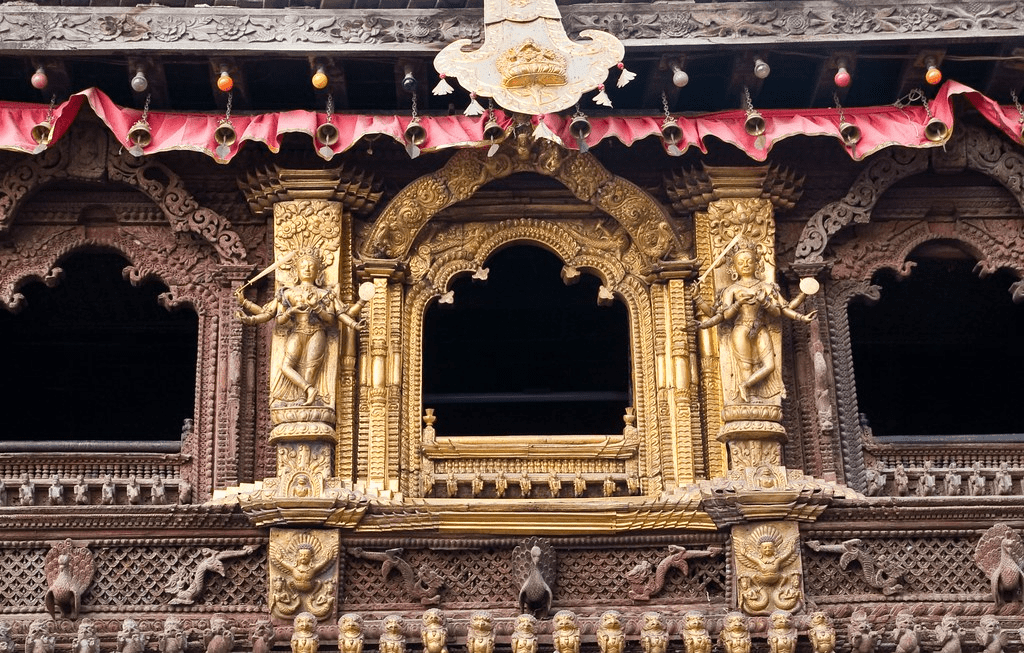
Stumbling across the Palace of Kumari was a pleasant surprise. I was shopping for masks, when all of a sudden I came across a magnificent structure surrounded by locals and tourists alike.
This building is no palace, or temple of stone. It is a example of the craftmanship and cultural relevance of the Nepalese people and their history. While Nepal is home to some of the most fantastic mountains, and a wonder of the natural world. This Palace of kumari is the countries very own Stonehenge, Eiffel tower or Statue of liberty.
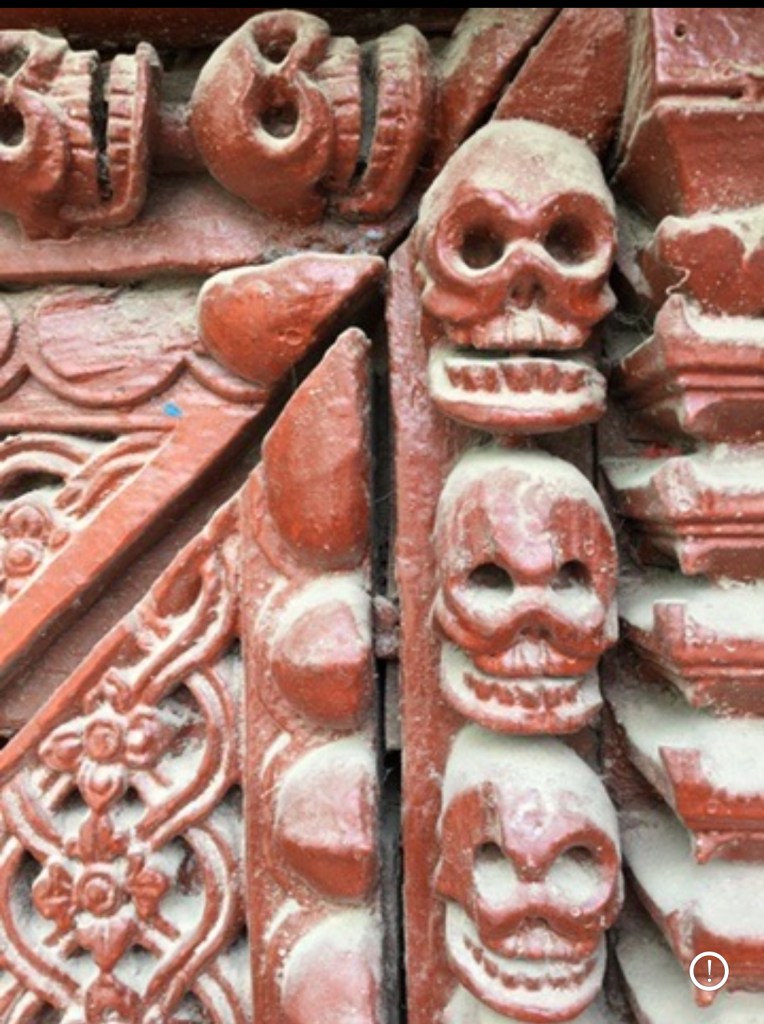
Craved from wood, and painted by hand. The integrate design of this wonder is remarkable. Small skulls surround door frames, Gods with ten arms sit cross legged next to serpents and swords, Ganesh and strange mythical animals have all been delicately and accurately carved into this Palace
But above all its wonders, the most incredible part of this structure lay within the courtyard of stone. As you wonder through tight doorways and past pillars made by the hands of skilled craftsman long dead. You enter a courtyard of wonder, and gazing down upon it a balcony. One where words fall short in their description. I will try non the less.
A reddish brown balcony of design I have never seen before overhangs by a margin from the slim red brick walls. Three windows, all closed by wooden pannle blinds over watch the yard like a heavenly window. Each window is pillared by Godly figures, carved deep into the structure as though buried in the weight of time. Above, another three windows peer out, mimicking those below. To think that someone could stand in front on one and not have their head breach through to the windows above seems impossible. So detailed these six windowed are, it is almost as though it were the home of a God, or should I say a Goddess.
Inside this Godly palace lives a Goddess.
A girl chosen from the age of three, is put through a series of trials to determine if they are the living Goddess. The trials vary, but the outcome is always the same. To whom ever passes the trials will become the holy ‘Kumari Devi’, the living embodiment of the Hindu Goddess Taleju.
Now, I don’t know the belief system of the Hindu’s or the traditions of this ancient religion. Neither do I understand why this girl is the embodiment of the Taleju. I could go online and find it our for you, but even then, I don’t want to be explaining a culture I don’t understand potentially from a website that doesn’t understand it either.
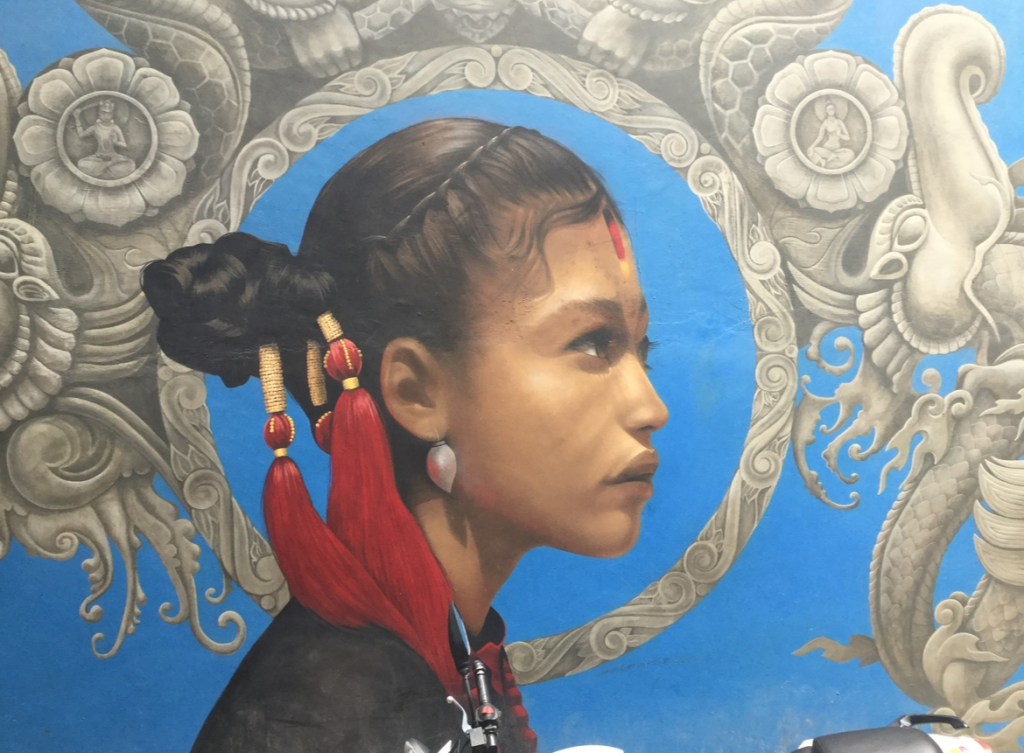
All I know is that there is backlash to this ancient tradition. While exploring the city, we found countless murals, such as the one below. These murals however were tarnished with graffiti saying “Free the Kumari Devi” or “Preeti is a prisoner”.
Preeti is or was the Kumari Devi at the time, and was bought up with the best education, limited but extreme wealth and the worship of a large population. What she didn’t have however, is a childhood. Her freedoms were limited by what was expected of her.
Now some people would argue that freedom is worth more than wealth and education. Others would disagree. All that is true, is that this remained a topic of discussion across Nepal.
While living in this remarkable palace, there is strict rules on the Goddess’s life. She must not leave the palace, unless there are festivals in which she is required to attend. If she does leave the palace for a festival, her feet are not to touch the ground.
The Kumari official caretakers are bound to her for eight years. Telling her what to wear, when to wear it and how. She never went hungry, or had a want for anything of this earth. Except perhaps freedom.
When walking around this palace, think about its significance, admire its incredible architecture and perhaps marvel at its history. But, also consider is one persons palace another’s prison?
Travellers Guide to Kathmandu

Exploring new cities and countries is a learning curb. Some people like myself like to arrive with a rough idea of the country and go with the flow. Others, like to know a little more about the place they are visiting before arrivingmore about the place they are visiting before arriving. Both have pros, both have cons.
Arriving with a itinerary and a great understanding of the culture allows one to have prior knowledge and understanding. Therefore being wise to things others would miss. It also allows you to skip things not worth your precious time and go to the best view spots and best restaurants. It does however dissolve what most travellers seek, surprise and the unknown.
To arrive with no plan and with no understanding can be exhilarating and adrenalin pumping, you can walk anywhere, see anything and everything and see a country or city at its rawest form. But you also miss a lot, and are often overwhelmed with things to do, or left with nothing to do.
Here at Uncharted Thoughts, we like to offer a balance. Know things by all means, but we like to make the journey half the experience.
This section of the post is for the latter of the two options. For those that want to know a little more about Nepal, most accurately Kathmandu, before arriving at the airport.
Let us walk you through the, who, what, where, why and how’s of this ancient city.
Kathmandu Basics
Kathmandu is the capital city of Nepal. It is nestled in the Kathmandu valley. It has a population of 900.000 with an additional 4 million in the surrounding areas. It is the 19th highest altitude capital city in the world and one of the oldest continually inhabited places on earth.
The Newar people are 30% of its overall population, followed closely by the Matwali at 25%. According to a national report there are 125 languages within Nepal, however the official language is Nepali. English is wisely spoken and taught across the country.
According to another survey in 2019, 80% of the city is Hindu. Almost 10% is Buddhist and the rest is made up of Islamic, Christian and a tribal religion known as Kirat Mundhum.
The valley over one million years ago was a large lake, fed by the Bagmati river. The river is one of the reasons for the continuing habitation of the city and a life course for its people.
Whether
Kathmandu gets hot, and stays relatively mild throughout the year. It is rare for the city to reach temperatures under 0 (Celsius). It’s months are similar to most countries in the Northern hemisphere. November through to February are the colder months. March to June, spring. and then July till October, summer.
Nepal has five seasons, Spring, Summer, Monsoon, Autumn and Winter. The Monsoon season tends to fall between June and August.
Kathmandu is vastly different in its whether patterns than the rest of the country due to it’s geographical location.
Most tourists arrive between March – May or September – October. This is due to the mountains being more accessible and safer. However, base camp hiking and thru hiking runs throughout the year.
Kathmandu is particularly hot in the summer months due to the issue of pollution. It ranks in the top 200 most polluted cities in the world (HERE).
The heat builds up between rugged buildings and with the polluted air it is hard for it to escape until the late evening.
What to bring?
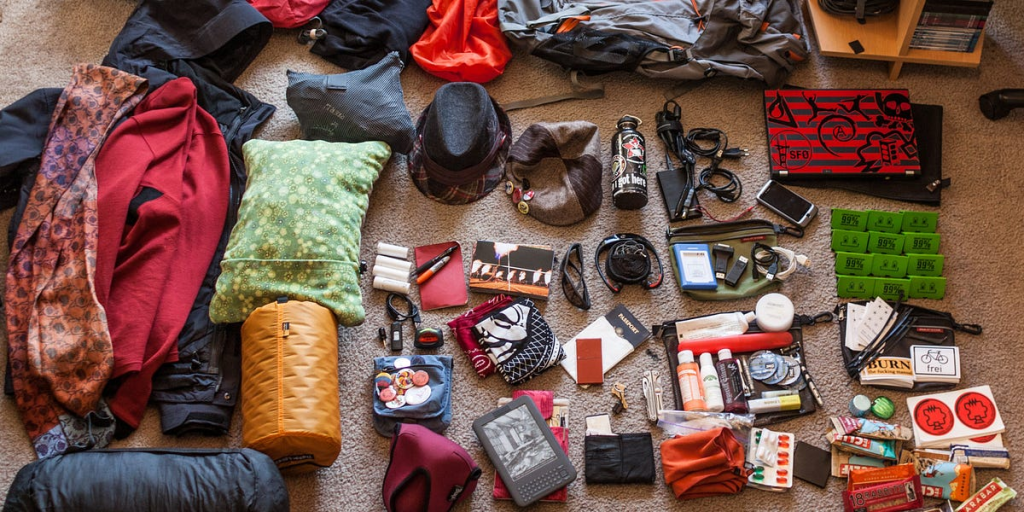
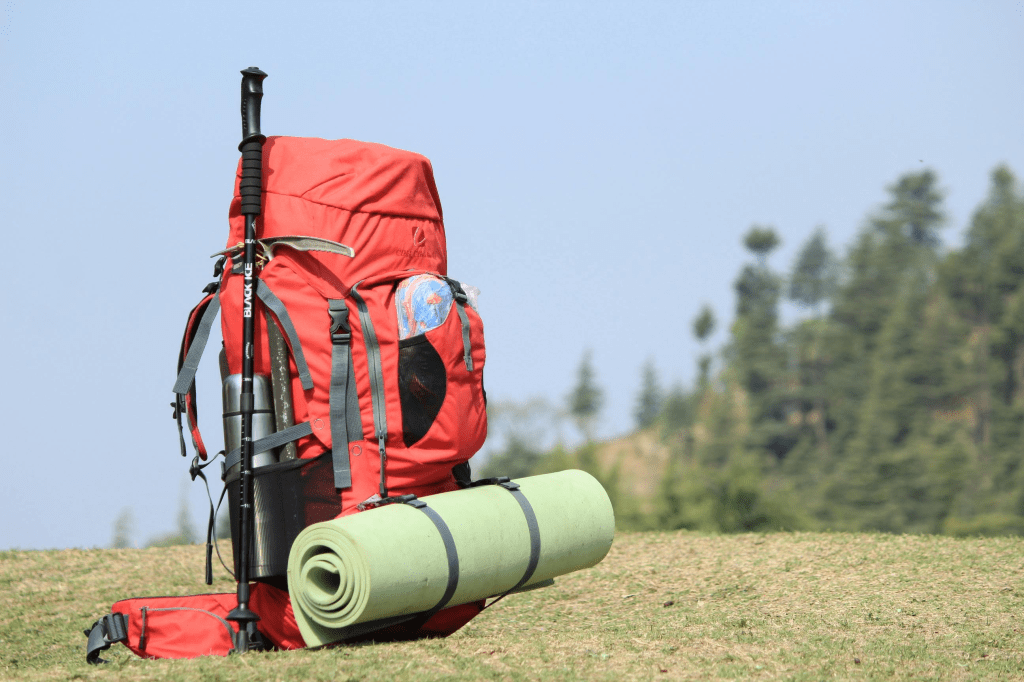
I imagine if you are heading to Nepal, then you are already in the know of what you need to bring. Most of you reading this are more than likely heading to the mountains and will be hiking. Therefore you will have everything you need anyway. But, just in case you are not lumbering a massive backpack and walking poles. Then I will enlighten you on what you need in Kathmandu.
Bags – Yes plural. One bag for the bulk of your stuff. One for day hikes and another for all the amazing stuff you are going to buy (HERE). If you are looking to be in Nepal for longer than two weeks, and are heading up into the hills. I’d recommend buying a 50+ litre bag, a smaller 15 litre bag and a duffle bag for all the goodies you’ll be bringing or sending home. You can buy all of this for half the price in Kathmandu. So, if you are concerned about purchasing bags before your flights, don’t. Do it in Kathmandu.
Clothing – Depending on when you go to Kathmandu, depends on what you need clothing wise. In the summer you need shorts, T’s, trainers / hiking shoes, a hat. Usual common sense stuff. In the winter, trousers, boots, jumper. Don’t think to hard on this, I travelled a lot with the bare minimum and picked up stuff I needed along the way. Remember, you can always pick up new stuff, but leaving stuff behind costs more. I once went on a hike with a lot of new and expensive equipment and had to ditch some due to the weight… I lost money, where if I purchased to my means on the trip, I’d still have a lot of good equipment.
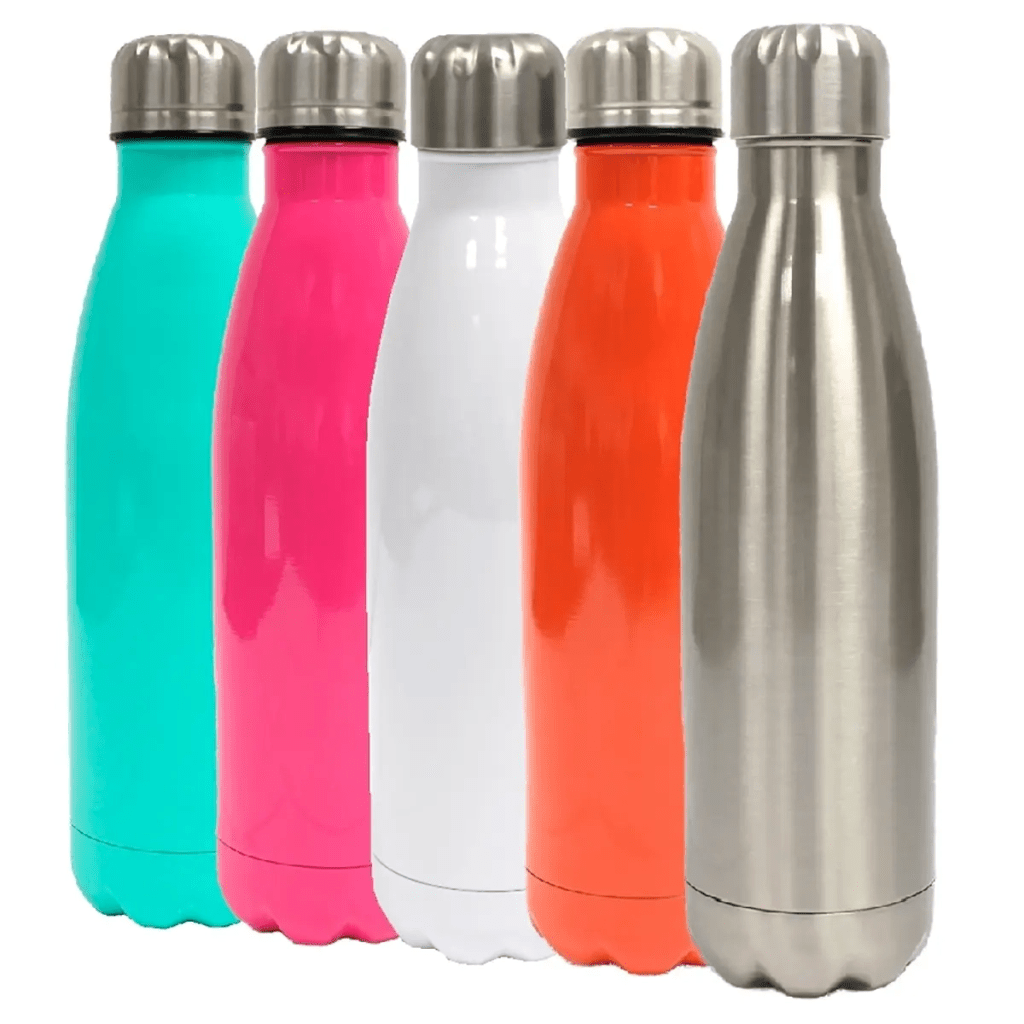
Water Bottle – Bring a water bottle, bring water purifying tablets and bring some common sense. Water in Kathmandu is NOT drinkable. It will not be safe, nor wise or suggested that you drink any water from Kathmandu taps.
Buy it. I know it is not environmentally friendly, but unfortunately this is how it is.
Always buy 2. One for now, one for later.
Safety and what to be aware of
Kathmandu as a male is safe. I am able to walk the streets at any time of day or night with little to no issues. The locals are friendly and helpful. I did witness a street fight on a night out, but being from the UK, that isn’t anything to be surprised by.
While walking the trail I came across a Dutch girl who said she had been harassed in Kathmandu by men. There are also issues of sexual assault that need to be addressed. Unfortunately, I feel this is the same across the world, in every country, in every city. I don’t think Nepal stands above the rest, nor below them. Just be careful and aware of your surroundings. Seek a shop/cafe/restaurant/bar for safety and stay vigilant of your drinks.
The country is incredible safe on the whole, Kathmandu being a very safe district, do not let rumours or singular areas of criminal activity put a stop to you having fun and enjoying this great country. Sitting in the top 50 safety countries on the planet HERE.
Gay, Lesbian, Trans and other sexual orientations are on the whole excepted throughout Nepal. Showing affection in public is frowned upon no matter the sexual orientation. So to avoid any confrontation it is best to not hold hands, and do more than a small kiss in public areas.
Do not do drugs, or take part in any illegal activities. Punishments can vary depending on the crime. Seek legal advice from a professional. Don’t end up in an Asian prison. I have seen the state of these facilities and its not worth it.
Pricing
Man, Nepal is so cheap I’ve considered living there. I think I spent all of £500 there. Obviously it is relative to how you travel. But honestly, this is a country you can travel in luxury and still spend next to nothing.
Accommodation can range from £3 a night dorms, £6 private rooms or a private luxury five star hotel, designed after the Palace of Kumari with a swimming pool and incredible restaurant for £400 a night at the Dwarika (Here). The choice is yours.
This goes for food as well. You can get a full meal, with a drink and dessert for £4 or something more attuned to those travelling for comfort at £100 a meal. From Dal Bhat, to Yak, your taste buds will forever be changed after this visit.
One of the reasons Nepal stands above the rest for me, is value for money. I have never been to a country were £3 hostels are equal to £30 a night hostels here in the UK. Where £1.50 can buy you a quality, tasty meal and drink. Nepal stands above the rest when it comes to value for money.
COme with me…
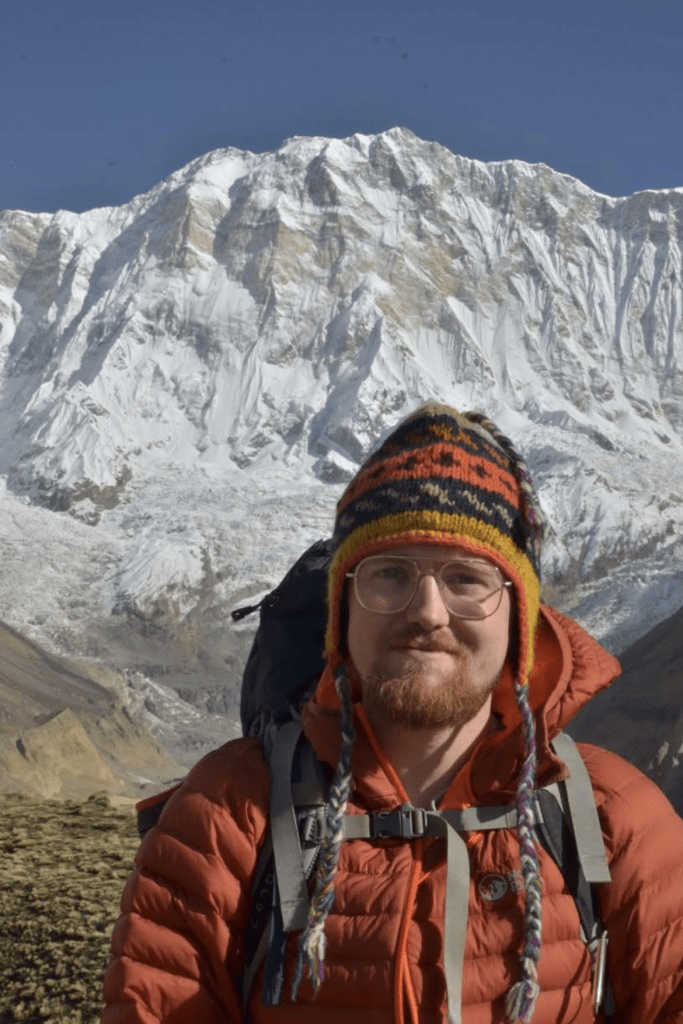
I want it to be noted here that I visited Nepal some years ago now. I was there with my brother and we had the greatest time. I still, to this day, vote Nepal as my personal favourite place on the planet HERE (Besides my family home).
Unfortunately the majority of the pictures I have from my time in Nepal are gone to the wind. Vanished without a trace into the depths of my computer backlog or, just never uploaded. So, I have tried to use as many photographs from my time there but most of these images were found online.
Please, a quick disclaimer. As a tourist it is your responsibility to represent your country. Be respectful of other cultures and wear appropriate attire when visiting holy sights.
Please consider donating, every penny will go towards my growing business and future travel plans.
Make a one-time donation
Make a monthly donation
Make a yearly donation
Choose an amount
Or enter a custom amount
Your contribution is appreciated.
Your contribution is appreciated.
Your contribution is appreciated.
DonateDonate monthlyDonate yearly Uncharted Thoughts.
Leave a comment