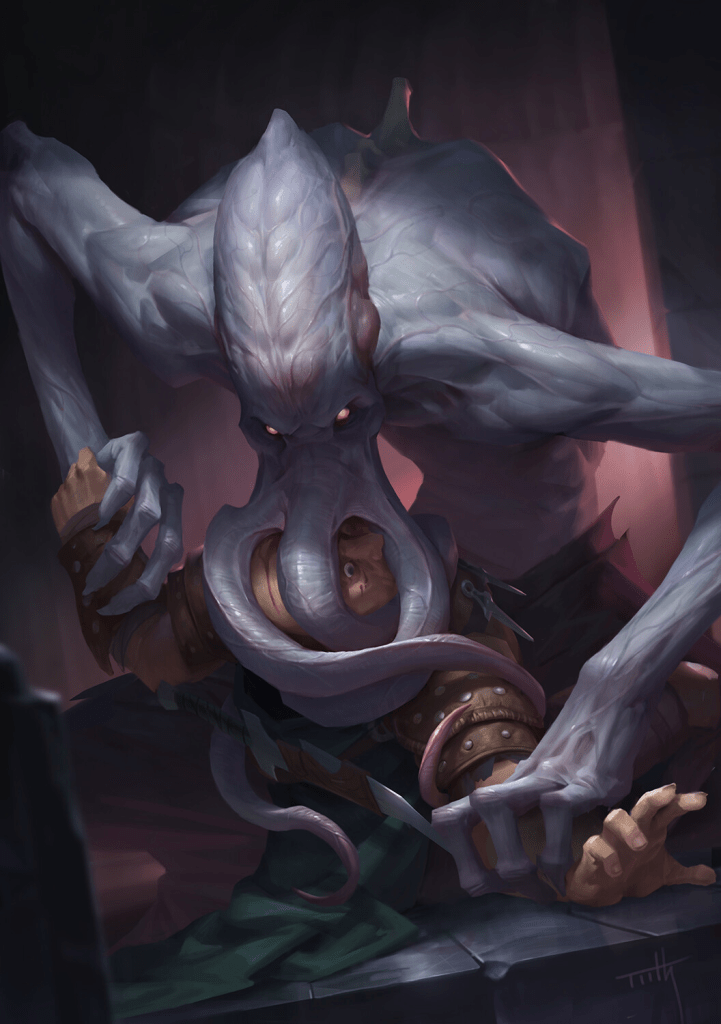
Last week I posted a blog regarding my journey into the magical world of Dungeon and Dragons, how I found myself enticed into these imaginary realms of monsters and treasures and how this game changed me for the better. This blog however, is going to be a more step by step, a how to guide on how to create your own campaign. So whether you are new to the game, or perhaps just an old timer looking for new and exciting ways to draft a exciting campaign that will have your players thrilled. This blog is for you.
Step One – Genre.
Now, us old timers know how this part goes… don’t we. Being sat before that blank word document, the curser blinking up at us impatiently, waiting for us to put it to work, waiting for that spark of inspiration. Meanwhile, high above the screen our heads are swimming with endless possibilities. Will our adventurers be trudging through the under dark in search of an ancient relic so powerful that it was hidden there by the very Gods. Or, perhaps the apocalypse has finally come to a world of elves and orcs, a wasteland of desert scourges its way across the once lush forests, and with it an army of the dead. Or, maybe political intrigue is more your style? Perhaps your characters want their small, poor clan/house to climb the ladder of power, to have the lord and ladies at court bow or tremble before them instead of a newly crowned king, through mischief and a little fowl play who knows where your clan will end up?
Whatever it is, this step is crucial when understanding where this campaign will go. Without these foundations, the world your players will be spending the next X amount of hours in will not feel real. Nor will the groundworks be set for the campaigns settings. For beginners, I think it best to take a copy of a pre-made campaign such as Curse of Strahd or Icewind Dale and tweak it to your own customisation. This will allow for any groundworks to be pre determined and for you to expand with your own imagination.
Let’s create a new adventure now, as I walk you through the step by step campaign guide, as a sort of reference for you at home. Let’s take a easy genre, one that will help promote all aspect of Dungeons and Dragons, so that all players will have their characters involved within the story. Horror.
Step Two – World building.
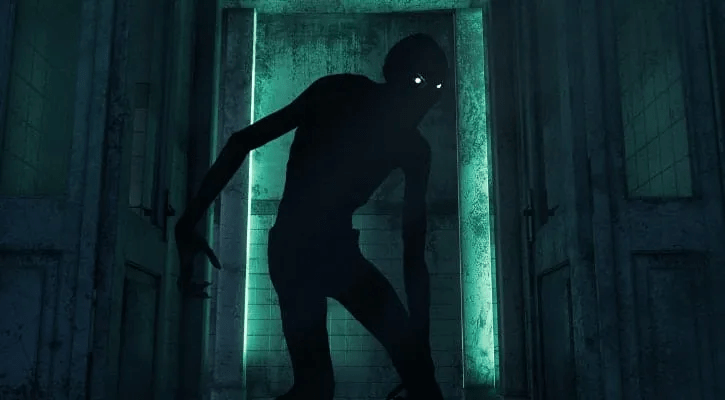
There are endless YouTube videos, books and blog tutorials on world building, be it for table top games to two thousands page novels. Therefore I will not bore you with the ins and outs of world building on this occasion, as that market has been flooded for many years. However, I think it is important to discuss that every world building process is different and there are no right or wrong ways of undergoing such a task.
After all, the adventurers need to play in a plane of existence that feels real, be it a colossal earth, created over thousands of hours of labour. Where each town, city, village and family have rich detailed histories. Or perhaps this campaign only needs a small village or maybe just a singular building that enticed the players into it. Whatever it may be, attention to detail is key when world building. The atmosphere needs to feel real, the NPCs alive with personality and the social systems and political system within the game make sense.
That doesn’t mean you can’t have a planet of 6 moons, or a king that has eight legs or… whatever you may conjure up in you imagination. What must be remembered however is, why these things exist and how did they come to be?
I have created a world called Koritha, many many years ago, and with it I have dragged my players through desert dunes, high mountain passes, lively cities and small quaint villages. To create such a world, you have to build upon the foundations over long periods of time. I started by drawing a map, then adding towns and cities, mountain ranges and topical forests. This can be done on a smaller scale also, with towns and villages, draw a map, add buildings and points of interest. Then begin to write a lore, a history of events. Remember that your players are delving into a world already lived in. Make it rich, unique and interesting.
For our horror game, we will have our players explore a small village outside of a large swamp woodland. A village of 12-13 families, so players can get to know the NPC’s, so there is a detective element to the game. Perhaps the swamp is a red herring, that the bodies of victims are found in the swamp, misleading the players to explore it further. A road should lead in and out of the town, not a busy road, just so new comers can come and mix up the players idea of who the killer(s) are.
Step Three – Plot.
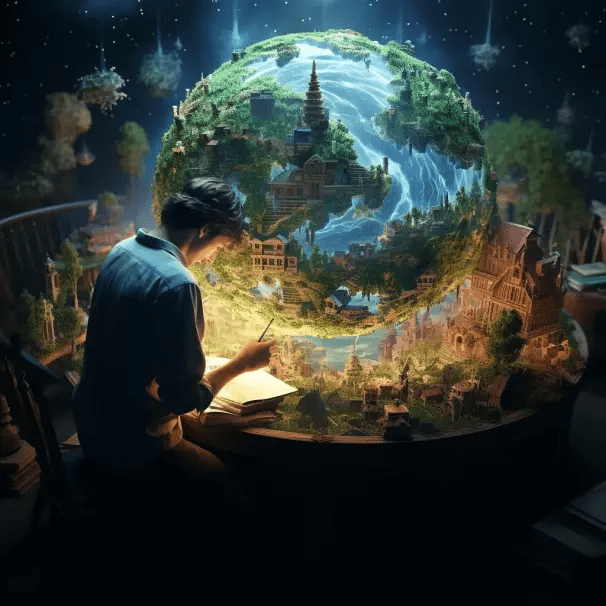
The plot is what drives the story forwards. Although there should be a large amount of improvisation in any TTRPG. A basic plot has to be formed for story structure. Of course there are TTRPG’s that can run completely off improvisation, how these games work, or how the GM / DM is able to conduct this, I have no idea. So for the sake of easy story based games we will NOT be conducting these realms of chaos.
I think, besides genre, plot it by far the most important element of a TTRPG. The plot, obviously has to link in with the genre. You can’t really have a romantic comedy plot, link in with a crime thriller genre. Or perhaps a spy, political intrigue, 007 type plot linked in with a wasteland apocalyptic survival. So, link the two, if you are going for action adventure, make sure the plot is one filled with battles, treasure and strange uncharted lands. If you are going for a survival wilderness genre, make sure that players are stranded in an isolated place, trying to make their way back to civilisation.
Plot is hard to plan and even harder to execute. My last campaign was filled with hidden messages from the dream world, prophecies from realms beyond the physical, a bloody ancient cult, an impending apocalypse with the rise of Silitar (A devil) and four complex backstories, all of which needed to be moulded into each session. However, like most things in DnD, it all comes down to how much preparation is done on behalf of the DM / GM.
It is important to remember that not each campaign needs to have a complex plot. There are no ‘rules’ to where the mind can or should go when creating a RPG. The only ‘rules’ I’d stand by as a DM/GM is that the players are there to have fun, so, make it fun. If they like dungeon crawls with lots of battles, make it that way. If they like spy/investigations make the game tailor fit to that genre. If, they want a long campaign with twists and turns and dark tunnels, be sure you got your work cut out.
For our TTRPG horror DnD campaign, we will have a series of murderers committed throughout this marshland village. Each morning the players will wake up from their Inn or camp to find another body in the marshland. While examining the bodies, there will be clues pointing towards the issue at hand. Although I like a classic vampire or cannibal trope, I think this murderer should be a smart human or humanoid attempting to become more politically powerful within the village by killing off his/her opponents. All awhile making these murders look like they have been committed by mysterious beast.
Step Four – Planning longevity.
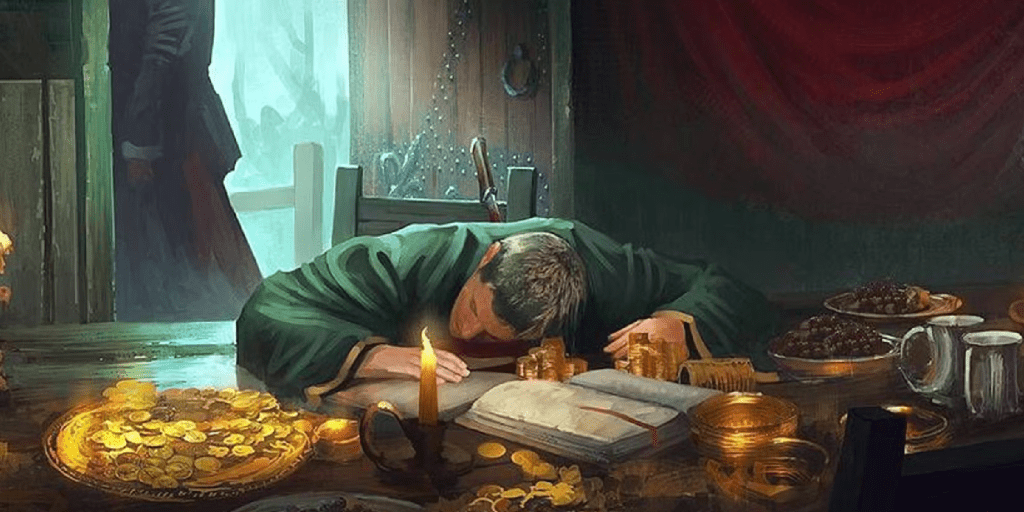
Building a campaign is a ever moving process. Not only are you planning ahead the twists and turns of the plot. You have to navigate how the players are going to end up where you want them to be, without railroading the campaign completely. So be it in game or after each session, you must take notes, remember NPCs and events that took place in order to project the feeling of a real, immersive and moving world. Its complicated, but with the right mind set, it can be liberating and fun.
After each session, I tend to jot down 10 bullet points of important things that happened to each character. What NPC’s did they run into? How can these be used at a later date? What is the bad guy doing while they are exploring a town? Are there any clues I have dropped or could drop in the next session? Are the players enjoying the game? If so what parts do they react positively too? Are there parts I felt they were bored? Was there anything the players wanted to do but didn’t have time to?
To keep myself in the loop of where the adventure was going, additionally to the bullet points. I write a list of things that needed to happen before progressing to the next part. Whether these take a single session or five, without the clues, NPCs and events, the party could not progress to the next stages of the game.
This section is by far the hardest to keep under control, however it is essential to the games progression and longevity. Although it is hard, stick with it, even when you feel like a tin foiled hat, weed smoking conspiracy theorist who’s life has become immersed in a made up fantasy land and you are trying to work out if you have gone slightly insane while debating with yourself who the killer is in your village.

Step Five – Rehearsal
Rehearsals are different for each DM/GM. While some prefer not to visit the game until game day, myself and others go back to the drawing board once or twice before the game commences. Obviously I can not rehearse the game in full, as players are able to make their own decisions on where to go, what to do and to be honest you can never really be in full control of the game.
However, I do go back over my notes regularly. Remembering characters, plot lines, and important moments that I hope to incorporate into the session. Usually I do this the day before the session and a quick overview just before the game.

Step Six – Play.
Now its time to play… You’ve spend hours, maybe days getting this adventure ready and at last, the dice are ready, the snacks are bowled out, the drinks are flowing and the DM screen is up. Before you are some of your friends and they are gagging to get their teeth into your new world.
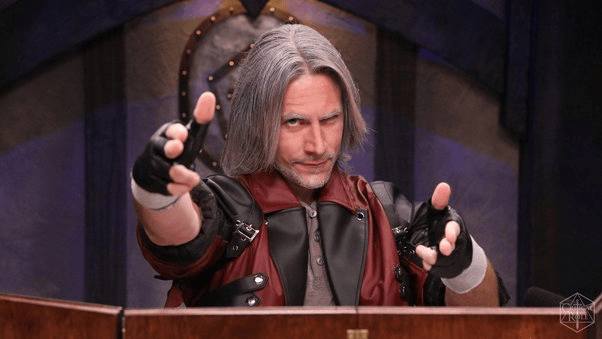
Remember, this is the time to have fun, the hard work is out the way and now all you have to do is put on the acting masks and enjoy your creation. Don’t seek outside influence from other DM’s, everyone has their own style. While Matt Mercer has become one of the most renowned in the business, he has a style that works for him. DO NOT compare yourself to any other DM/GM. Bring your own spice to the game.
I for one, focus on description, NPC’s and player on player interaction. I find large epic battle monologs boring, I find lore dumps unnecessary and elaborate acting distracting. I think Matt, although a great DM, sometimes cringe and, at times, a bit of a spot light DM. Find your own voice by watching the players reaction to your skills. Because at the end of the day, its about them, not you.
 Uncharted Thoughts.
Leave a comment