Spoilers obviously….

“Dad, wanna go see Dune?” I asked in the early hours of Monday morning. “What’s Dune?” He replied, with seemingly little interest. “You know, the SyFy movie about sand worms. The second one is out now”. That’s how my morning started out, little did I know, I was about to wittiness one of the greatest films of our generation.
I am not a film critic, nor have I studied media beyond GCSE level. However, I do consider my taste in cinema somewhat refined. While I do enjoy the watching action packed nonsense of John Wick. My heart belongs to movies that have deeper undertones. Be them, metaphorical, symbolic or hidden beneath layers of philosophical content, I like to leave the theatre thinking.
In an age of Marvel and DC, it’s rare to find these thought provoking movies. However, due to their submersion in a pool or cheap jokes and plot armour, I think those rare and often overlooked films shine ever the brighter. It was not long ago that I walked blindly into the afternoon sun having sat through Oppenheimer. Leaving with a mind filled with fear for the future of our planet.
Before delving into the deeper meaning of Dune, at least my own thoughts on the subject matter. I think it’s important to highlight some of the cinematic boundaries Dune has breached.
Dune is without a doubt the most beautiful on screen experience I have ever had the pleasure of watching (besides perhaps Planet Earth 2). From the extreme long shots, detailing the vastness and beauty of the desert to the high angel of Paul’s assent to the leadership role he is destined for. The film is frame by frame spectacular. I find the teams ability to make the barren desert look so full of beauty an achievement beyond measure.
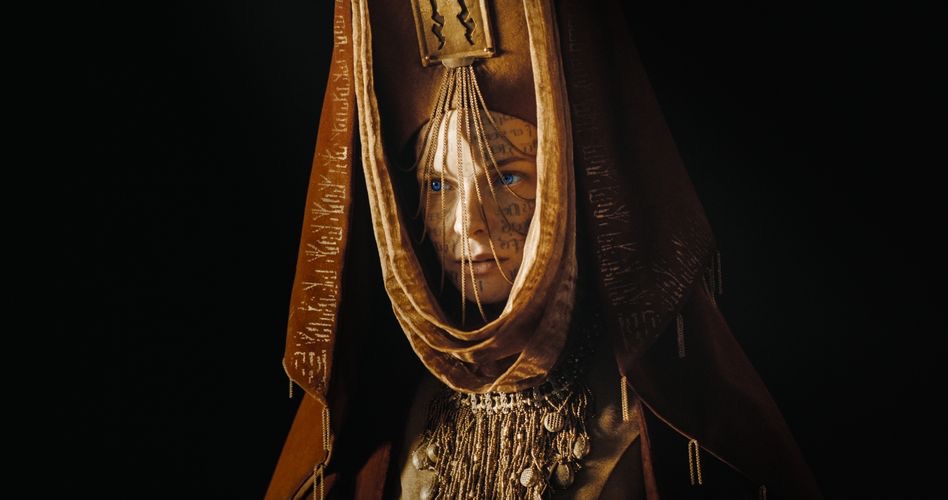
The costume design is equally as impressive. Be it the long dusty robes of the Fremen, the clunky ink black armour of the Harkonnen or the frilled tall dark towered hoods of the Bene Gesserit. The costumes are astounding, equal or surpassing the likes of Game of Thrones, Barbie and Gladiator. The team that designed and created these astounding designs should without doubt be issued an Oscar.
The score is phenomenal. If I had a pound for for each time Hans Zimmer created a masterclass orchestral phenomenon, I’d be able to quit my job and live a comfortable life. It seems as though he has monopolised the filming industry with his magical musical talent. His ability to transform a scene into something… more, is truly remarkable. The use of brushes on drums (a wild uneducated guess) to create the sound of moving sand creates an atmosphere most composers would only dream of creating. Once again, an Oscar worthy score.
I have very little to complain about, which makes a change. While the likes of the Star Wars franchise keeps handing out disappointment after disappointment. It is refreshing to have little to no complaints after a movie. If I was forced to make a complaint, it would merely be in regards of screen time for some of the characters. The likes of Josh Brolin’s Gurney Halleck and Dave Bautista’s Glossu Rabban have very little screen time, and at times I forget who and what they are to the story. Additionally, I think these two character arches have been diluted by a much larger story, perhaps I am grasping at straws here to find something negative about the film, but that is all I could really come up with.

My interpretation.
I do not expect this to be a accurate interpretation as I am merely regurgitating what the film made me feel as a work of art. I think there are three hidden meanings that derive from the story. The first being a warning to humanity about the global warming and greed, the second marking the need for revolution and change to the political sphere and finally, who are the ‘good guys’ in history?. In some regards I think these can all be interlinked with each other and while explaining this, I hope you can see the correlations between the hidden meanings.
Global Warming and the environment.
Arrakis is a desert planet, homed to the Fremen and housing the most valuable resource in the universe, Spice. The great houses of the Universe play their part in collecting and distributing spice for interstellar travel, while the Fremen fight for their freedom from oppression.
I think the message here is clearer than the others I interpreted. Arrakis is a barren desert, it represents what earth may become if we continue to destroy it. It suggests that we, represented by the outer world houses, are lucky enough to live in a paradise where the Fremen live hard, dangerous lives in a desolate world. Perhaps this is a interpretation on how life will become if we do not overcome the challenges of global warming and destruction of the environment.
Additionally, I believe dune is representation of capitalism. The richer outer world houses get rich off the back of a rare mineral found only on this desert planet. They suck the planet dry as the local tribes suffer under their ruling. Be is the ‘good’ guys, house Atreides, or the ‘bad’ guys the Harkonnen, they are both bound by the production of Spice. Although treatment of the natives was considered more humane by the Atreides, capitalism is capitalism and money rules above all. Harkonnen or Atreides, spice must leave the planet, be it peacefully or with war.
Revolution, a time for change.
Paul Atreides, also known as the Paul ‘Lisan Al Gaib’ Atreides is seen as the almost Jesus figure to the Fremen. An outsider who will lead their people to paradise, away from the oppression of the greater houses. Although Pauls story has many hidden meanings, it is clear that he represents a figurehead of revolution. A Marx or a Lenin. He is there to break the wheel of oppression, cross referencing this to the capitalistic galactic producing of spice. Highlight’s the possibility that this book/movie is about freeing the people of lower class society from poverty and oppression.
I think this film is somewhat dangerous, when leaving the cinema I recall wondering if this is a call to arms for the lower classes. To wake us from our slumber, to fight against the evils of capitalistic values.
Are we the bad guys?.
Although the wars in the middle east are far more complicated that I care to go into, I couldn’t help but wonder if there was a element of disapproval towards these conflicts written into the film. Although Frank Herbert was not alive in the times of the middle eastern crises, dying in 1989 and having written the Dune books some year prior. I couldn’t help but feel an unease when watching the film. Do the great houses represent the western alliances in foreign often underdeveloped countries? Committing war and crimes against the indigenous peoples for capitalistic prestige?
Where our action in the Middle East truly for the benefit of humanity or just another war for resources and wealth?
Propaganda

I think most films are propaganda tools, conveying hidden messages for the audience to take in subconsciously or willingly. Dune is no different. For me, dunes message was a cry out for social, environmental and political change in our western society. A message perhaps dangerous to the elite as it ventures into the idea of potential revolution and the uprising of the lower class. Is dune a Marxist film? potentially, however it is a film based on change. That the system will, be in tomorrow or in thirty thousand years, collapse under the weight of the larger working population.
I will not be making a habit of writing movie reviews, unless it is deemed popular and I find movies worth writing about.
 Uncharted Thoughts.
Leave a comment