My relationship with my childhood friend Joe is one built on travel, “would you rather” debates and quoting the office, the English one, the good one. A common interest we never really discussed until our journey into university is our love for story telling and journalism. Although our late teenage years were filled with watching documentaries, be them VICE, Louis Theroux or independent YouTubers. We never really openly discussed our individual passion for the subject, nor the possibility of us studying it following our undergraduate degree.
That was until our trip to South America in 2022. A incredible journey into a continent famous for its coffee, cocaine, tropical beaches and lush rainforests. There, we got to truly spend time together, be it a thirty three hour bus ride from Ibague to Santa Marta or a nine hour wait in a shopping mall in Lima. We found time to discuss our future plans, hopes and dreams, an interest touched on multiple times was journalism.
So, almost two years later (22/11/2021) I found myself on a train from Windermere to Cardiff to attend an opening day for Cardiff University Masters in Journalism with my dear friend Joe.
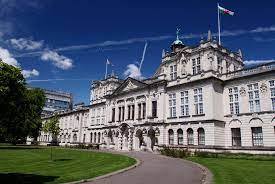
The University
With its large, visually stimulating castle, large green parks and abundance surrounding pubs Cardiff University is without doubt one of the most popular universities in the United Kingdom. Popular in the sense that most people I have spoken to about going to University or those thinking about it, consider Cardiff to be in their top five to attend. Now, those figures are from people I have spoken to, there is no evidence that I have found that suggests that this is the case. However, there are stats that provide a better insight into this establishments position within the educational field.
Cardiff University is one of the 24 Russell Group Universities within the U.K. Meaning that it is considered to be the leading in fields across the spectrum of subjects and deemed to be a world class facility for excellence in education.
With a 76% student satisfaction rating, with over 23.000 undergraduate and 10.000 post gradate students, 7.000 international students from hundreds of nationalities across the globe. Additionally seven Queen’s Anniversary awards, two noble prize winner researchers and a very high employment rating following undergraduate and post graduate studies, it is clear that Cardiff is a exceptional university.
The Course(s)
After arriving at the campus, taking in the hustle and bustle of excited students, registering and getting our free hot drink stamp. We made our way up the winding three floors, passing hundreds of students, all crowded around small tables of professors selling their courses with enthusiasm. We made our way directly to Journalism, we had no plan b, we knew our destiny. It was this, or nothing.
Here we met two of our lecturers, Dr Sali Collins and Dr Cathy Duncan. Both experts in their chosen fields, Sali being the Head of Practice and Senior in Broadcasting, and Cathy a lecturer on news journalism.
Although a lot was covered in the hour talk, I am going to attempt to extract the key points. Understand that if you are reading this and expect a full analysis of the talk I am afraid that I will not be able to extract all the information. I was there as a small fish in a large pond. Taking in what I could with the skills I have and whatever prior understanding I have of journalism and the course itself. So if you have any questions about the course, or you are interested in taking part, I would highly recommend attending an opening day or, emailing one of the lecturers. They seemed really open and happy to help.
It seems to my understand that there are three sperate avenues when going into the masters program, the first being broadcasting. Concentrating on the ins and outs of TV broadcasting as well as other methods of broadcasted news and journalism.
The second avenue being News, now this was particular hard for me to understand. Isn’t News Journalism and Broadcasting the same thing? Couldn’t they be in the same avenue? Well no, the News course focuses on newspapers, and the written word. Yet, they also explore Podcasting and videos. I am not sure how this is separated from broadcasting nor the third avenue; magazine journalism. A course focusing on magazine publication and the future of journalism in this arena.
Additionally to the course itself, which offers a hands on approach into the world of journalism, a NCTJ is included within the expense. Deemed by Piers Morgan to be ‘the perfect skill base’ for learning journalism and entering into this vast, often complicated and competitive field. The National Council for the Training of Journalist (NCTJ) teaches the vital basics for journalism. From short hand writing and knowledge of media law.
The next step
My next step is to complete my Level 2 in Maths functional skills. With out it, my chances of getting onto this course will be slim, not impossible but slim. This is why you should listen at school. While I was messing around in class and enjoying the freedom of my childhood. Those that knuckled down, soaked in the free education that was given to them and fought through the temptations of a young life would not be sat taking exams and wasting valuable time in their later years.
Following passing that exam, I will need to look to my masters. Throw myself into the world of journalism as I have for everything else in my life. With enthusiasm and determination.
 Uncharted Thoughts.
Leave a comment